State Key Laboratory of Microbial Metabolism, School of Life Sciences and Biotechnology, Shanghai Jiao Tong University, Shanghai, China.
Nat Commun. 2013;4:2163. doi: 10.1038/ncomms3163.
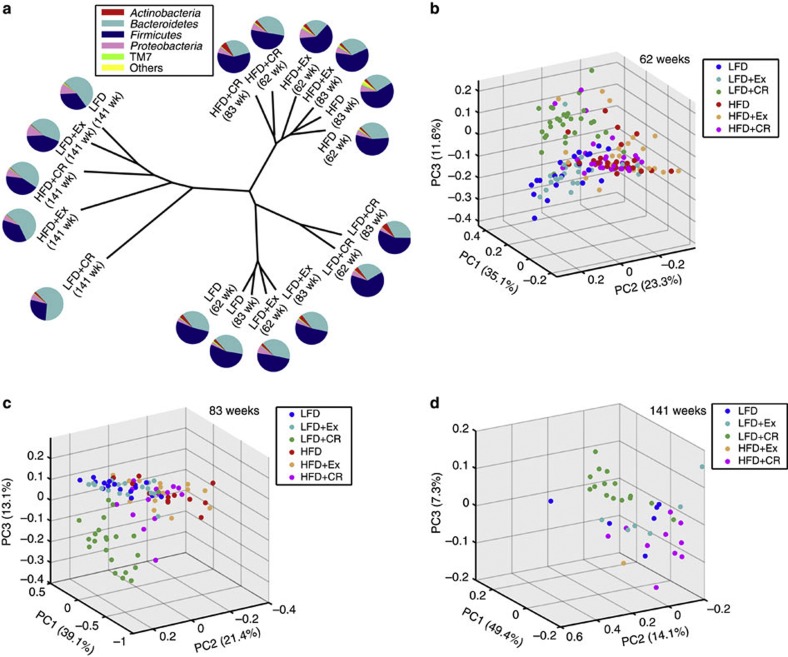
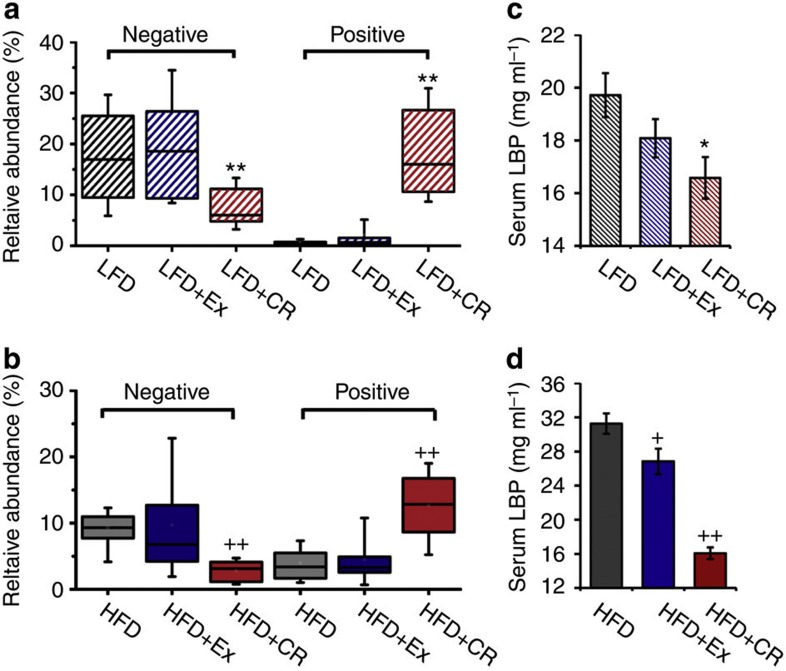
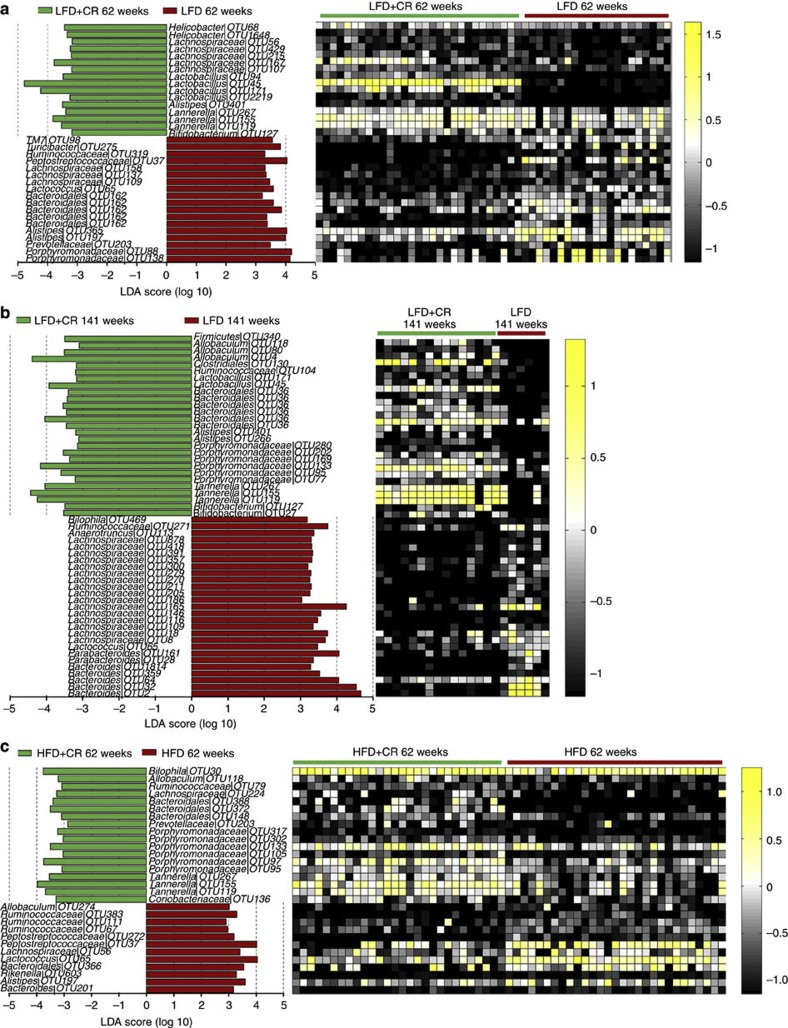
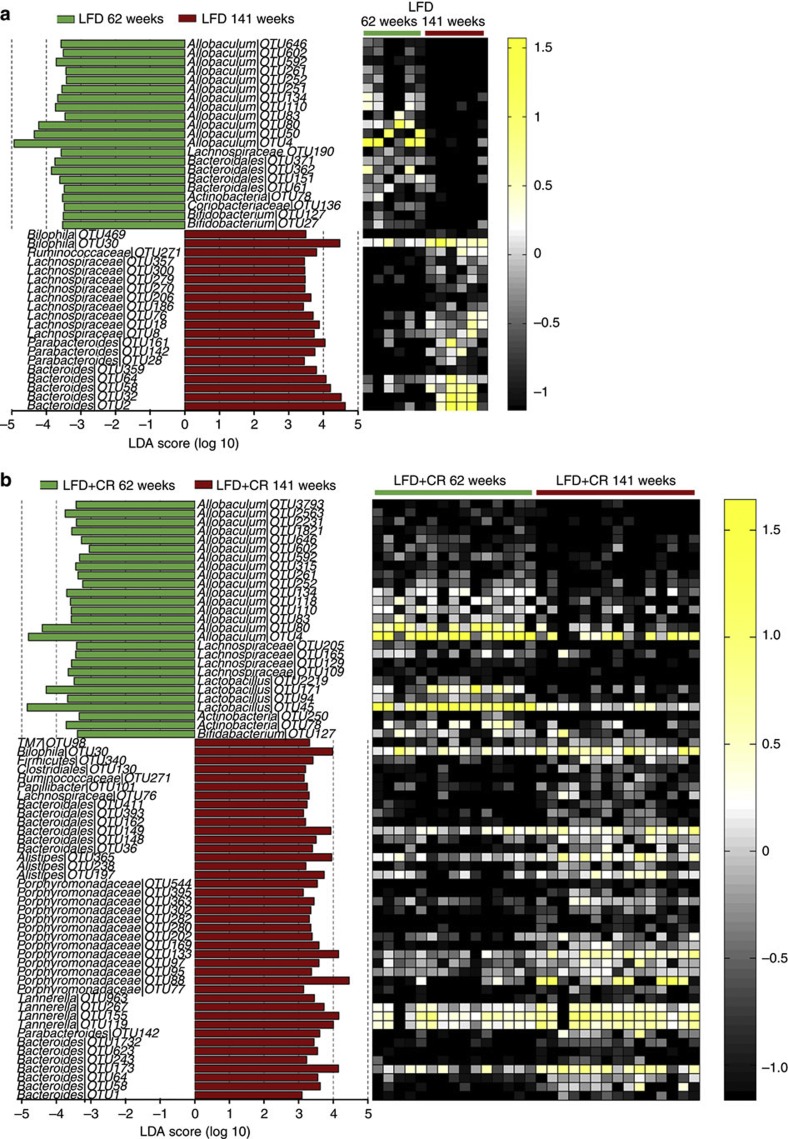
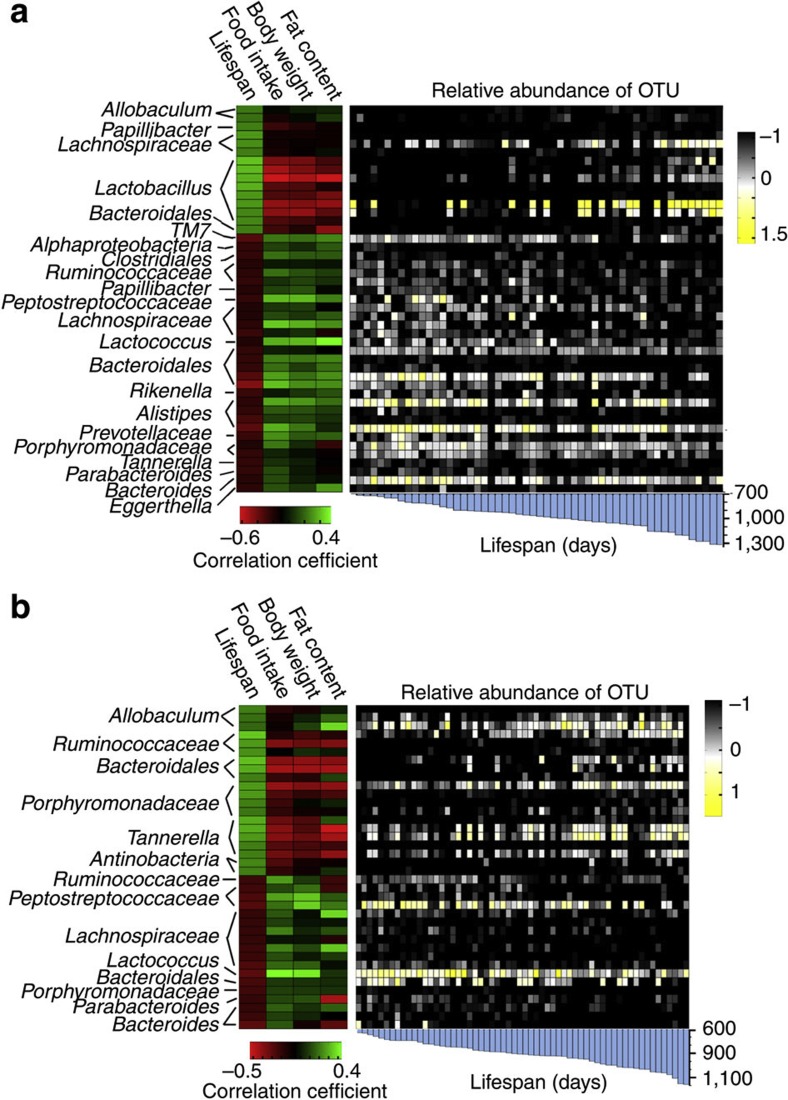
Calorie restriction has been regarded as the only experimental regimen that can effectively lengthen lifespan in various animal models, but the actual mechanism remains controversial. The gut microbiota has been shown to have a pivotal role in host health, and its structure is mostly shaped by diet. Here we show that life-long calorie restriction on both high-fat or low-fat diet, but not voluntary exercise, significantly changes the overall structure of the gut microbiota of C57BL/6 J mice. Calorie restriction enriches phylotypes positively correlated with lifespan, for example, the genus Lactobacillus on low-fat diet, and reduces phylotypes negatively correlated with lifespan. These calorie restriction-induced changes in the gut microbiota are concomitant with significantly reduced serum levels of lipopolysaccharide-binding protein, suggesting that animals under calorie restriction can establish a structurally balanced architecture of gut microbiota that may exert a health benefit to the host via reduction of antigen load from the gut.
热量限制被认为是唯一能有效延长各种动物模型寿命的实验方案,但其实验的具体机制仍存在争议。肠道微生物群在宿主健康中起着关键作用,其结构主要由饮食决定。在这里,我们发现长期的热量限制(无论是高脂肪饮食还是低脂肪饮食),而不是自愿运动,会显著改变 C57BL/6 J 小鼠的肠道微生物群的整体结构。热量限制会使与寿命呈正相关的生物群增多,例如在低脂肪饮食中增加乳杆菌属,同时减少与寿命呈负相关的生物群。这种热量限制引起的肠道微生物群的变化伴随着脂多糖结合蛋白的血清水平显著降低,这表明热量限制的动物可以建立一种结构平衡的肠道微生物群架构,通过减少来自肠道的抗原负荷,可能对宿主产生健康益处。