CAS Key Laboratory of Nutrition, Metabolism and Food Safety, Shanghai Institute of Nutrition and Health, Shanghai Institutes for Biological Sciences, University of Chinese Academy of Sciences, Chinese Academy of Sciences, Shanghai, 200031, China.
School of Life Sciences and Technology, Shanghai Tech University, Shanghai, 200031, China.
Sci Rep. 2018 Aug 29;8(1):13037. doi: 10.1038/s41598-018-31353-1.
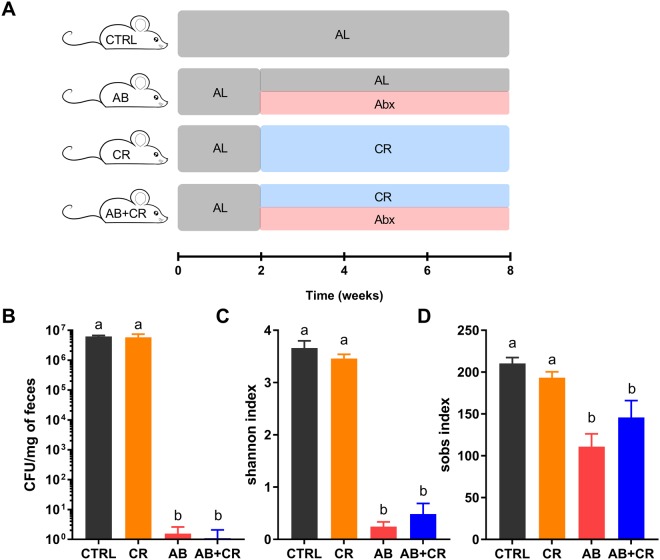
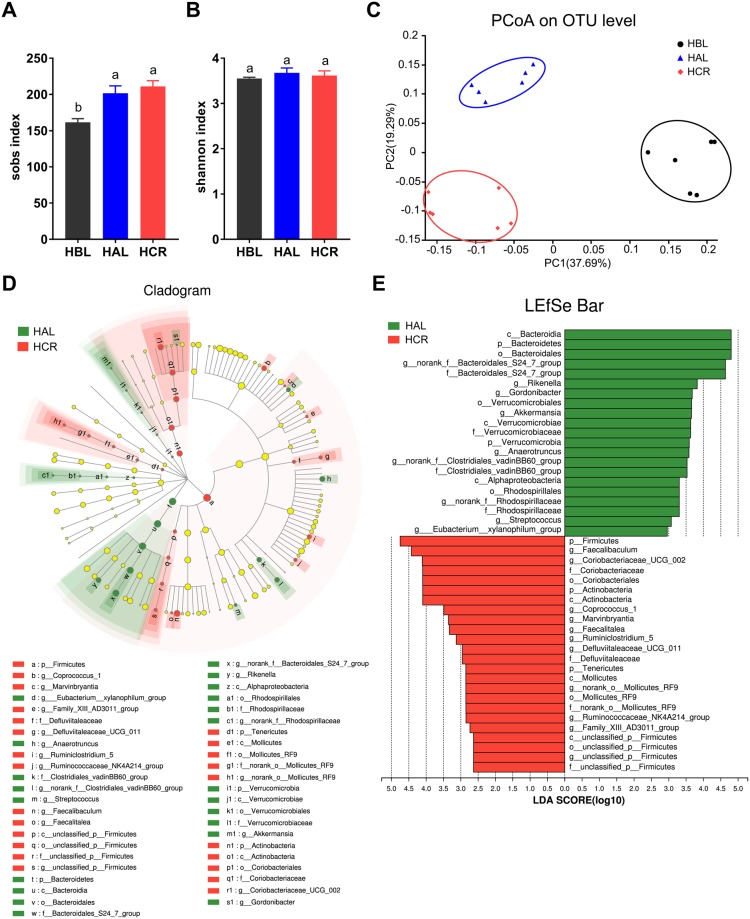
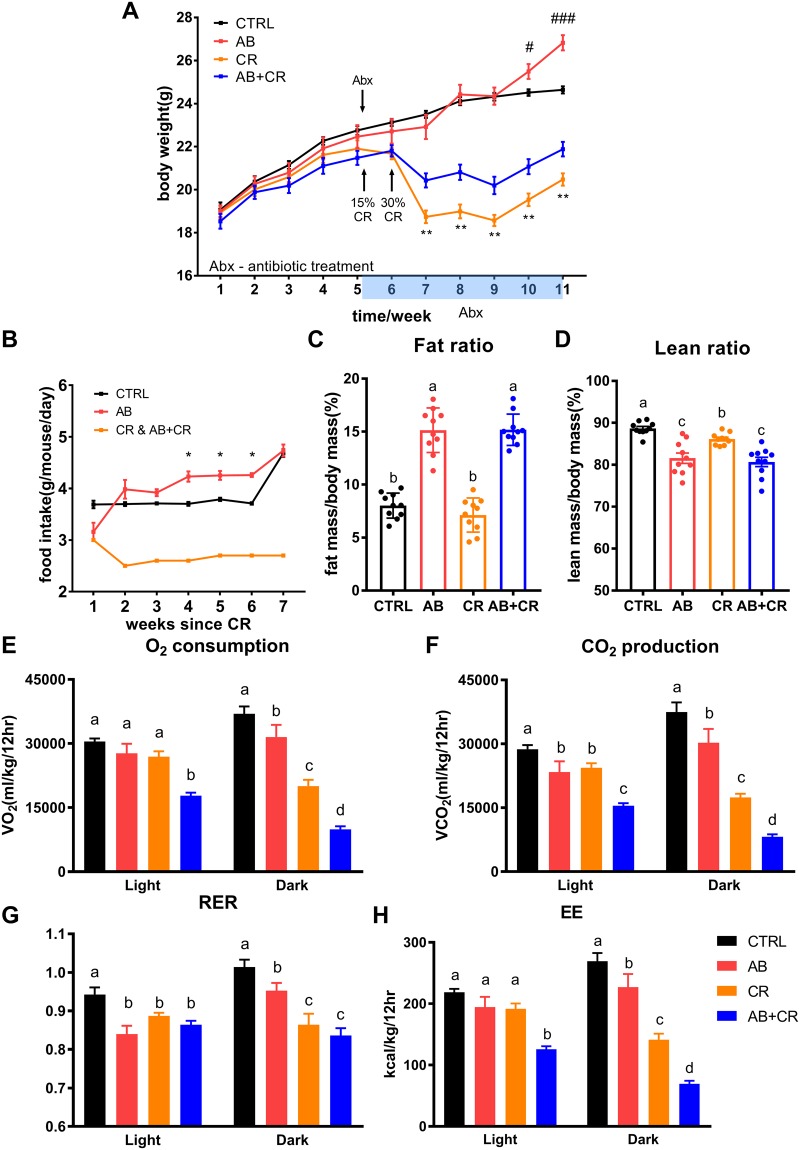
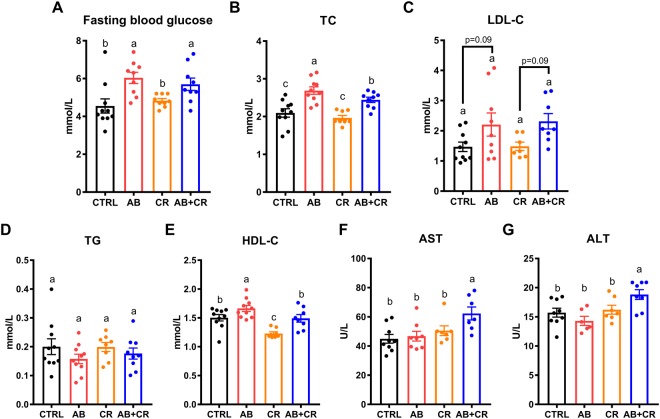
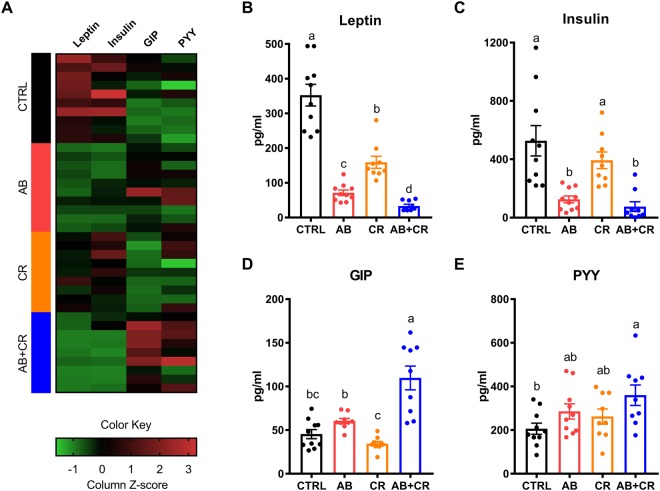
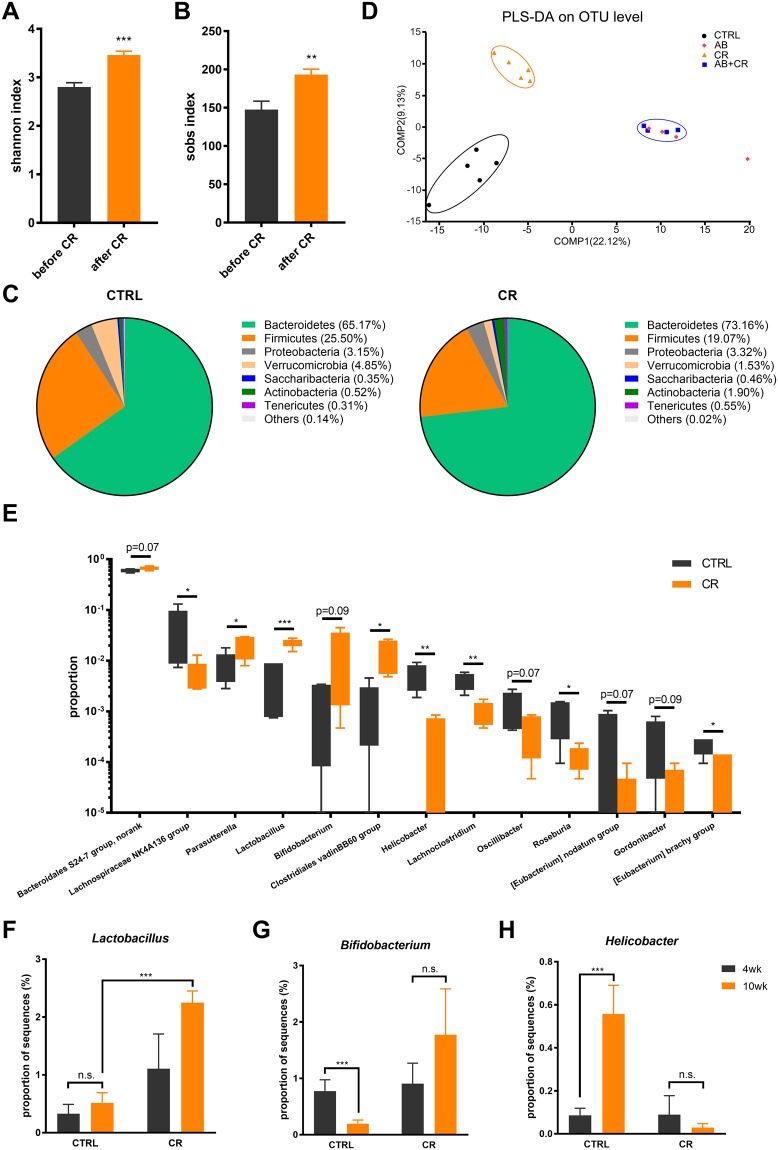
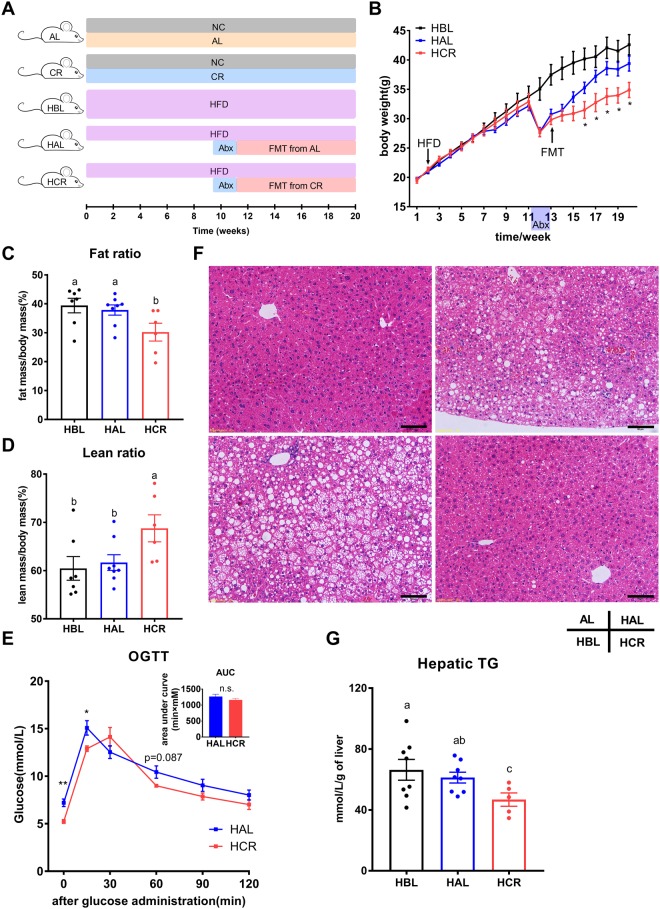
Calorie restriction (CR) extends lifespan and elicits numerous effects beneficial to health and metabolism in various model organisms, but the underlying mechanisms are not completely understood. Gut microbiota has been reported to be associated with the beneficial effects of CR; however, it is unknown whether these effects of CR are causally mediated by gut microbiota. In this study, we employed an antibiotic-induced microbiota-depleted mouse model to investigate the functional role of gut microbiota in CR. Depletion of gut microbiota rendered mice resistant to CR-induced loss of body weight, accompanied by the increase in fat mass, the reduction in lean mass and the decline in metabolic rate. Depletion of gut microbiota led to increases in fasting blood glucose and cholesterol levels independent of CR. A few metabolism-modulating hormones including leptin and insulin were altered by CR and/or gut microbiota depletion. In addition, CR altered the composition of gut microbiota with significant increases in major probiotic genera such as Lactobacillus and Bifidobacterium, together with the decrease of Helicobacter. In addition, we performed fecal microbiota transplantation in mice fed with high-fat diet. Mice with transferred microbiota from calorie-restricted mice resisted high fat diet-induced obesity and exhibited metabolic improvement such as alleviated hepatic lipid accumulation. Collectively, these data indicate that CR-induced metabolic improvement especially in body weight reduction is mediated by intestinal microbiota to a certain extent.
热量限制(CR)可延长寿命,并在各种模式生物中引发许多有益于健康和新陈代谢的效应,但其中的机制尚不完全清楚。肠道微生物群已被报道与 CR 的有益效应有关;然而,CR 是否通过肠道微生物群来介导这些效应尚不清楚。在本研究中,我们采用抗生素诱导的微生物群耗竭小鼠模型来研究肠道微生物群在 CR 中的功能作用。微生物群耗竭使小鼠对 CR 诱导的体重减轻产生抗性,伴随着脂肪量增加、瘦体量减少和代谢率下降。微生物群耗竭导致空腹血糖和胆固醇水平升高,这与 CR 无关。一些代谢调节激素,包括瘦素和胰岛素,被 CR 和/或微生物群耗竭改变。此外,CR 改变了肠道微生物群的组成,主要益生菌属如乳杆菌和双歧杆菌显著增加,同时幽门螺旋杆菌减少。此外,我们在高脂肪饮食喂养的小鼠中进行了粪便微生物群移植。从热量限制的小鼠中转移的微生物群的小鼠抵抗高脂肪饮食诱导的肥胖,并表现出代谢改善,如减轻肝脏脂质积累。总的来说,这些数据表明,CR 诱导的代谢改善,特别是在体重减轻方面,在一定程度上是由肠道微生物群介导的。