Department of Biochemistry, University of Wisconsin-Madison, 433 Babcock Drive, Madison, Wisconsin 53706, USA.
Nat Commun. 2013;4:2186. doi: 10.1038/ncomms3186.
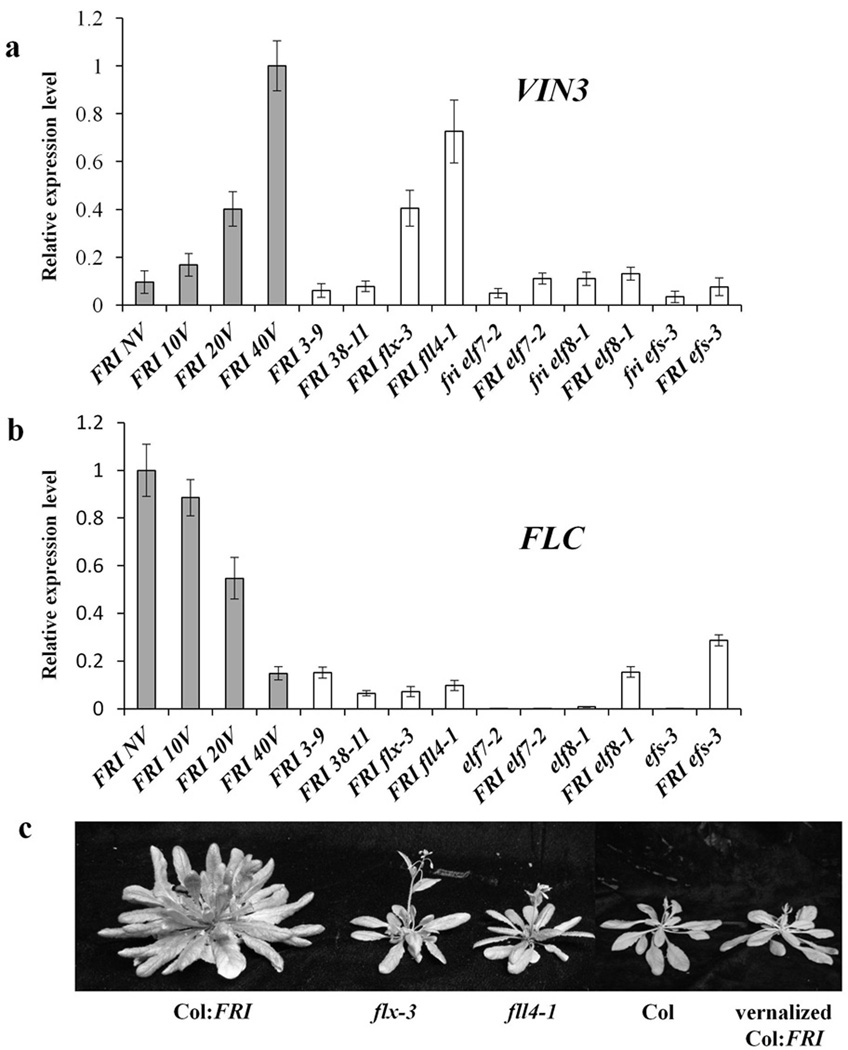
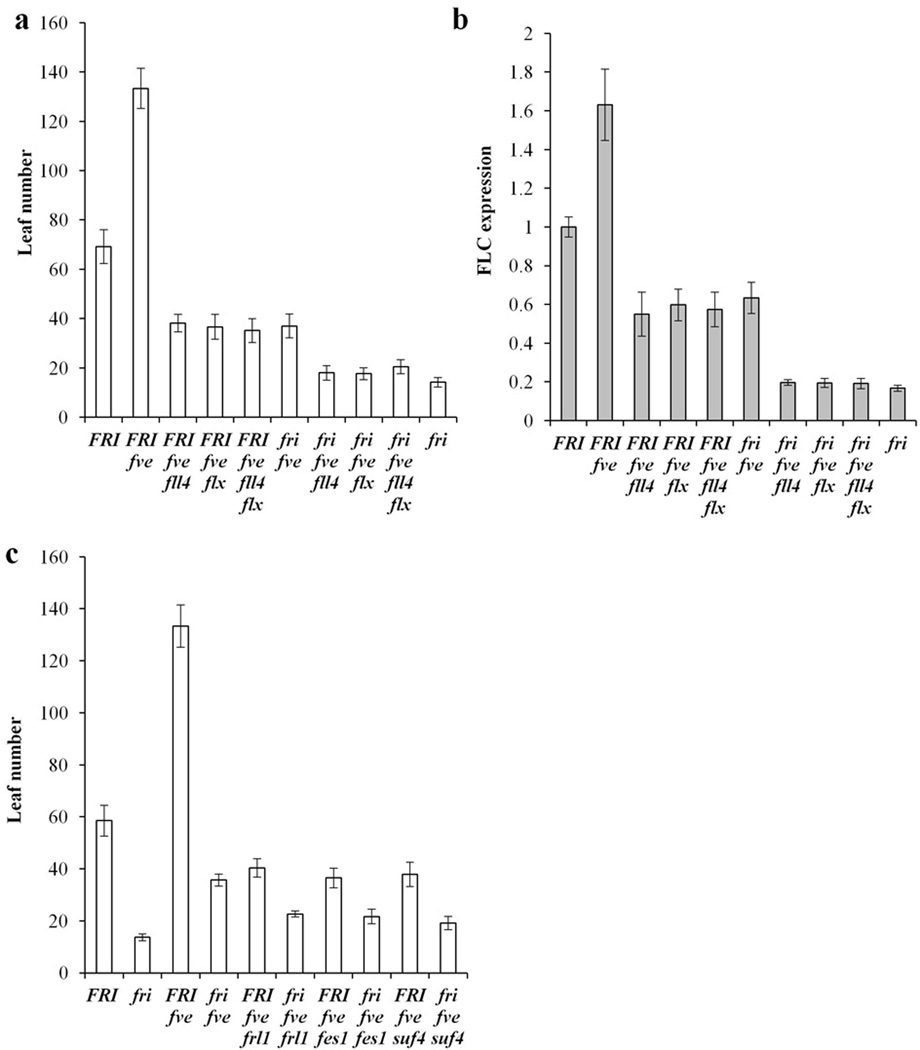
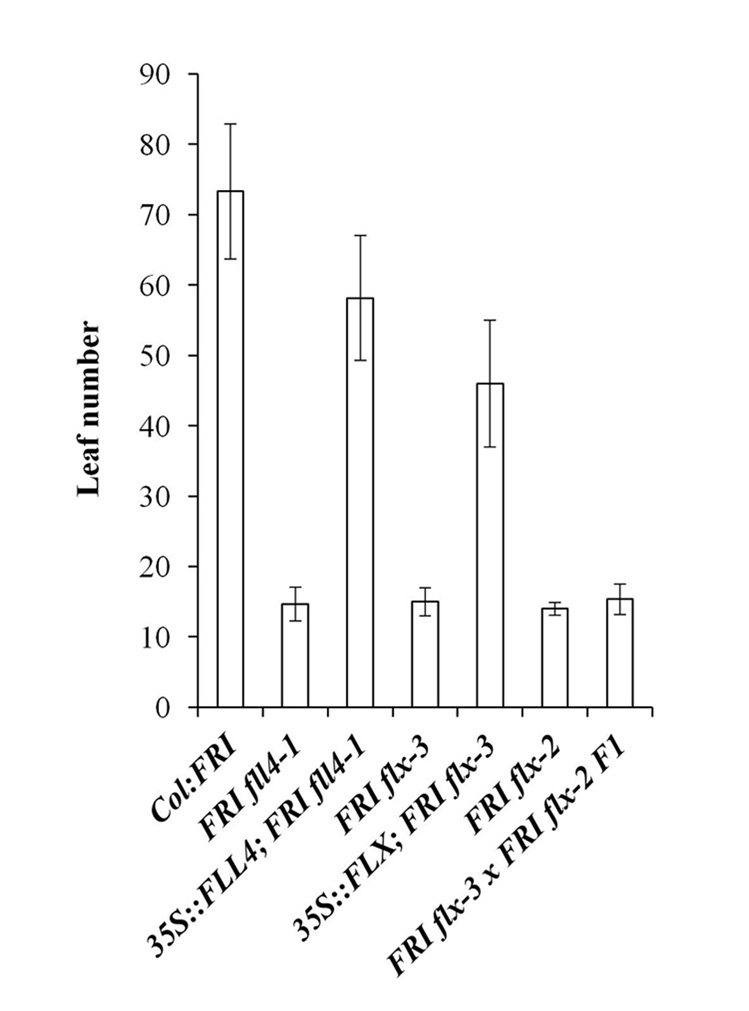
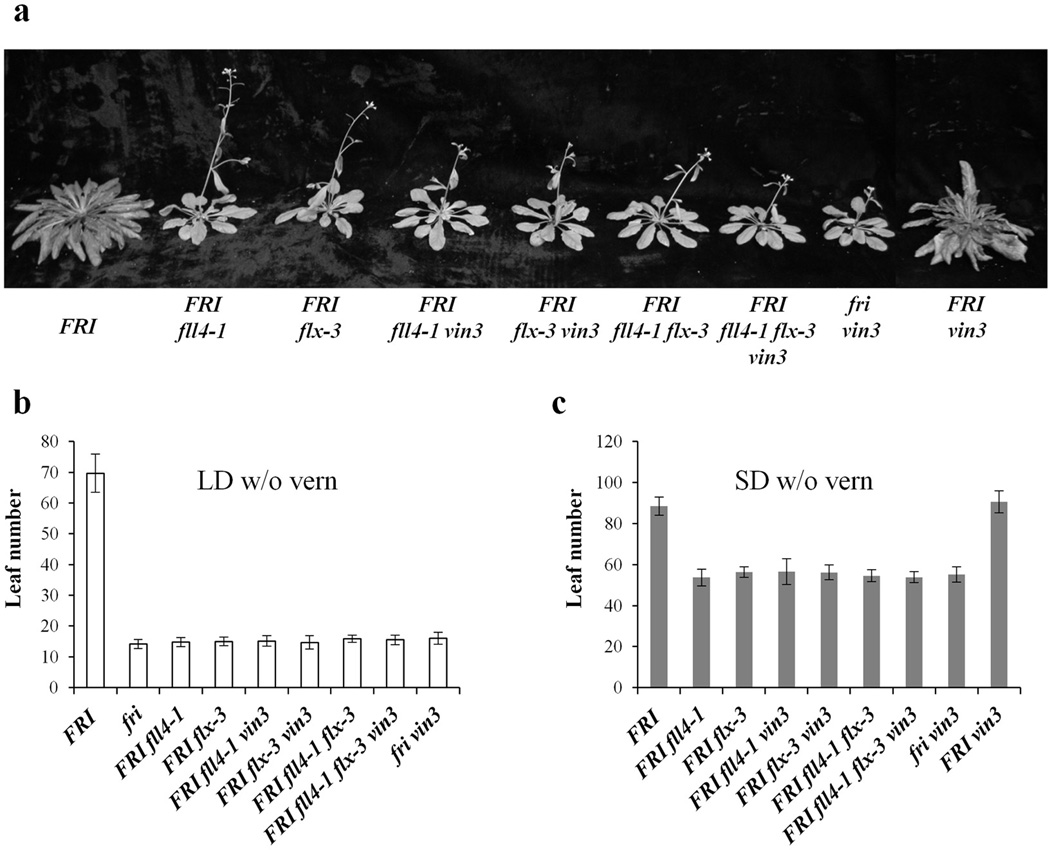
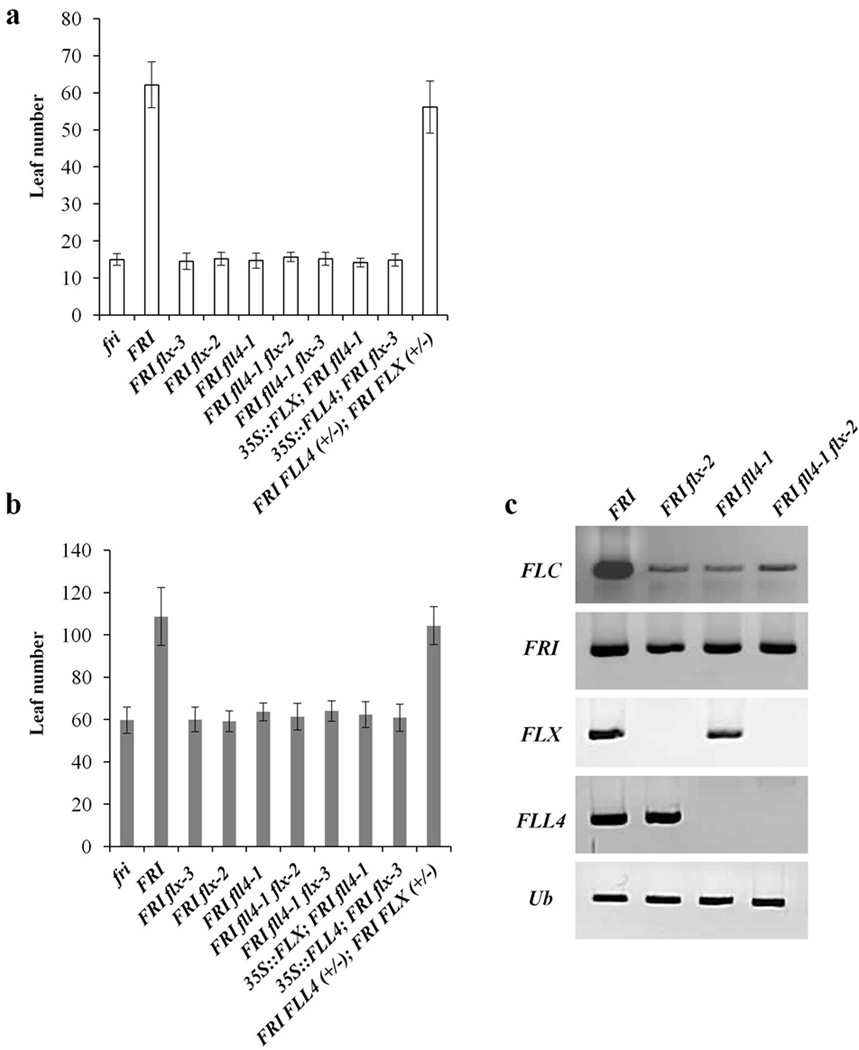
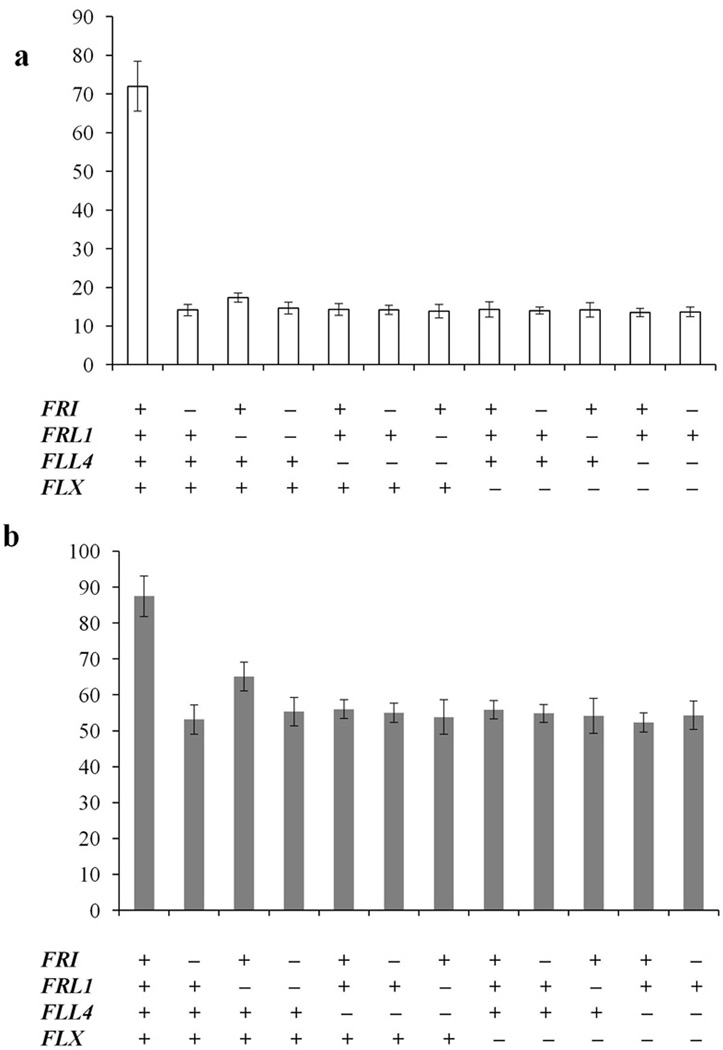
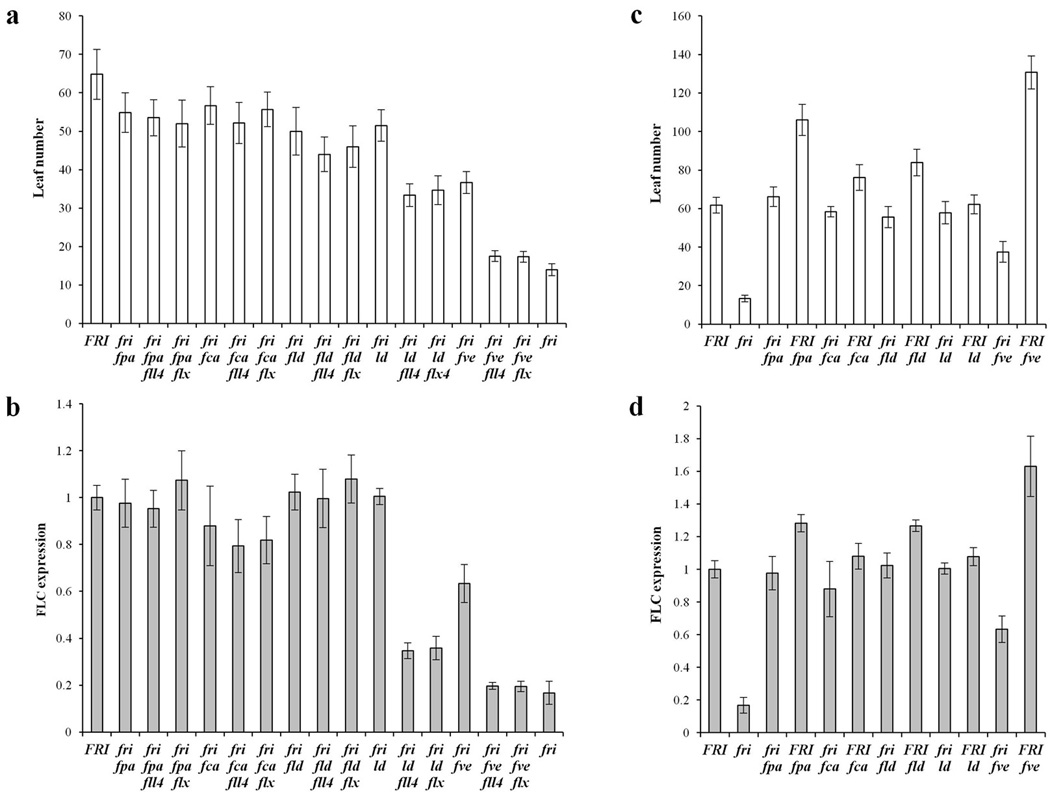
Studies of natural genetic variation for the vernalization requirement in Arabidopsis have revealed two genes, FRIGIDA and FLOWERING LOCUS C (FLC), that are determinants of the vernalization-requiring, winter-annual habit. In this study, we show that FLOWERING LOCUS C EXPRESSOR-LIKE 4 (FLL4) is essential for upregulation of FLC in winter-annual Arabidopsis accessions and establishment of a vernalization requirement. FLL4 is part of the FLOWERING LOCUS C EXPRESSOR gene family and both are non-redundantly involved in flowering time control. Epistasis analysis among FRIGIDA, FLL4, FLOWERING LOCUS C EXPRESSOR and autonomous-pathway genes reveals that FRIGIDA fve exhibits an extreme delay of flowering compared with fri fve, but mutants in other autonomous-pathway genes do not, indicating that FVE acts most antagonistically to FRIGIDA. FLL4 may represent a new member of a FRI-containing complex that activates FLC.
对拟南芥春化需求的自然遗传变异的研究揭示了两个基因,FRIGIDA 和 FLOWERING LOCUS C(FLC),它们是春化所需的冬季一年生习性的决定因素。在这项研究中,我们表明 FLOWERING LOCUS C EXPRESSOR-LIKE 4(FLL4)是上调冬季一年生拟南芥品系中 FLC 和建立春化需求所必需的。FLL4 是 FLOWERING LOCUS C EXPRESSOR 基因家族的一部分,两者在开花时间控制中都具有非冗余作用。FRIGIDA、FLL4、FLOWERING LOCUS C EXPRESSOR 和自主途径基因之间的上位性分析表明,FRIGIDA fve 与 fri fve 相比表现出极端的开花延迟,但其他自主途径基因的突变体则没有,表明 FVE 与 FRIGIDA 的作用最为拮抗。FLL4 可能代表一个包含 FRIGIDA 的新的 FLC 激活复合物的成员。