Department of Plant Protection, Institute of Vegetables and Flowers, Chinese Academy of Agricultural Sciences, Beijing, P. R. China.
Sci Rep. 2013;3:2230. doi: 10.1038/srep02230.
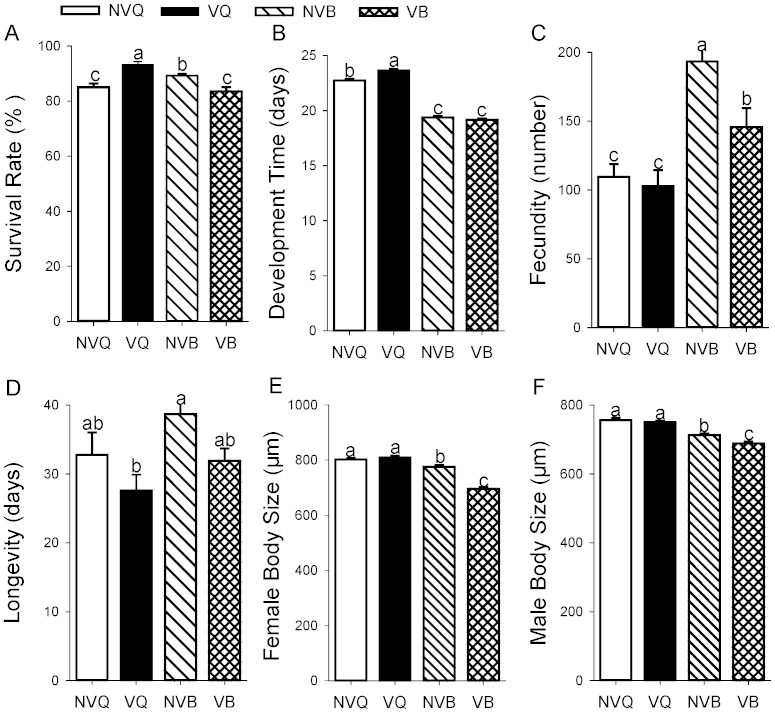
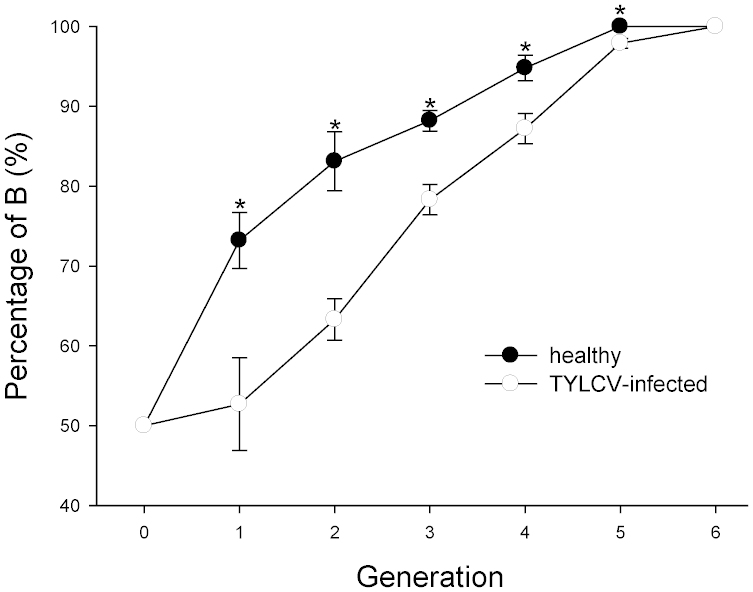
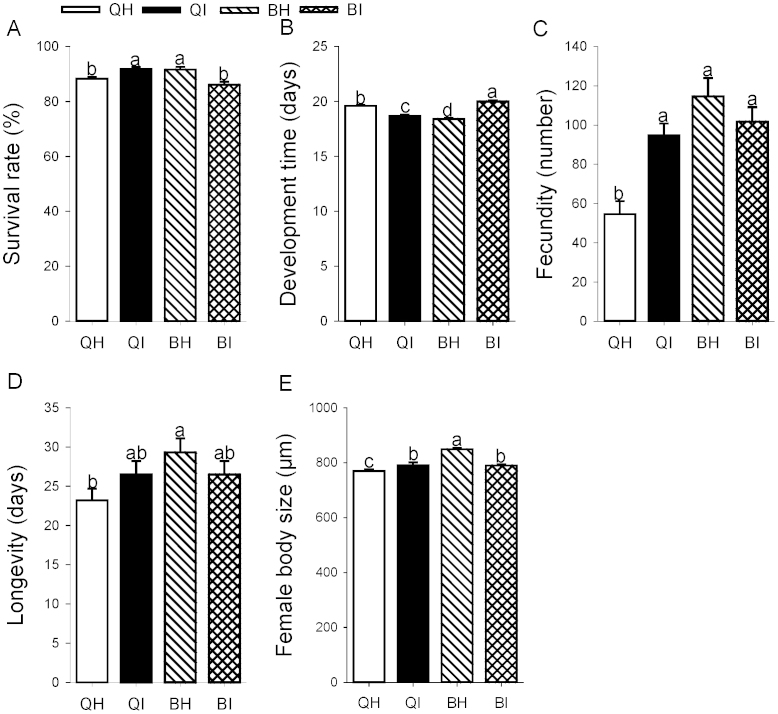
Concurrent spread of Tomato yellow leaf curl virus (TYLCV) with invasion of Bemisia tabaci Q rather than B in China suggests a more mutualistic relationship between TYLCV and Q than B. To assess this hypothesis, we quantified the impacts of TYLCV on the performance and competitiveness of B and Q in the laboratory. The results showed that relative to their non-infected counterparts feeding on cotton (a non-host for TYLCV), infected B exhibited significant reductions in life-history traits, whereas infected Q only showed marginal reductions. While Q performed better on TYLCV-infected tomato plants than on uninfected ones, the reverse was observed in B. Q displacement by B took one more generation on TYLCV-infected tomato plants than on healthy ones. These results demonstrate that TYLCV was indirectly mutualistic to Q but directly and indirectly parasitic to B.
伴随烟粉虱 Q 型而非 B 型在中国的入侵,番茄黄曲叶病毒(TYLCV)呈同时扩散趋势,这表明 TYLCV 与 Q 型相比与 B 型可能具有更互利的关系。为了评估这一假设,我们在实验室中量化了 TYLCV 对 B 和 Q 型在性能和竞争力方面的影响。结果表明,与吸食棉花(TYLCV 的非宿主)的未感染个体相比,感染 TYLCV 的 B 型个体的生活史特征显著降低,而感染 Q 型个体仅表现出轻微降低。虽然 Q 型在感染 TYLCV 的番茄植株上的表现优于未感染的植株,但 B 型则相反。在感染 TYLCV 的番茄植株上,B 型取代 Q 型需要多一代的时间,而在健康植株上则不需要。这些结果表明,TYLCV 对 Q 型是间接互利的,但对 B 型是直接和间接寄生的。