Faculty of Arts and Sciences Center for Systems Biology, Harvard University, Cambridge, MA 02138, USA.
Science. 2013 Jul 19;341(6143):295-8. doi: 10.1126/science.1235872.
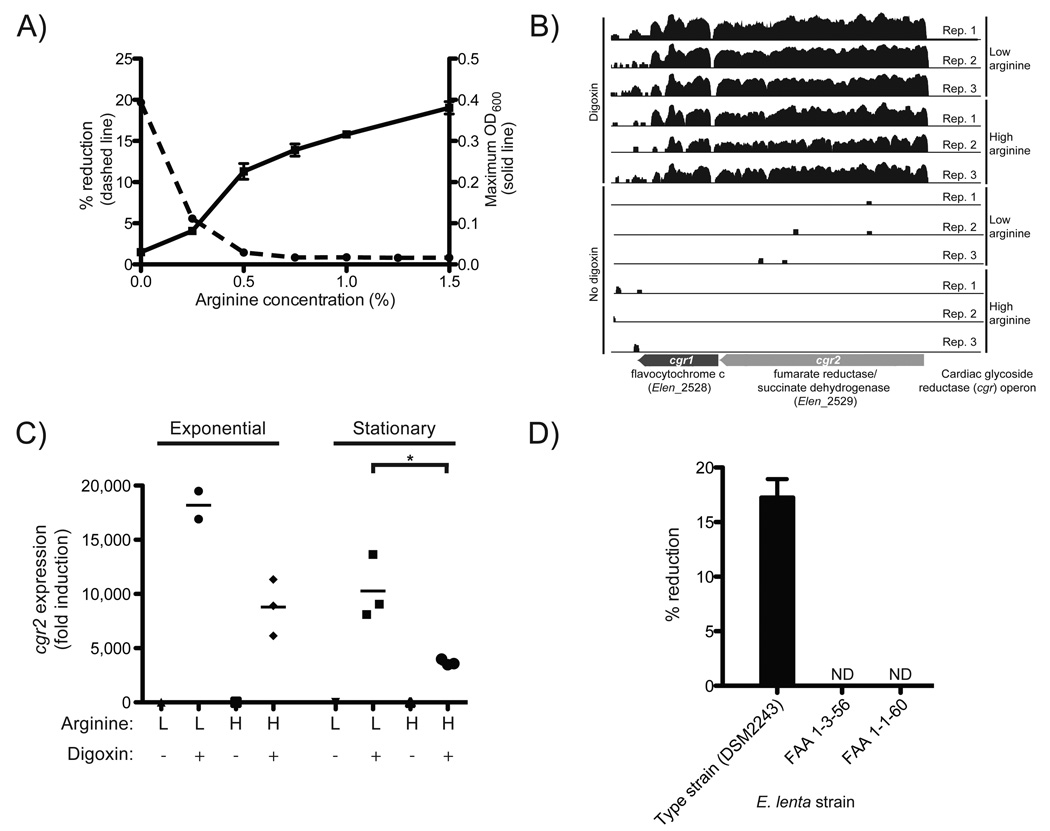
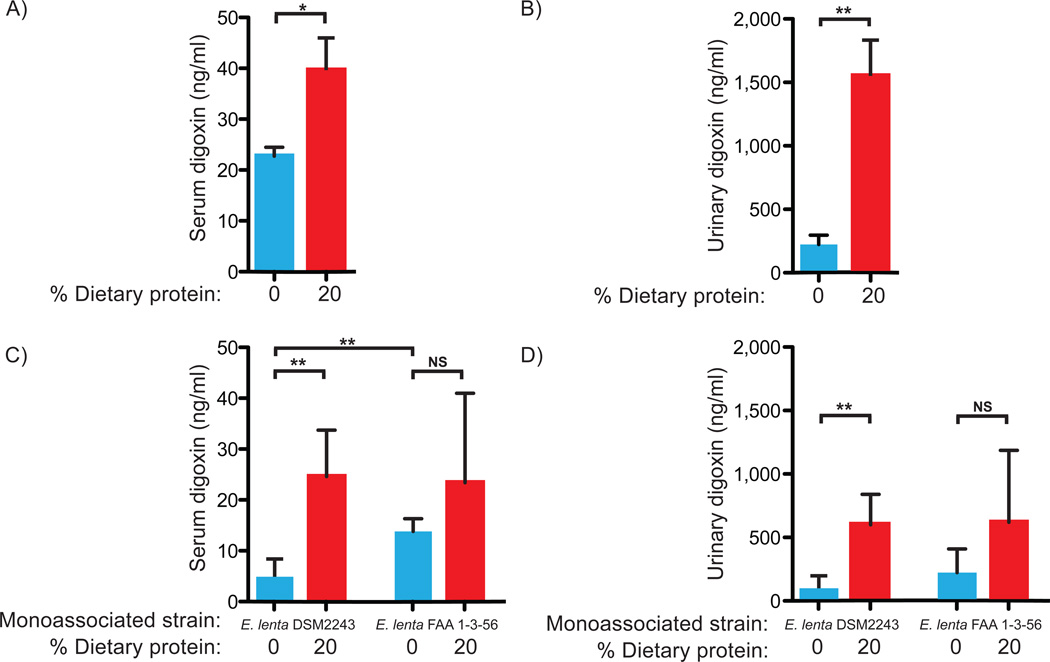
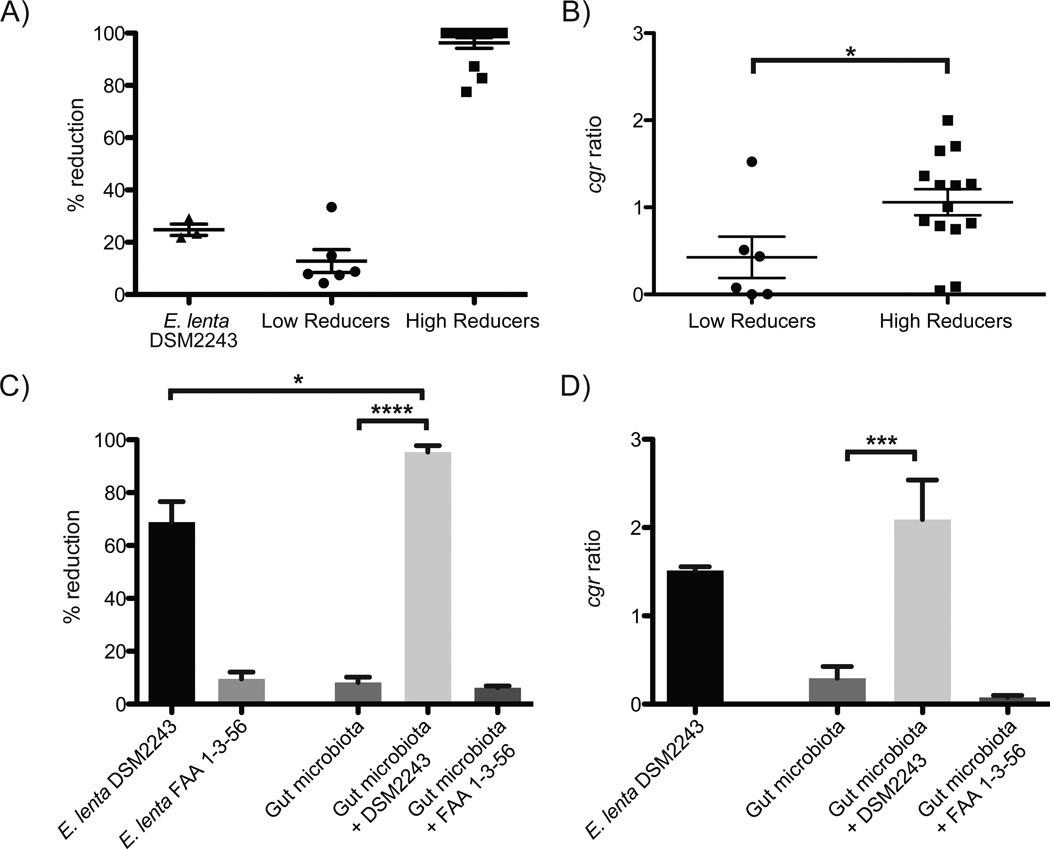
Despite numerous examples of the effects of the human gastrointestinal microbiome on drug efficacy and toxicity, there is often an incomplete understanding of the underlying mechanisms. Here, we dissect the inactivation of the cardiac drug digoxin by the gut Actinobacterium Eggerthella lenta. Transcriptional profiling, comparative genomics, and culture-based assays revealed a cytochrome-encoding operon up-regulated by digoxin, inhibited by arginine, absent in nonmetabolizing E. lenta strains, and predictive of digoxin inactivation by the human gut microbiome. Pharmacokinetic studies using gnotobiotic mice revealed that dietary protein reduces the in vivo microbial metabolism of digoxin, with significant changes to drug concentration in the serum and urine. These results emphasize the importance of viewing pharmacology from the perspective of both our human and microbial genomes.
尽管有许多人类胃肠道微生物组对药物疗效和毒性影响的例子,但人们对潜在机制往往缺乏完整的认识。在这里,我们剖析了肠道放线菌迟缓埃格特菌对心脏药物地高辛的灭活作用。转录谱分析、比较基因组学和基于培养的测定揭示了一个受地高辛上调、受精氨酸抑制、在非代谢迟缓埃格特菌菌株中缺失、且可预测人类肠道微生物组对地高辛失活作用的细胞色素编码操纵子。使用无菌小鼠的药代动力学研究表明,饮食蛋白减少了地高辛在体内的微生物代谢,导致血清和尿液中药物浓度显著变化。这些结果强调了从人类和微生物基因组两个角度来看待药理学的重要性。