Napolitano José G, Gödecke Tanja, Lankin David C, Jaki Birgit U, McAlpine James B, Chen Shao-Nong, Pauli Guido F
Department of Medicinal Chemistry and Pharmacognosy, College of Pharmacy, University of Illinois at Chicago, Chicago, IL 60612, United States of America.
Department of Medicinal Chemistry and Pharmacognosy, College of Pharmacy, University of Illinois at Chicago, Chicago, IL 60612, United States of America.
J Pharm Biomed Anal. 2014 May;93:59-67. doi: 10.1016/j.jpba.2013.06.017. Epub 2013 Jun 21.
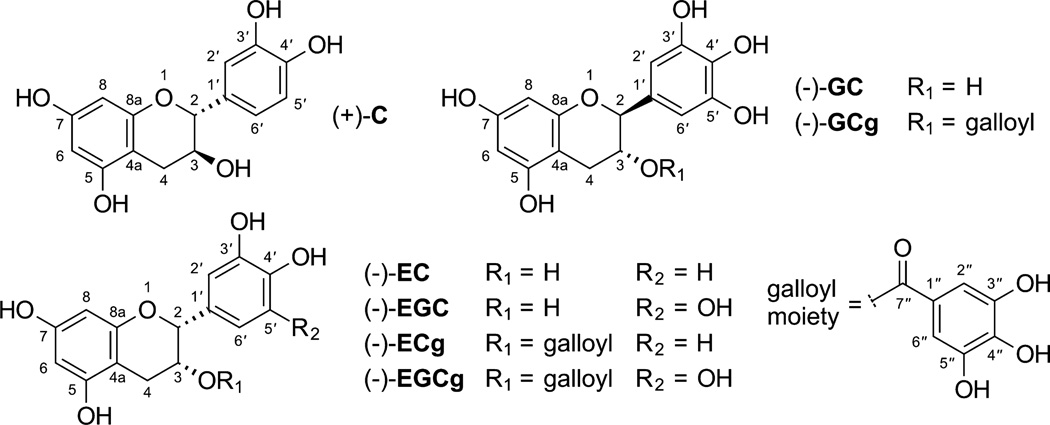
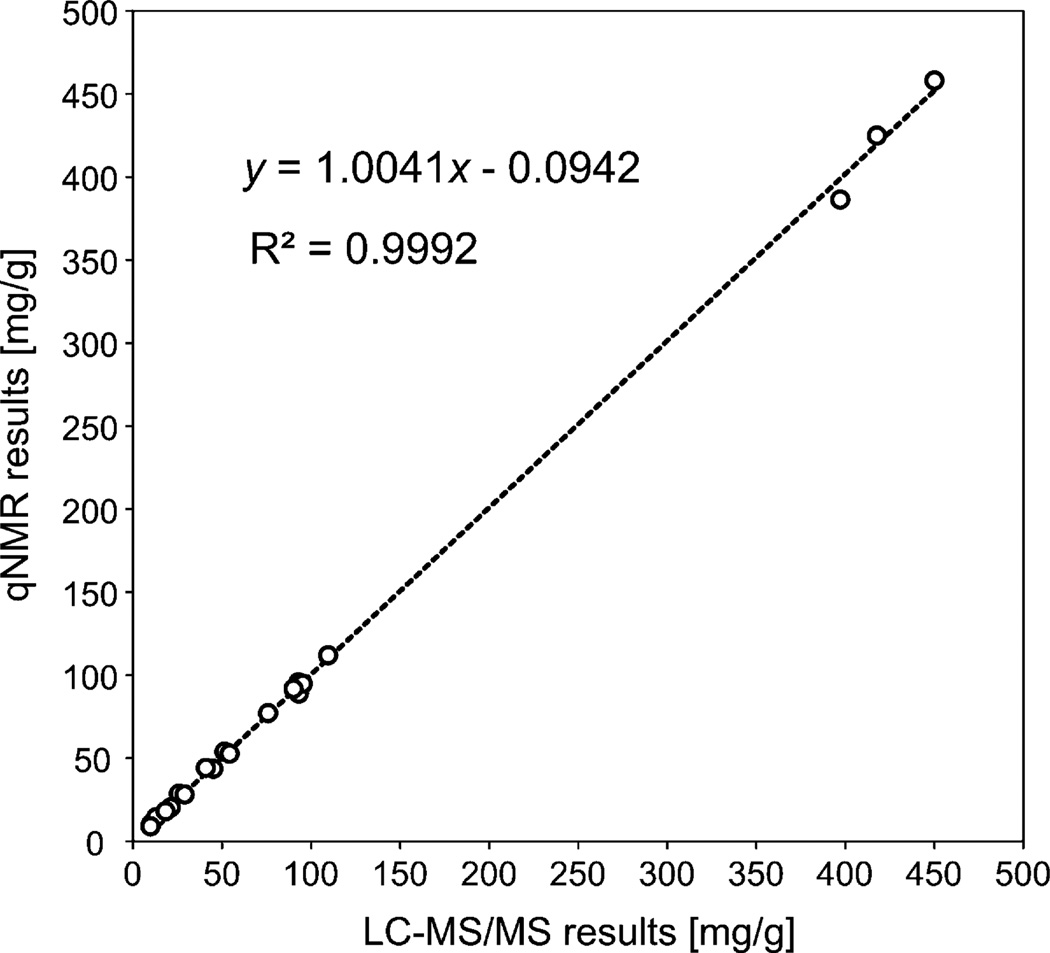
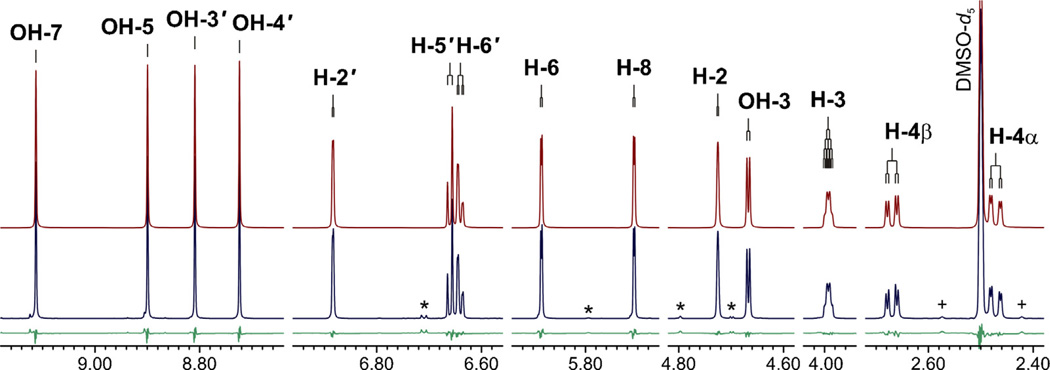
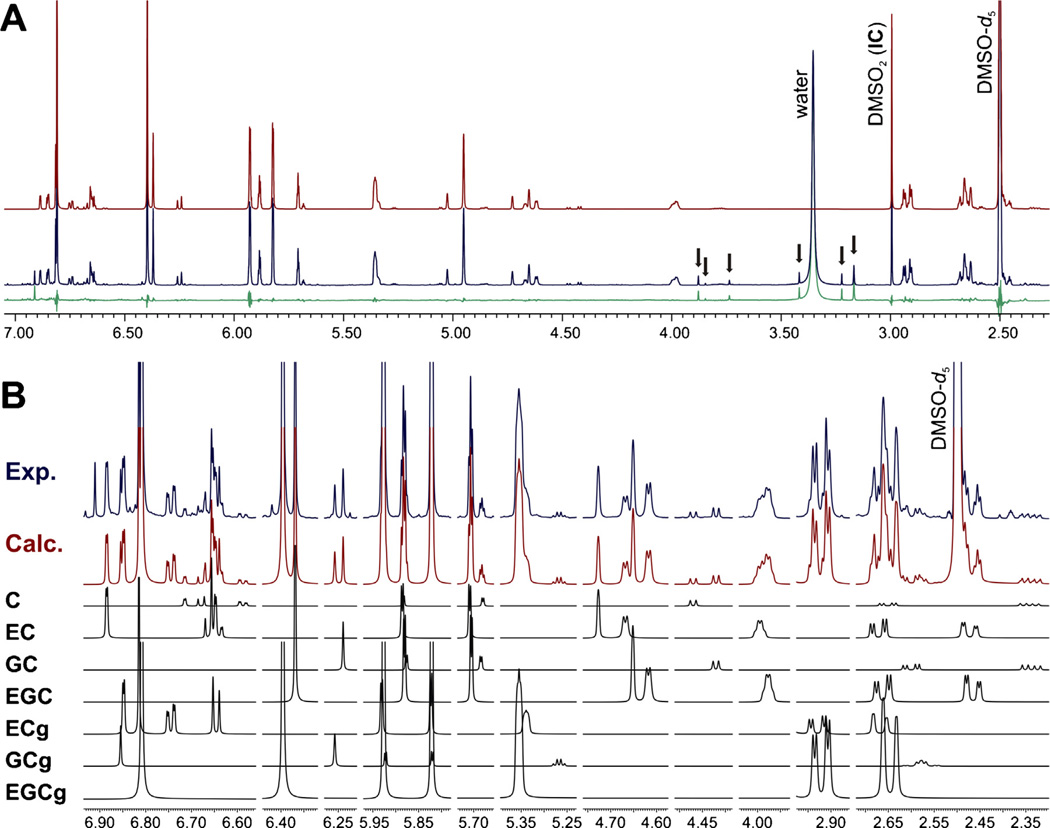
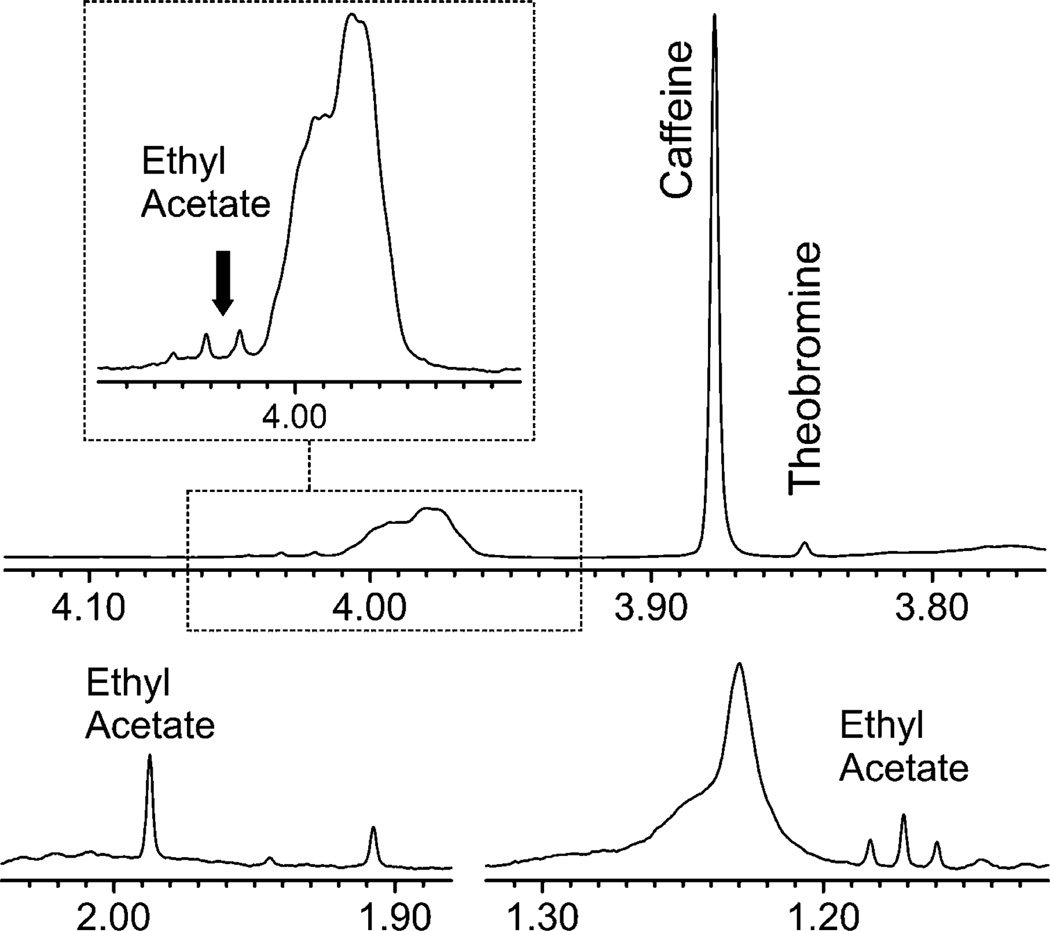
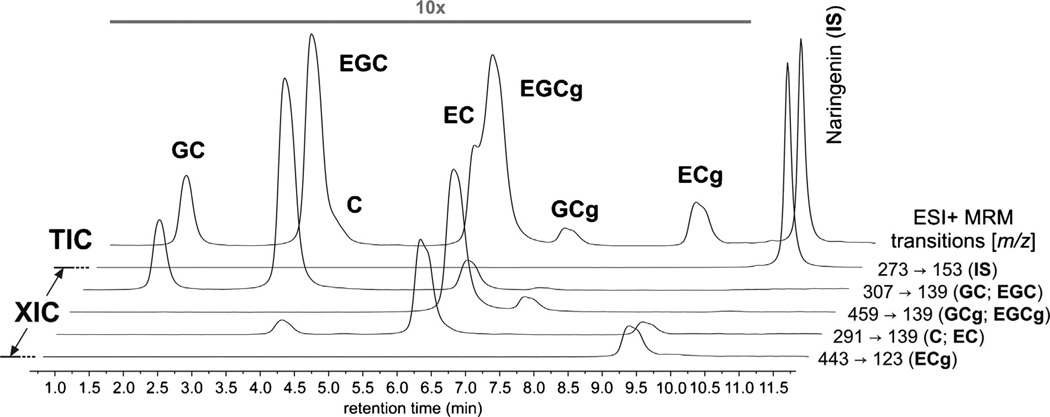
The development of analytical methods for parallel characterization of multiple phytoconstituents is essential to advance the quality control of herbal products. While chemical standardization is commonly carried out by targeted analysis using gas or liquid chromatography-based methods, more universal approaches based on quantitative (1)H NMR (qHNMR) measurements are being used increasingly in the multi-targeted assessment of these complex mixtures. The present study describes the development of a 1D qHNMR-based method for simultaneous identification and quantification of green tea constituents. This approach utilizes computer-assisted (1)H iterative Full Spin Analysis (HiFSA) and enables rapid profiling of seven catechins in commercial green tea extracts. The qHNMR results were cross-validated against quantitative profiles obtained with an orthogonal LC-MS/MS method. The relative strengths and weaknesses of both approaches are discussed, with special emphasis on the role of identical reference standards in qualitative and quantitative analyses.
开发用于多种植物成分平行表征的分析方法对于推进草药产品的质量控制至关重要。虽然化学标准化通常通过基于气相或液相色谱的靶向分析来进行,但基于定量氢核磁共振(qHNMR)测量的更通用方法在这些复杂混合物的多靶点评估中越来越多地被使用。本研究描述了一种基于一维qHNMR的方法的开发,用于同时鉴定和定量绿茶成分。该方法利用计算机辅助的氢迭代全自旋分析(HiFSA),能够快速分析商业绿茶提取物中的七种儿茶素。qHNMR结果与用正交液相色谱-串联质谱法获得的定量图谱进行了交叉验证。讨论了两种方法的相对优缺点,特别强调了相同参考标准在定性和定量分析中的作用。