Department of Human and Molecular Genetics, Virginia Commonwealth University School of Medicine, Richmond, Virginia, USA.
Adv Cancer Res. 2013;119:421-75. doi: 10.1016/B978-0-12-407190-2.00007-1.
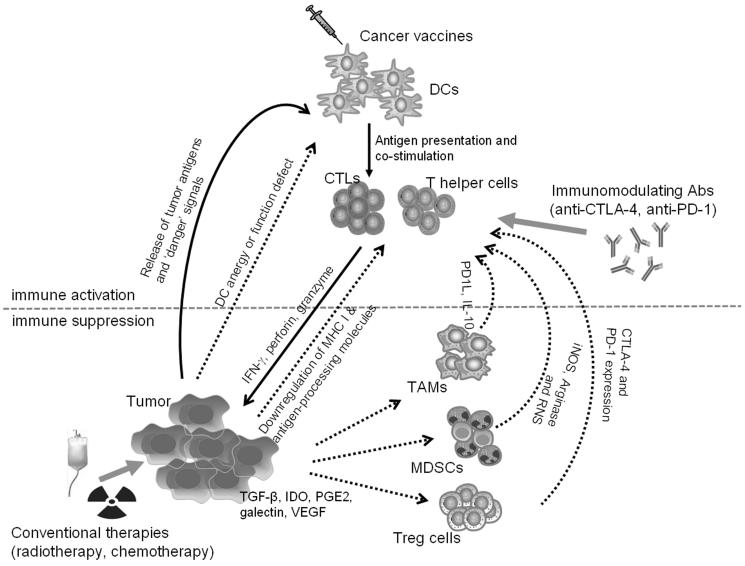
Therapeutic vaccines represent a viable option for active immunotherapy of cancers that aim to treat late stage disease by using a patient's own immune system. The promising results from clinical trials recently led to the approval of the first therapeutic cancer vaccine by the U.S. Food and Drug Administration. This major breakthrough not only provides a new treatment modality for cancer management but also paves the way for rationally designing and optimizing future vaccines with improved anticancer efficacy. Numerous vaccine strategies are currently being evaluated both preclinically and clinically. This review discusses therapeutic cancer vaccines from diverse platforms or targets as well as the preclinical and clinical studies employing these therapeutic vaccines. We also consider tumor-induced immune suppression that hinders the potency of therapeutic vaccines, and potential strategies to counteract these mechanisms for generating more robust and durable antitumor immune responses.
治疗性疫苗是一种可行的选择,可用于针对癌症的主动免疫疗法,其目的是利用患者自身的免疫系统来治疗晚期疾病。最近临床试验的有前景结果导致美国食品和药物管理局批准了首个治疗性癌症疫苗。这一重大突破不仅为癌症管理提供了一种新的治疗模式,也为合理设计和优化未来具有更高抗癌疗效的疫苗铺平了道路。目前正在临床前和临床层面评估许多疫苗策略。本综述讨论了来自不同平台或靶点的治疗性癌症疫苗,以及使用这些治疗性疫苗的临床前和临床研究。我们还考虑了肿瘤诱导的免疫抑制,它会削弱治疗性疫苗的效力,以及用于产生更强大和持久的抗肿瘤免疫反应的潜在策略。