Department of Biochemistry, McGill University, Montreal, Quebec, Canada.
Blood Cancer J. 2013 Jul 19;3(7):e128. doi: 10.1038/bcj.2013.25.
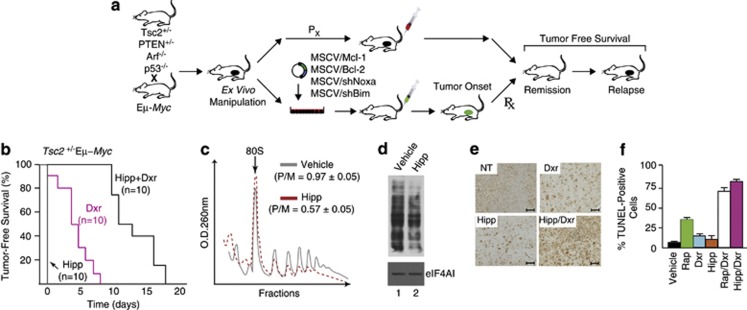
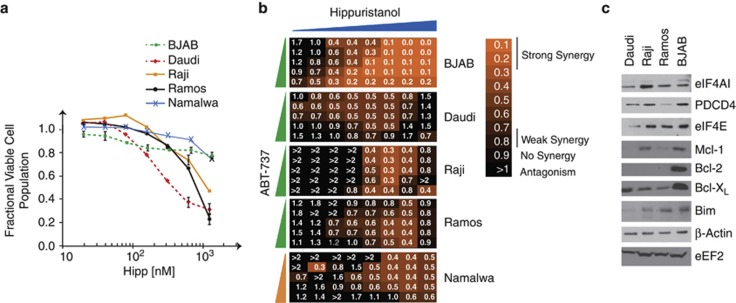
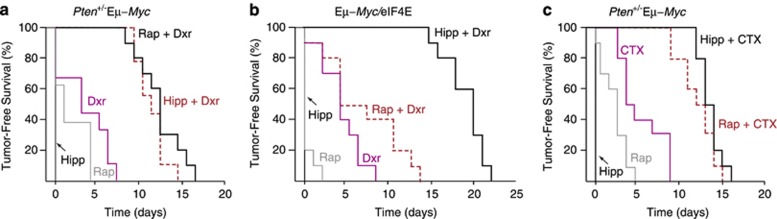
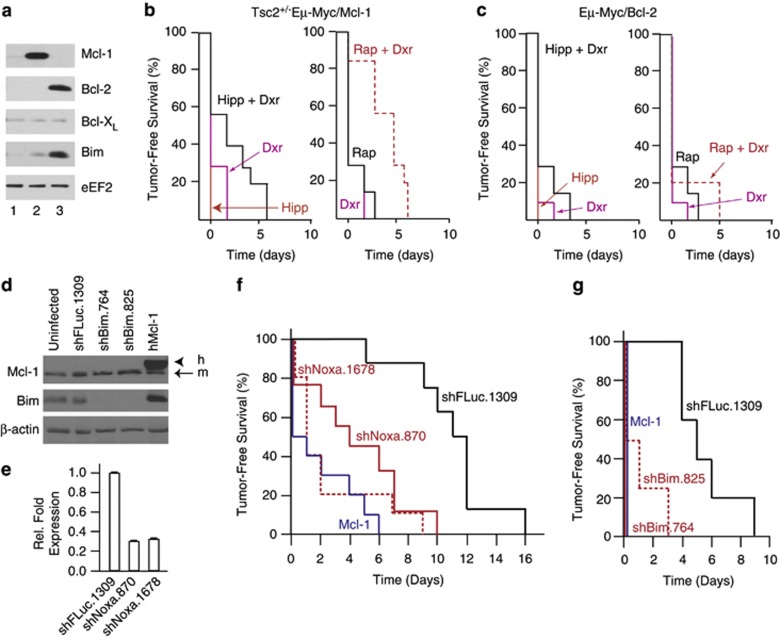
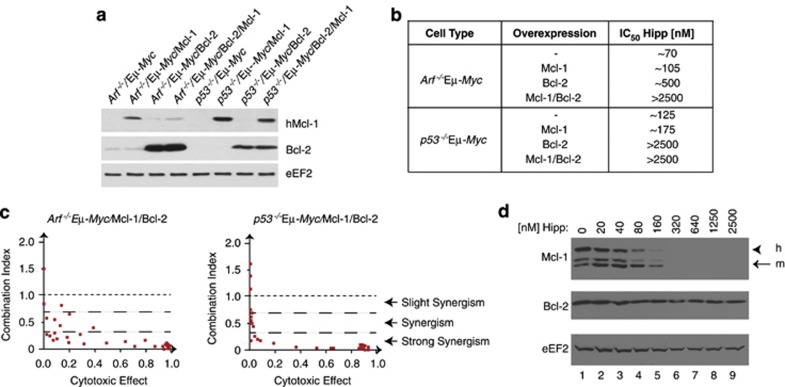
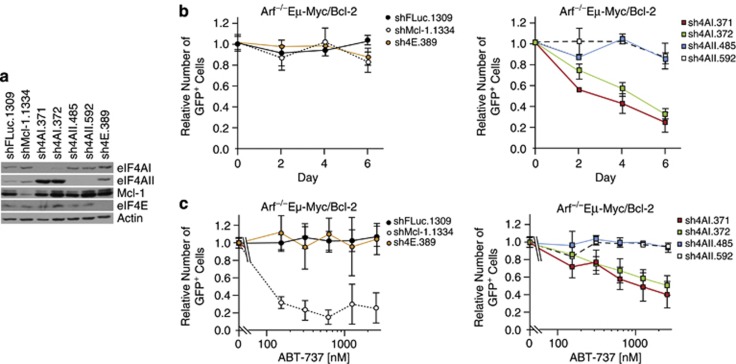
Translation is regulated predominantly at the initiation phase by several signal transduction pathways that are often usurped in human cancers, including the PI3K/Akt/mTOR axis. mTOR exerts unique administration over translation by regulating assembly of eukaryotic initiation factor (eIF) 4F, a heterotrimeric complex responsible for recruiting 40S ribosomes (and associated factors) to mRNA 5' cap structures. Hence, there is much interest in targeted therapies that block eIF4F activity to assess the consequences on tumor cell growth and chemotherapy response. We report here that hippuristanol (Hipp), a translation initiation inhibitor that selectively inhibits the eIF4F RNA helicase subunit, eIF4A, resensitizes Eμ-Myc lymphomas to DNA damaging agents, including those that overexpress eIF4E-a modifier of rapamycin responsiveness. As Mcl-1 levels are significantly affected by Hipp, combining its use with the Bcl-2 family inhibitor, ABT-737, leads to a potent synergistic response in triggering cell death in mouse and human lymphoma and leukemia cells. Suppression of eIF4AI using RNA interference also synergized with ABT-737 in murine lymphomas, highlighting eIF4AI as a therapeutic target for modulating tumor cell response to chemotherapy.
翻译主要在起始阶段受到几个信号转导通路的调控,这些通路在人类癌症中经常被劫持,包括 PI3K/Akt/mTOR 轴。mTOR 通过调节真核起始因子 (eIF) 4F 的组装来对翻译进行独特的管理,eIF 4F 是一种异源三聚体复合物,负责将 40S 核糖体(和相关因子)募集到 mRNA 5'帽结构上。因此,人们对靶向治疗方法非常感兴趣,这些方法可以阻断 eIF4F 活性,以评估其对肿瘤细胞生长和化疗反应的影响。我们在这里报告, hippuristanol(Hipp)是一种翻译起始抑制剂,它选择性地抑制 eIF4F RNA 解旋酶亚基 eIF4A,使 Eμ-Myc 淋巴瘤对 DNA 损伤剂重新敏感,包括那些过度表达 rapamycin 反应性调节剂 eIF4E-a 的剂。由于 Hipp 显著影响 Mcl-1 水平,因此将其与 Bcl-2 家族抑制剂 ABT-737 联合使用,可在触发小鼠和人类淋巴瘤和白血病细胞死亡方面产生强大的协同反应。使用 RNA 干扰抑制 eIF4AI 也与 ABT-737 在小鼠淋巴瘤中协同作用,突出了 eIF4AI 作为调节肿瘤细胞对化疗反应的治疗靶标。