Department of Pathology, University Medical Center Utrecht, Utrecht, The Netherlands.
1] Department of Pathology, University Medical Center Utrecht, Utrecht, The Netherlands [2] Division of Internal Medicine and Dermatology, University Medical Center Utrecht, Utrecht, The Netherlands.
Oncogene. 2013 Dec 12;32(50):5582-92. doi: 10.1038/onc.2013.277. Epub 2013 Jul 22.
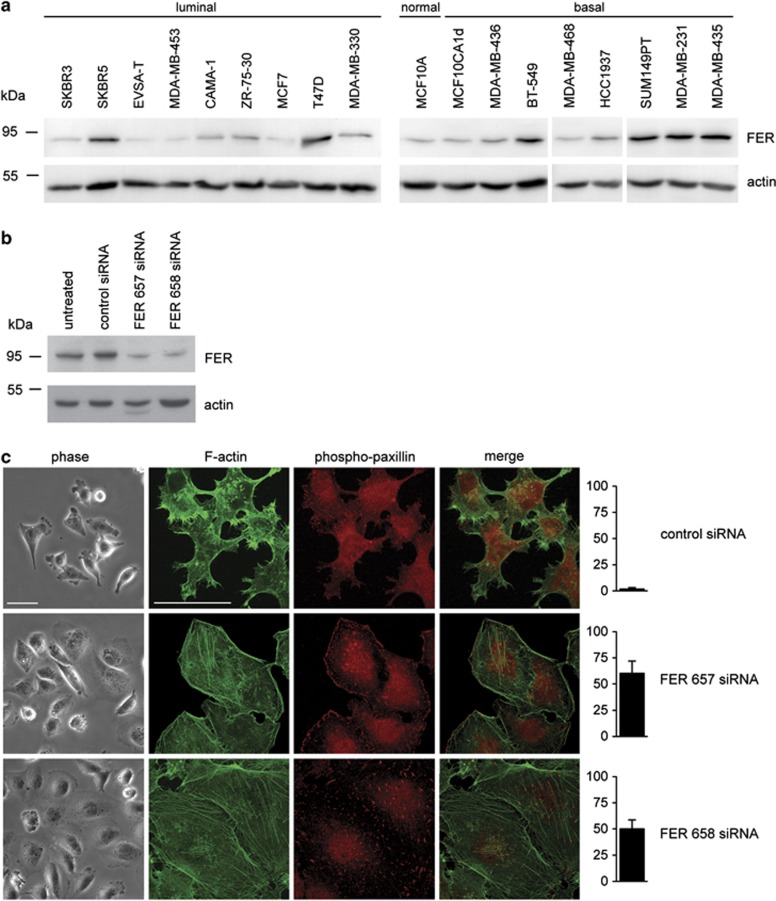
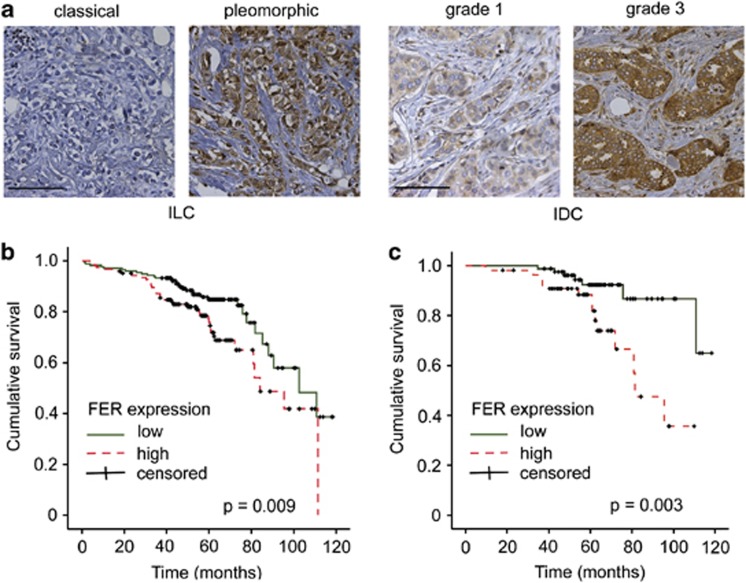
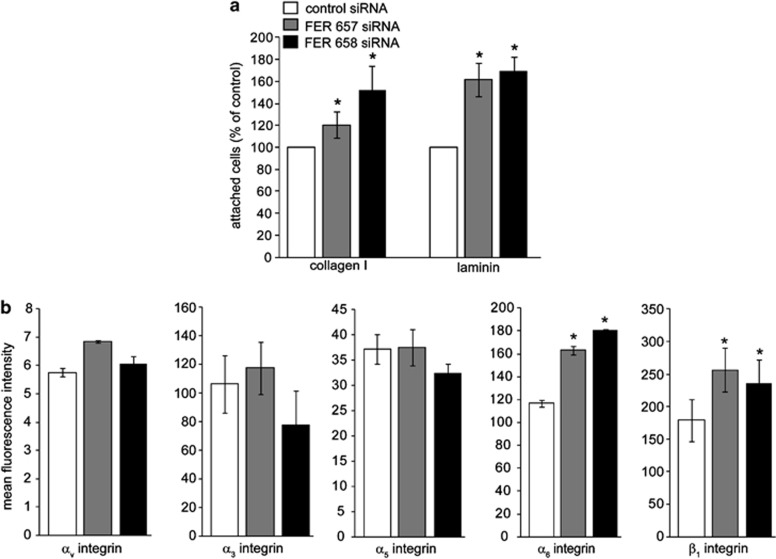
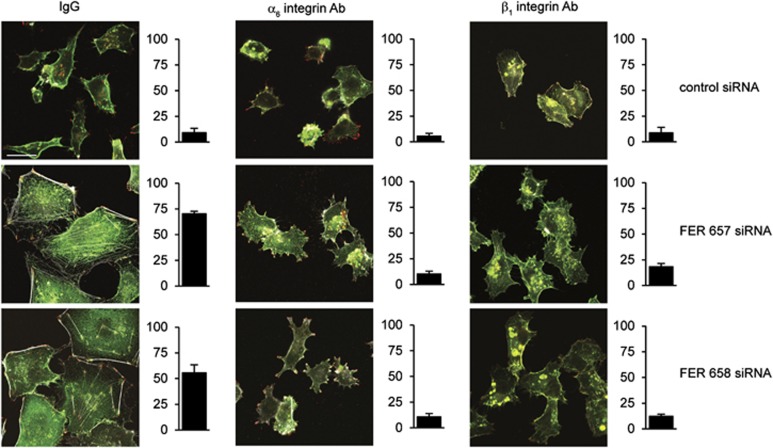
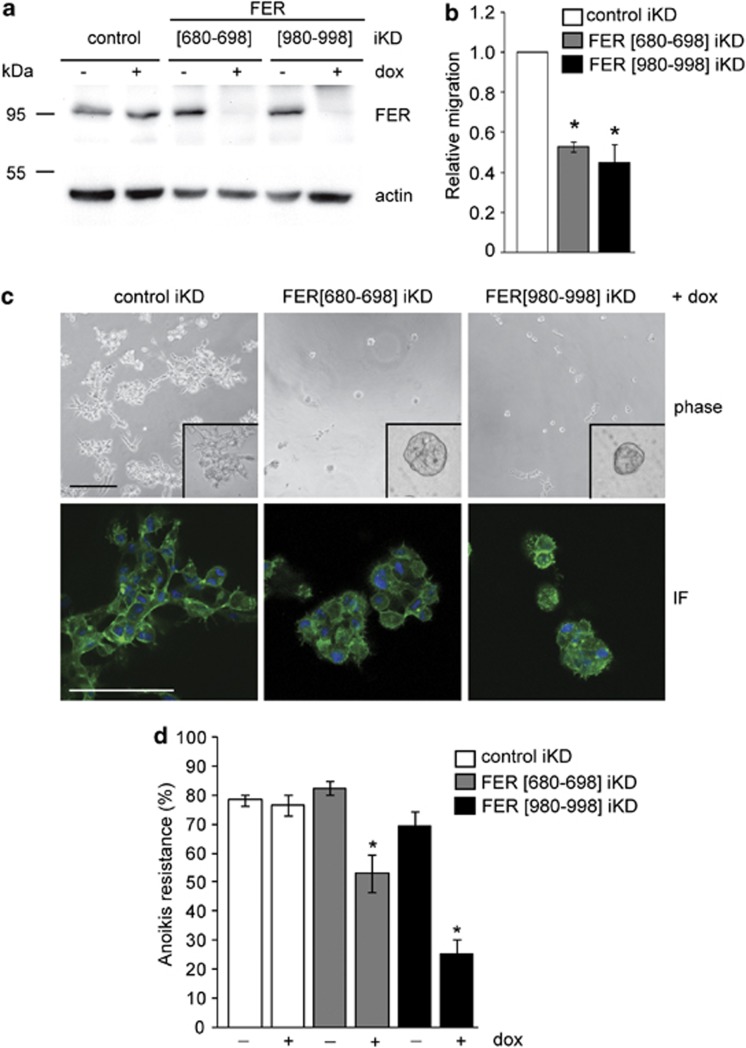
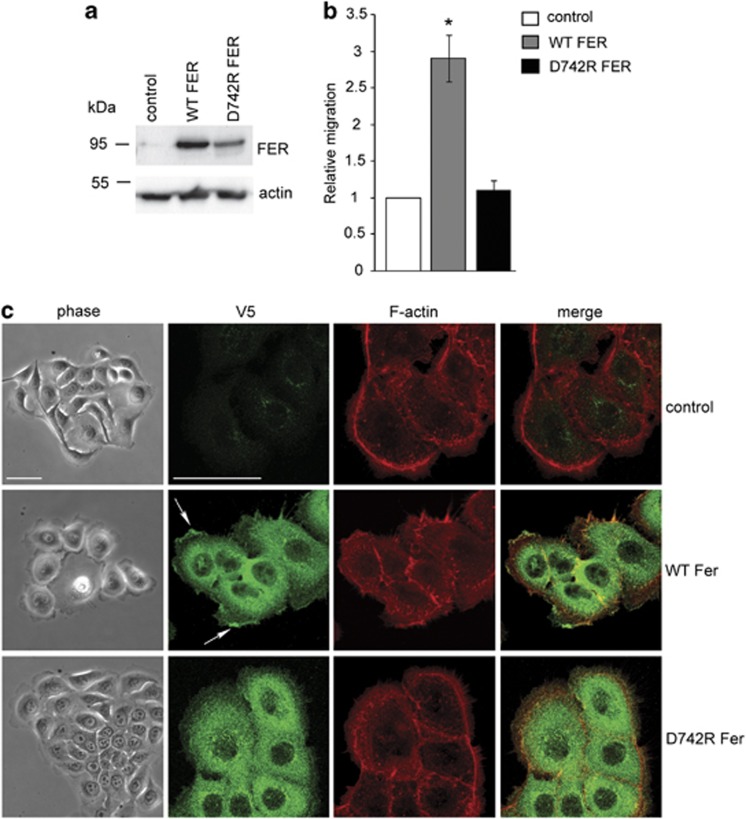
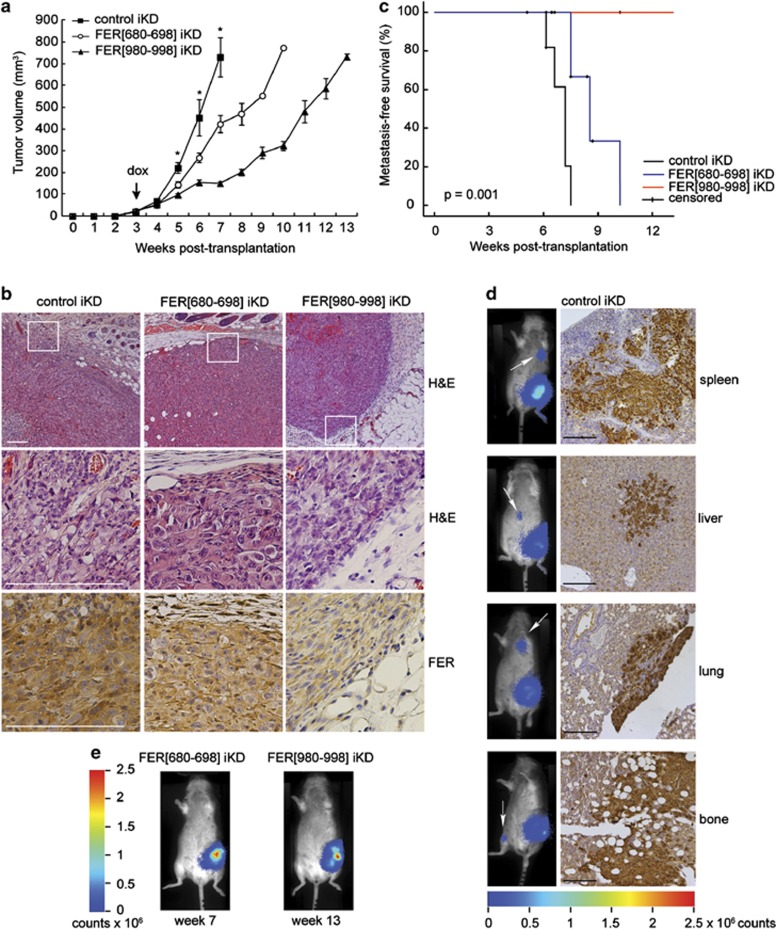
Metastatic breast cancer cannot be treated successfully. Currently, the targeted therapies for metastatic disease are limited to human epidermal growth factor receptor 2 and hormone receptor antagonists. Understanding the mechanisms of breast cancer growth and metastasis is therefore crucial for the development of new intervention strategies. Here, we show that FER kinase (FER) controls migration and metastasis of invasive human breast cancer cell lines by regulating α6- and β1-integrin-dependent adhesion. Conversely, the overexpression of FER in non-metastatic breast cancer cells induces pro-invasive features. FER drives anoikis resistance, regulates tumour growth and is necessary for metastasis in a mouse model of human breast cancer. In human invasive breast cancer, high FER expression is an independent prognostic factor that correlates with high-grade basal/triple-negative tumours and worse overall survival, especially in lymph node-negative patients. These findings establish FER as a promising target for the prevention and inhibition of metastatic breast cancer.
转移性乳腺癌无法成功治疗。目前,转移性疾病的靶向治疗仅限于人表皮生长因子受体 2 和激素受体拮抗剂。因此,了解乳腺癌生长和转移的机制对于开发新的干预策略至关重要。在这里,我们表明 FER 激酶 (FER) 通过调节 α6 和 β1 整联蛋白依赖性黏附来控制侵袭性人乳腺癌细胞系的迁移和转移。相反,在非转移性乳腺癌细胞中过表达 FER 会诱导促侵袭特征。FER 驱动无锚定生存,调节肿瘤生长,并且在人类乳腺癌的小鼠模型中是转移所必需的。在人类侵袭性乳腺癌中,高 FER 表达是一个独立的预后因素,与高级别基底/三阴性肿瘤相关,并且总体生存率较差,尤其是在淋巴结阴性的患者中。这些发现确立了 FER 作为预防和抑制转移性乳腺癌的有前途的靶标。