Genome Research Center, Department of Biochemistry, College of Life Science and Biotechnology, Yonsei University, Seoul, Republic of Korea.
PLoS Pathog. 2013;9(7):e1003478. doi: 10.1371/journal.ppat.1003478. Epub 2013 Jul 18.
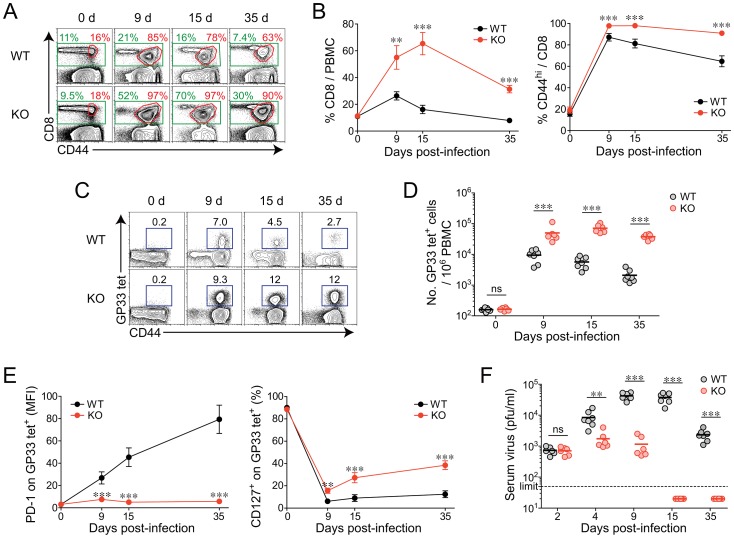
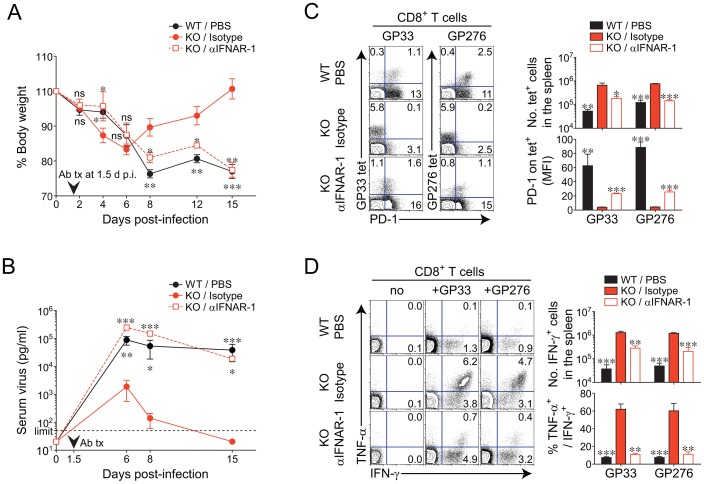
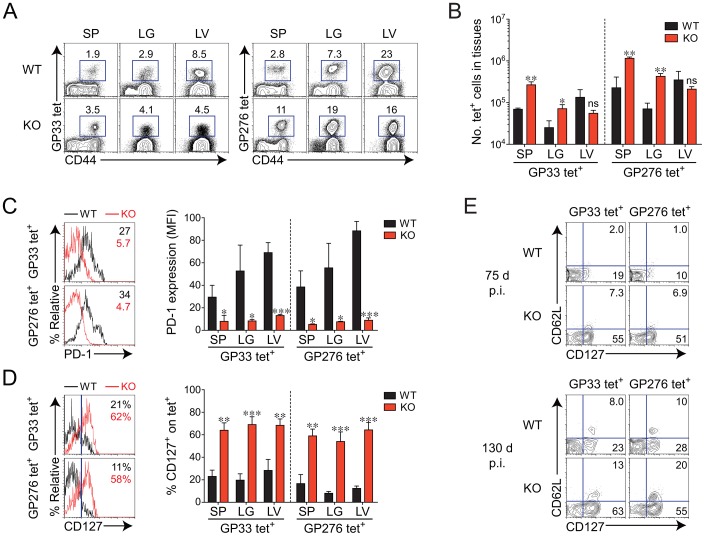
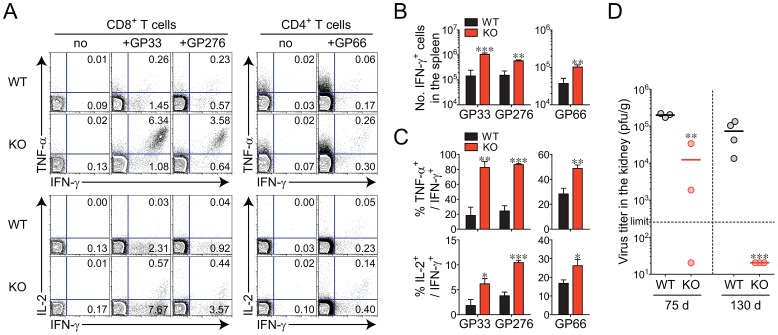
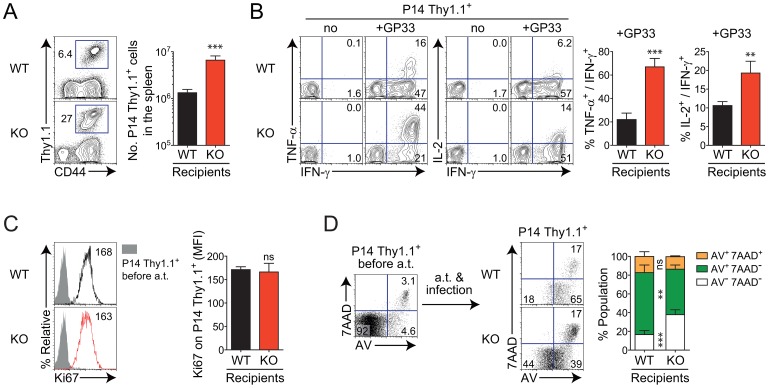
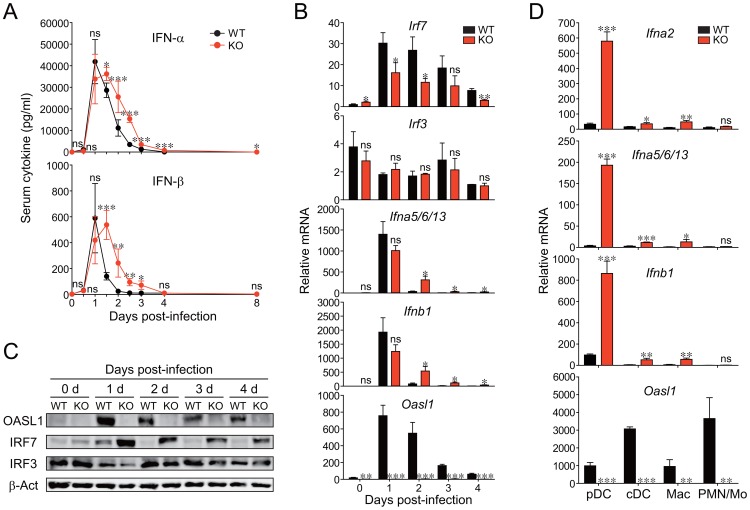
The type I interferons (IFN-Is) are critical not only in early viral control but also in prolonged T-cell immune responses. However, chronic viral infections such as those of human immunodeficiency virus (HIV) and hepatitis C virus (HCV) in humans and lymphocytic choriomeningitis virus (LCMV) in mice overcome this early IFN-I barrier and induce viral persistence and exhaustion of T-cell function. Although various T-cell-intrinsic and -extrinsic factors are known to contribute to induction of chronic conditions, the roles of IFN-I negative regulators in chronic viral infections have been largely unexplored. Herein, we explored whether 2'-5' oligoadenylate synthetase-like 1 (OASL1), a recently defined IFN-I negative regulator, plays a key role in the virus-specific T-cell response and viral defense against chronic LCMV. To this end, we infected Oasl1 knockout and wild-type mice with LCMV CL-13 (a chronic virus) and monitored T-cell responses, serum cytokine levels, and viral titers. LCMV CL-13-infected Oasl1 KO mice displayed a sustained level of serum IFN-I, which was primarily produced by splenic plasmacytoid dendritic cells, during the very early phase of infection (2-3 days post-infection). Oasl1 deficiency also led to the accelerated elimination of viremia and induction of a functional antiviral CD8 T-cell response, which critically depended on IFN-I receptor signaling. Together, these results demonstrate that OASL1-mediated negative regulation of IFN-I production at an early phase of infection permits viral persistence and suppresses T-cell function, suggesting that IFN-I negative regulators, including OASL1, could be exciting new targets for preventing chronic viral infection.
I 型干扰素 (IFN-Is) 不仅在早期病毒控制中至关重要,而且在延长的 T 细胞免疫反应中也至关重要。然而,慢性病毒感染,如人类免疫缺陷病毒 (HIV) 和丙型肝炎病毒 (HCV) 的人类感染和淋巴细胞性脉络丛脑膜炎病毒 (LCMV) 的小鼠感染,克服了这种早期 IFN-I 障碍,并诱导病毒持续存在和 T 细胞功能衰竭。尽管已知各种 T 细胞内在和外在因素有助于诱导慢性疾病,但 IFN-I 负调节剂在慢性病毒感染中的作用在很大程度上尚未得到探索。在此,我们探讨了 2'-5'寡聚腺苷酸合成酶样 1 (OASL1),一种新定义的 IFN-I 负调节剂,是否在病毒特异性 T 细胞反应和针对慢性 LCMV 的病毒防御中发挥关键作用。为此,我们用 LCMV CL-13(慢性病毒)感染 Oasl1 敲除和野生型小鼠,并监测 T 细胞反应、血清细胞因子水平和病毒滴度。在感染后的前 2-3 天,感染 LCMV CL-13 的 Oasl1 KO 小鼠的血清 IFN-I 水平持续升高,主要由脾浆细胞样树突状细胞产生。Oasl1 缺陷也导致病毒血症的迅速消除和功能性抗病毒 CD8 T 细胞反应的诱导,这严重依赖于 IFN-I 受体信号。总之,这些结果表明,OASL1 在感染早期对 IFN-I 产生的负调节允许病毒持续存在并抑制 T 细胞功能,这表明 IFN-I 负调节剂,包括 OASL1,可能是预防慢性病毒感染的令人兴奋的新靶点。