Lineberger Comprehensive Cancer Center, Program in Global Oncology, Department of Microbiology and Immunology, University of North Carolina at Chapel Hill, Chapel Hill, North Carolina, United States of America.
PLoS Pathog. 2013;9(7):e1003484. doi: 10.1371/journal.ppat.1003484. Epub 2013 Jul 18.
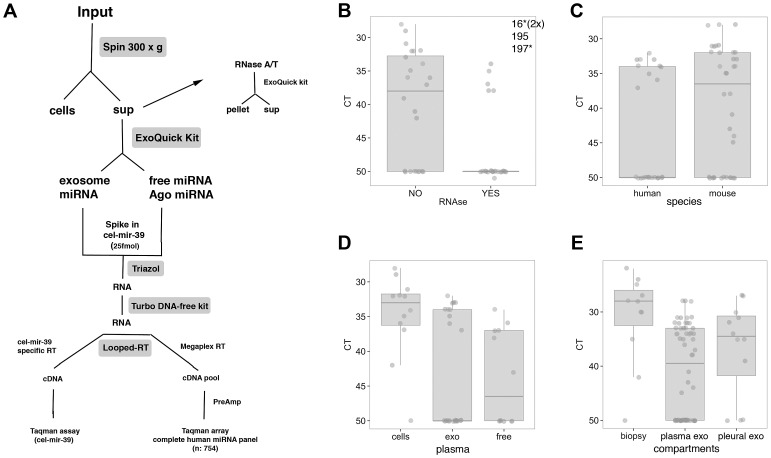
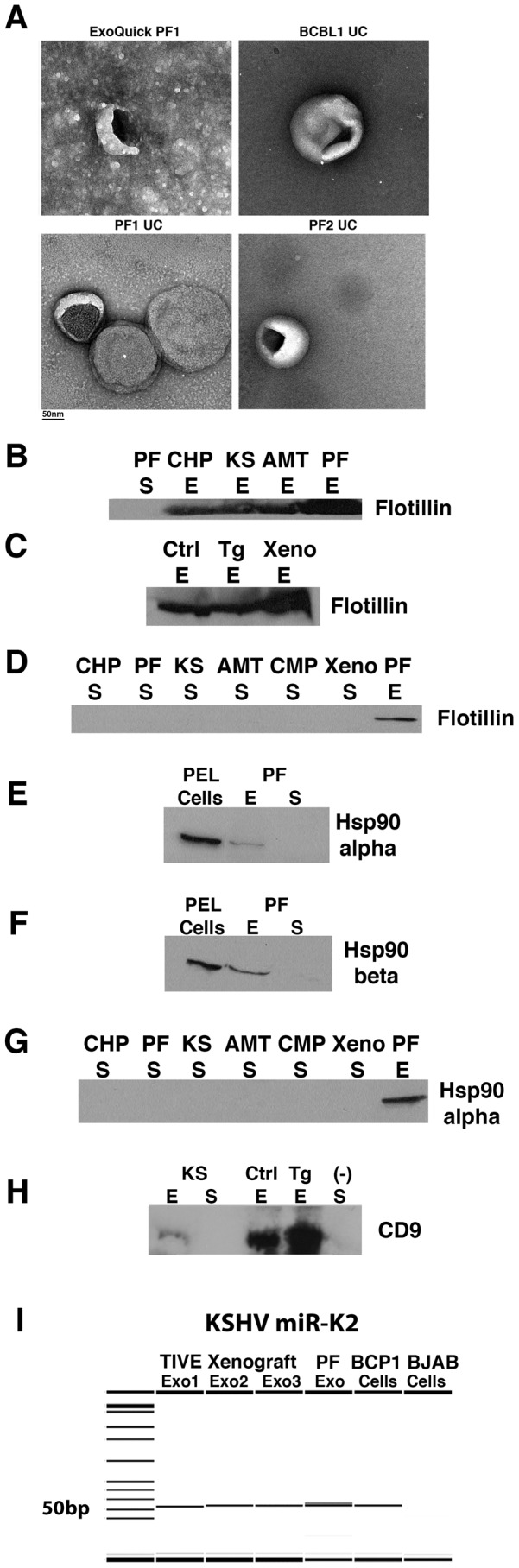
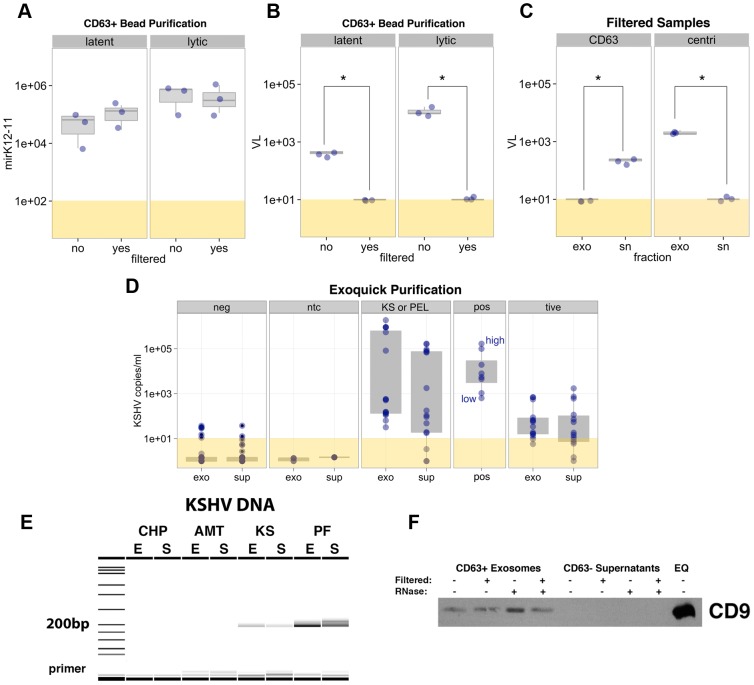
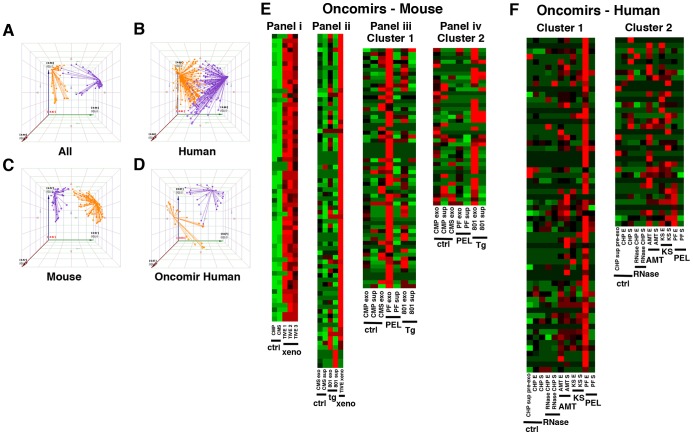
MicroRNAs (miRNAs) are stable, small non-coding RNAs that modulate many downstream target genes. Recently, circulating miRNAs have been detected in various body fluids and within exosomes, prompting their evaluation as candidate biomarkers of diseases, especially cancer. Kaposi's sarcoma (KS) is the most common AIDS-associated cancer and remains prevalent despite Highly Active Anti-Retroviral Therapy (HAART). KS is caused by KS-associated herpesvirus (KSHV), a gamma herpesvirus also associated with Primary Effusion Lymphoma (PEL). We sought to determine the host and viral circulating miRNAs in plasma, pleural fluid or serum from patients with the KSHV-associated malignancies KS and PEL and from two mouse models of KS. Both KSHV-encoded miRNAs and host miRNAs, including members of the miR-17-92 cluster, were detectable within patient exosomes and circulating miRNA profiles from KSHV mouse models. Further characterization revealed a subset of miRNAs that seemed to be preferentially incorporated into exosomes. Gene ontology analysis of signature exosomal miRNA targets revealed several signaling pathways that are known to be important in KSHV pathogenesis. Functional analysis of endothelial cells exposed to patient-derived exosomes demonstrated enhanced cell migration and IL-6 secretion. This suggests that exosomes derived from KSHV-associated malignancies are functional and contain a distinct subset of miRNAs. These could represent candidate biomarkers of disease and may contribute to the paracrine phenotypes that are a characteristic of KS.
微小 RNA(miRNAs)是稳定的、小的非编码 RNA,可调节许多下游靶基因。最近,在各种体液和外泌体中检测到循环 miRNAs,促使它们被评估为疾病,尤其是癌症的候选生物标志物。卡波济肉瘤(KS)是最常见的艾滋病相关癌症,尽管采用高效抗逆转录病毒疗法(HAART),其仍然普遍存在。KS 是由卡波济肉瘤相关疱疹病毒(KSHV)引起的,一种与原发性渗出性淋巴瘤(PEL)相关的γ疱疹病毒。我们试图确定与 KSHV 相关的恶性肿瘤 KS 和 PEL 患者以及两种 KS 小鼠模型的血浆、胸腔积液或血清中的宿主和病毒循环 miRNAs。在患者的外泌体和 KSHV 小鼠模型的循环 miRNA 图谱中都可以检测到 KSHV 编码的 miRNAs 和宿主 miRNAs,包括 miR-17-92 簇的成员。进一步的表征揭示了似乎优先纳入外泌体的一组 miRNAs。特征性外泌体 miRNA 靶标基因本体分析揭示了几个已知在 KSHV 发病机制中重要的信号通路。暴露于患者来源的外泌体的内皮细胞的功能分析表明细胞迁移和 IL-6 分泌增强。这表明源自 KSHV 相关恶性肿瘤的外泌体是功能性的,并且包含独特的 miRNA 子集。这些可能代表疾病的候选生物标志物,并可能有助于 KS 的旁分泌表型。