Department of Animal, Dairy and Veterinary Sciences, Institute for Antiviral Research, Utah State University, Logan, Utah, United States of America.
PLoS One. 2013 Jul 9;8(7):e68685. doi: 10.1371/journal.pone.0068685. Print 2013.
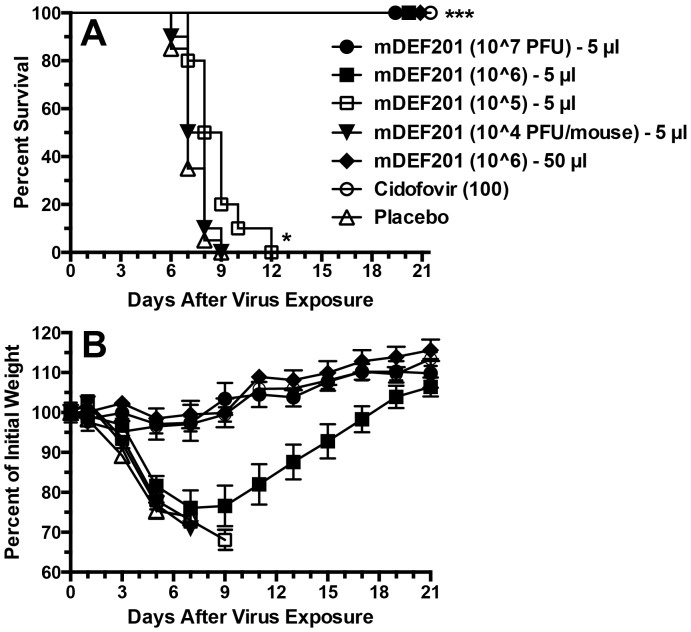
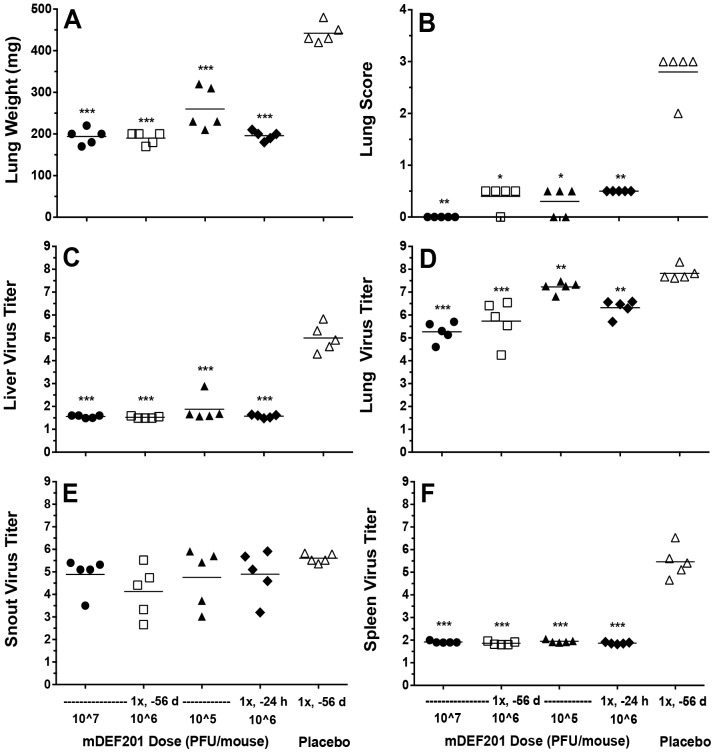
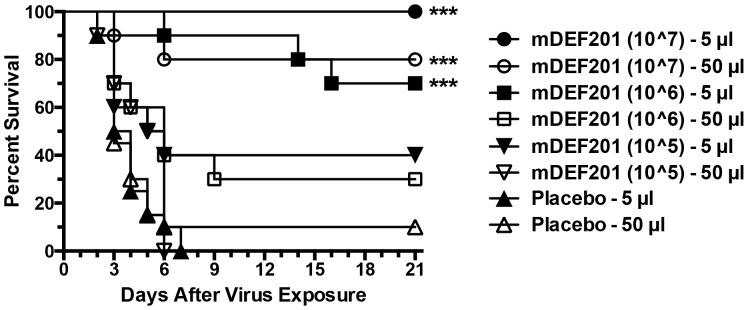
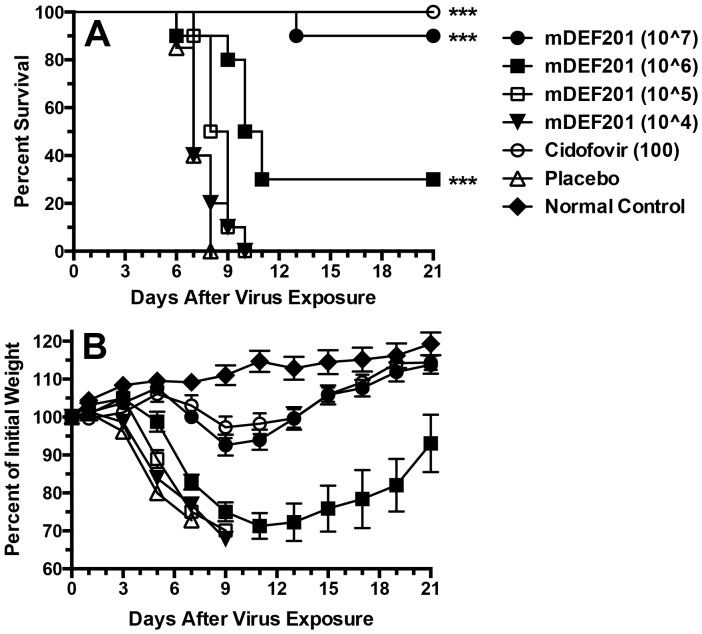
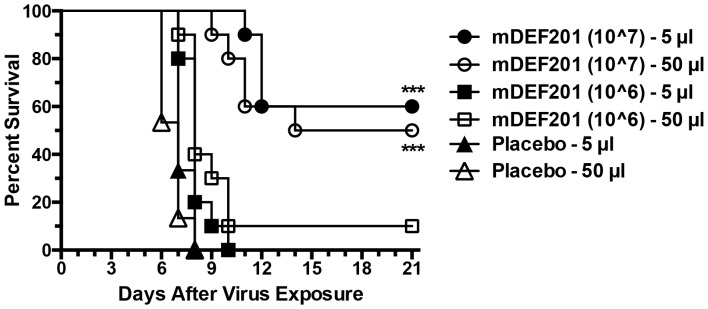
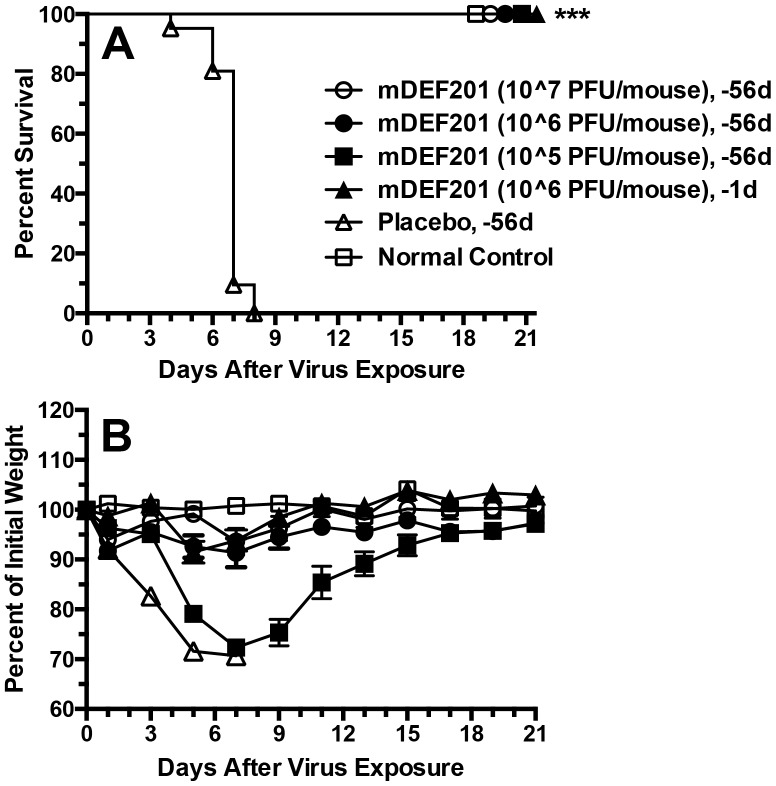
An adenovirus 5 vector encoding for mouse interferon alpha, subtype 5 (mDEF201) was evaluated for efficacy against lethal cowpox (Brighton strain) and vaccinia (WR strain) virus respiratory and systemic infections in mice. Two routes of mDEF201 administration were used, nasal sinus (5-µl) and pulmonary (50-µl), to compare differences in efficacy, since the preferred treatment of humans would be in a relatively small volume delivered intranasally. Lower respiratory infections (LRI), upper respiratory infections (URI), and systemic infections were induced by 50-µl intranasal, 10-µl intranasal, and 100-µl intraperitoneal virus challenges, respectively. mDEF201 treatments were given prophylactically either 24 h (short term) or 56d (long-term) prior to virus challenge. Single nasal sinus treatments of 10(6) and 10(7) PFU/mouse of mDEF201 protected all mice from vaccinia-induced LRI mortality (comparable to published studies with pulmonary delivered mDEF201). Systemic vaccinia infections responded significantly better to nasal sinus delivered mDEF201 than to pulmonary treatments. Cowpox LRI infections responded to 10(7) mDEF201 treatments, but a 10(6) dose was only weakly protective. Cowpox URI infections were equally treatable by nasal sinus and pulmonary delivered mDEF201 at 10(7) PFU/mouse. Dose-responsive prophylaxis with mDEF201, given one time only 56 d prior to initiating a vaccinia virus LRI infection, was 100% protective from 10(5) to 10(7) PFU/mouse. Improvements in lung hemorrhage score and lung weight were evident, as were decreases in liver, lung, and spleen virus titers. Thus, mDEF201 was able to treat different vaccinia and cowpox virus infections using both nasal sinus and pulmonary treatment regimens, supporting its development for humans.
一种编码小鼠干扰素 alpha,亚型 5(mDEF201)的腺病毒 5 载体,用于评估其对致死性牛痘(布赖顿株)和天花(WR 株)病毒呼吸道和全身感染的疗效。使用了两种 mDEF201 给药途径,鼻窦(5-μl)和肺(50-μl),以比较疗效差异,因为人类的首选治疗方法是在较小的体积内经鼻内给药。通过 50-μl 经鼻内、10-μl 经鼻内和 100-μl 腹腔内病毒挑战分别诱导下呼吸道感染(LRI)、上呼吸道感染(URI)和全身感染。mDEF201 治疗分别在病毒攻击前 24 小时(短期)或 56 天(长期)进行预防性给药。单次鼻窦治疗 10(6)和 10(7)PFU/只 mDEF201 可使所有小鼠免受天花诱导的 LRI 死亡率的影响(与已发表的肺内给予 mDEF201 的研究相当)。系统接种牛痘病毒感染对鼻窦给予的 mDEF201 的反应明显优于肺内治疗。牛痘 LRI 感染对 10(7)mDEF201 治疗有反应,但 10(6)剂量仅具有弱保护作用。牛痘 URI 感染对鼻窦和肺内给予的 10(7)PFU/只 mDEF201 同样可治疗。仅一次给药,在开始接种牛痘病毒 LRI 感染前 56 天给予 mDEF201 的剂量反应性预防,对 10(5)至 10(7)PFU/只的保护率为 100%。肺部出血评分和肺重的改善是明显的,肝、肺和脾病毒滴度也降低。因此,mDEF201 能够使用鼻窦和肺内治疗方案治疗不同的天花和牛痘病毒感染,支持其用于人类。