School of Immunity and Infection, University of Birmingham, Birmingham B15 2TT, UK; MRC-Arthritis Research UK Centre for Musculoskeletal Ageing Research, University of Birmingham, Birmingham B15 2TT, UK.
Brain Behav Immun. 2013 Oct;33:173-82. doi: 10.1016/j.bbi.2013.07.004. Epub 2013 Jul 20.
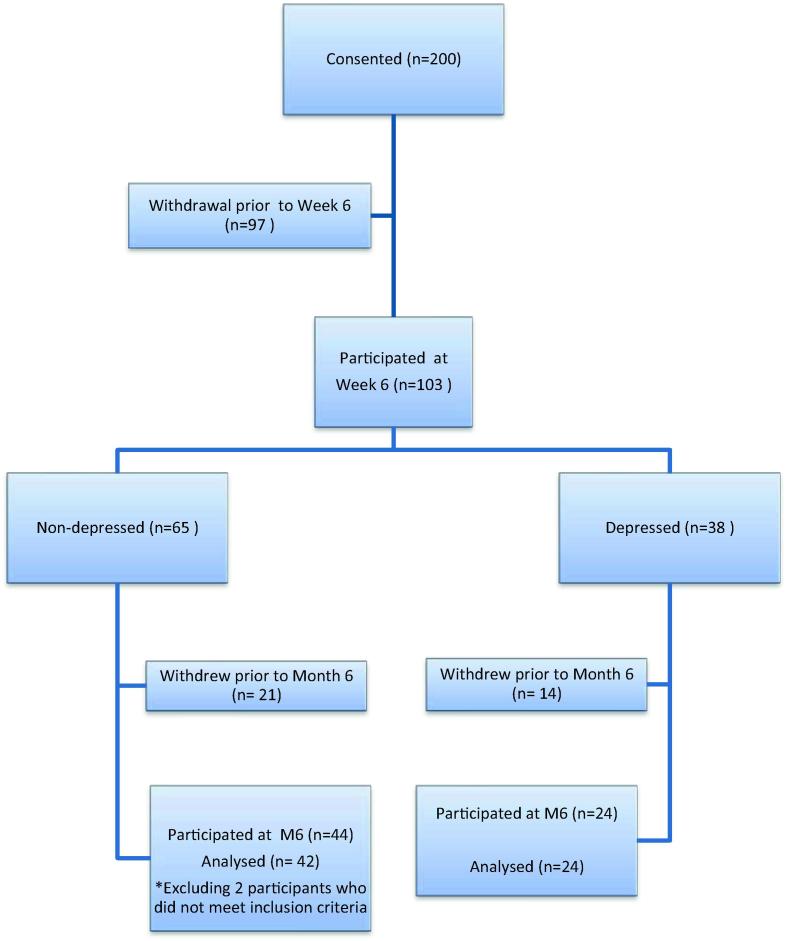
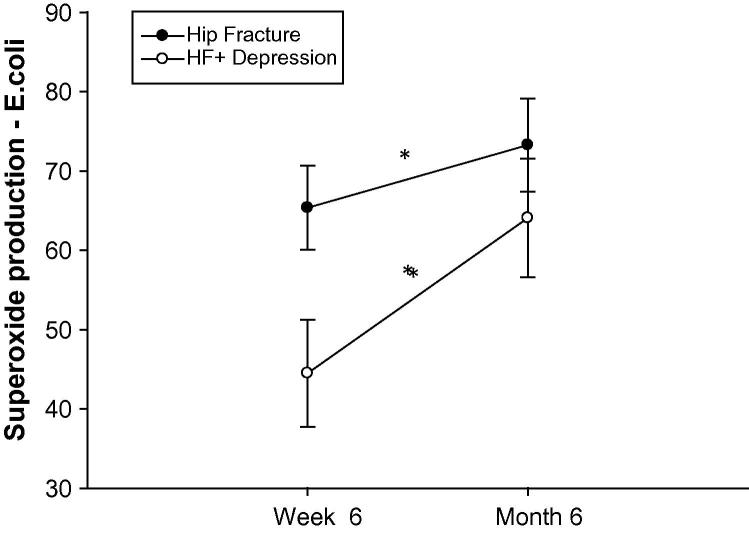
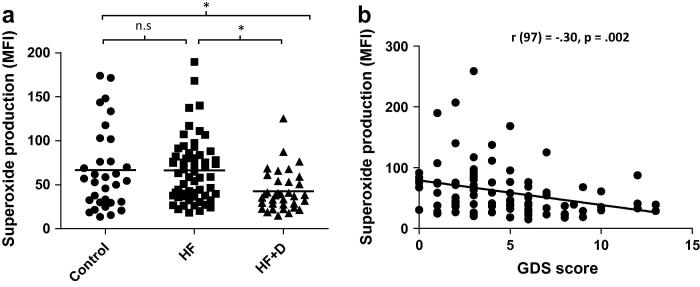
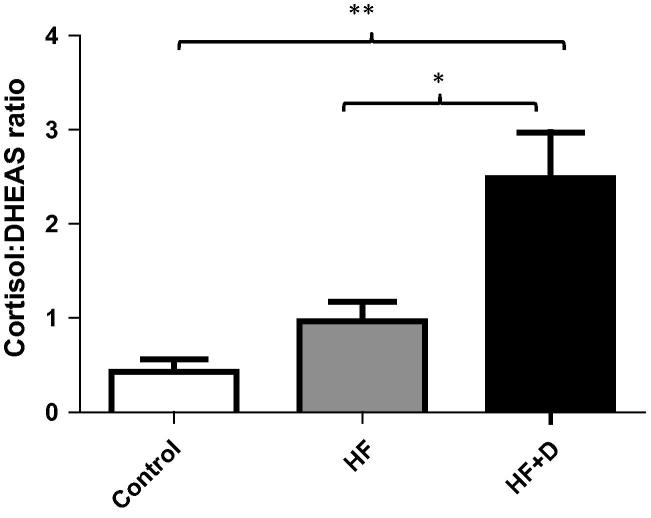
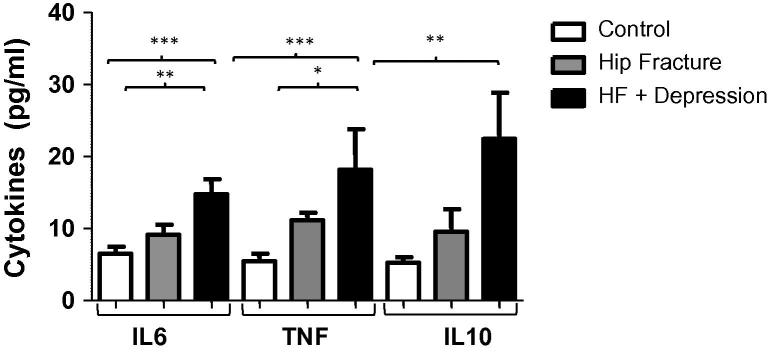
Hip fracture is a common trauma in older adults with a high incidence of depression, which relates to poorer prognosis including increased risk of infection. Ageing is accompanied by reduced immunity, termed immunesenescence, resulting in increased susceptibility to infection. We examined whether physical trauma (hip fracture) and psychological distress (depressive symptoms) had additive effects upon the aged immune system that might contribute to poor outcomes after injury. Neutrophil function was assessed in 101 hip fracture patients (81 female) 6 weeks and 6 months after injury and 43 healthy age-matched controls (28 female). Thirty eight fracture patients had depressive symptoms at 6 weeks. No difference in neutrophil phagocytosis of Escherichia coli was observed between controls and hip fracture patients, but superoxide production was significantly reduced in hip fracture patients with depressive symptoms compared with patients without symptoms (p=.001) or controls (p=.004) at 6 weeks. Superoxide production improved 6 months following fracture to the level seen in controls. We detected elevated serum cortisol, reduced dehydroepiandrosterone sulphate (DHEAS) and an increased cortisol:DHEAS ratio in fracture patients with depressive symptoms compared with patients without depressive symptoms or controls at 6 weeks and 6 months after injury. Serum IL6, TNFα and IL10 were higher among patients with depressive symptoms at 6 weeks. The cortisol:DHEAS ratio and IL6 levels related to depressive symptom scores but not to neutrophil function. In conclusion, depressive symptoms related to poorer neutrophil function after hip fracture, but this was not driven by changes in stress hormone or cytokine levels.
髋部骨折是老年人常见的创伤,其发生率较高,与抑郁有关,这与预后较差有关,包括感染风险增加。随着年龄的增长,免疫力会下降,这被称为免疫衰老,导致更容易感染。我们研究了身体创伤(髋部骨折)和心理困扰(抑郁症状)是否对老年免疫系统有累加效应,从而可能导致受伤后预后不良。我们评估了 101 例髋部骨折患者(81 名女性)在受伤后 6 周和 6 个月时以及 43 名年龄匹配的健康对照组(28 名女性)的中性粒细胞功能。38 例骨折患者在 6 周时有抑郁症状。在 6 周时,与对照组相比,髋部骨折患者的中性粒细胞吞噬大肠杆菌的能力没有差异,但有抑郁症状的髋部骨折患者的超氧化物产生明显低于无症状患者(p=.001)或对照组(p=.004)。6 个月后,超氧化物的产生在骨折后恢复到与对照组相同的水平。我们发现,与无抑郁症状的患者或对照组相比,髋部骨折患者有抑郁症状的患者在受伤后 6 周和 6 个月时血清皮质醇升高,脱氢表雄酮硫酸盐(DHEAS)减少,皮质醇:DHEAS 比值增加。在受伤后 6 周时,有抑郁症状的患者的血清白细胞介素 6(IL6)、肿瘤坏死因子 α(TNFα)和白细胞介素 10(IL10)水平较高。皮质醇:DHEAS 比值和 IL6 水平与抑郁症状评分相关,但与中性粒细胞功能无关。总之,髋部骨折后与抑郁相关的中性粒细胞功能较差,但这不是由应激激素或细胞因子水平的变化引起的。