Departamento de Biología Celular y Patología, IBSAL-Instituto de Neurociencias de Castilla y León, Universidad de Salamanca, Spain.
Neuroscience. 2013 Oct 10;250(100):493-506. doi: 10.1016/j.neuroscience.2013.07.036. Epub 2013 Jul 24.
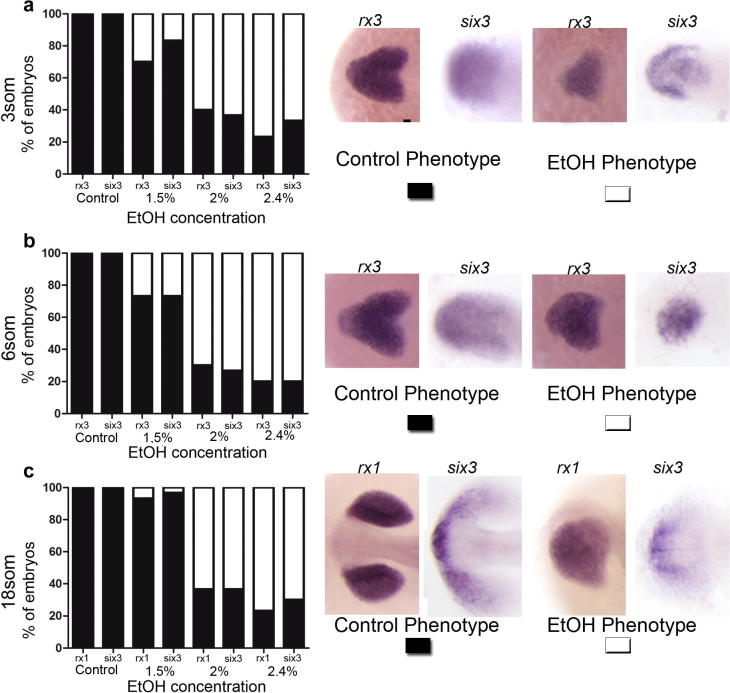
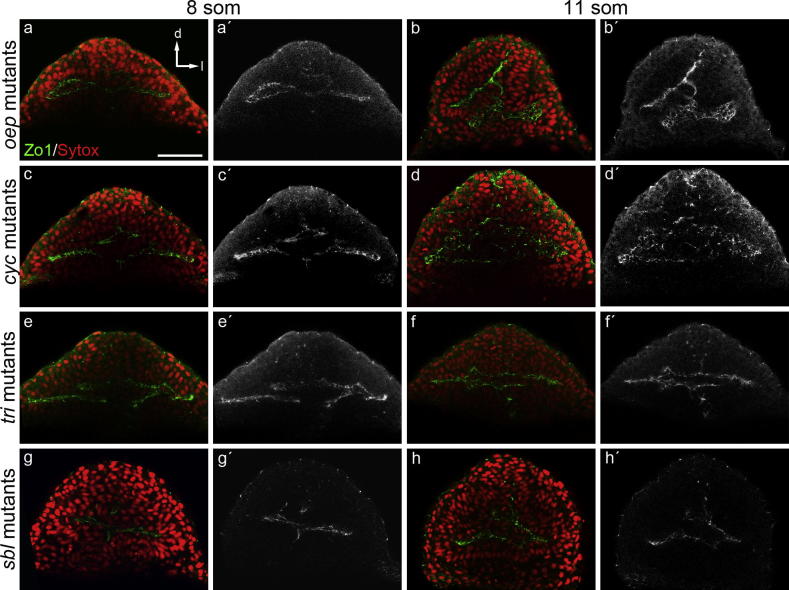
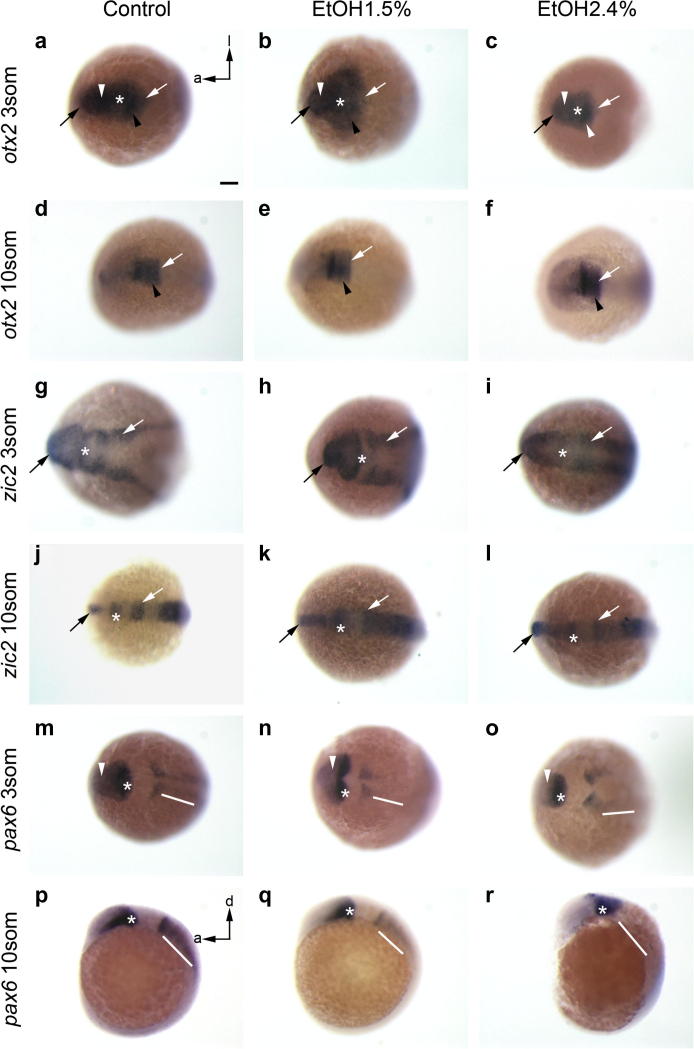
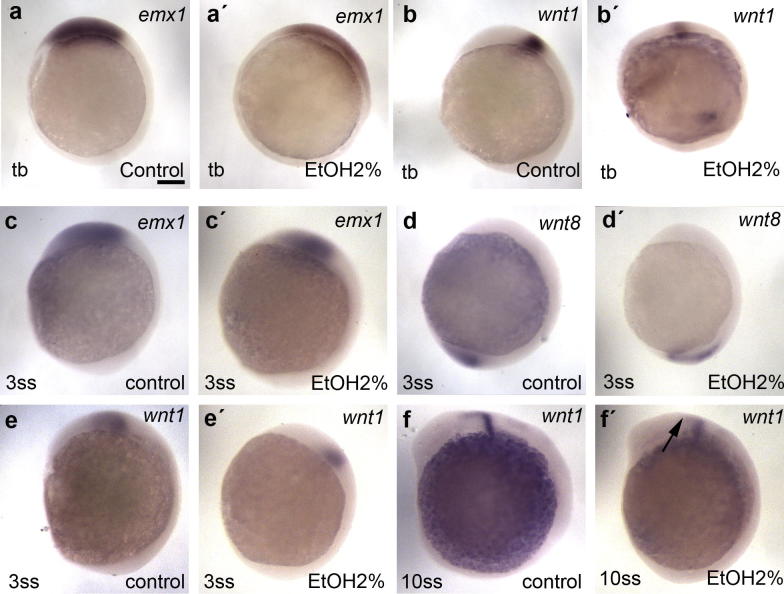
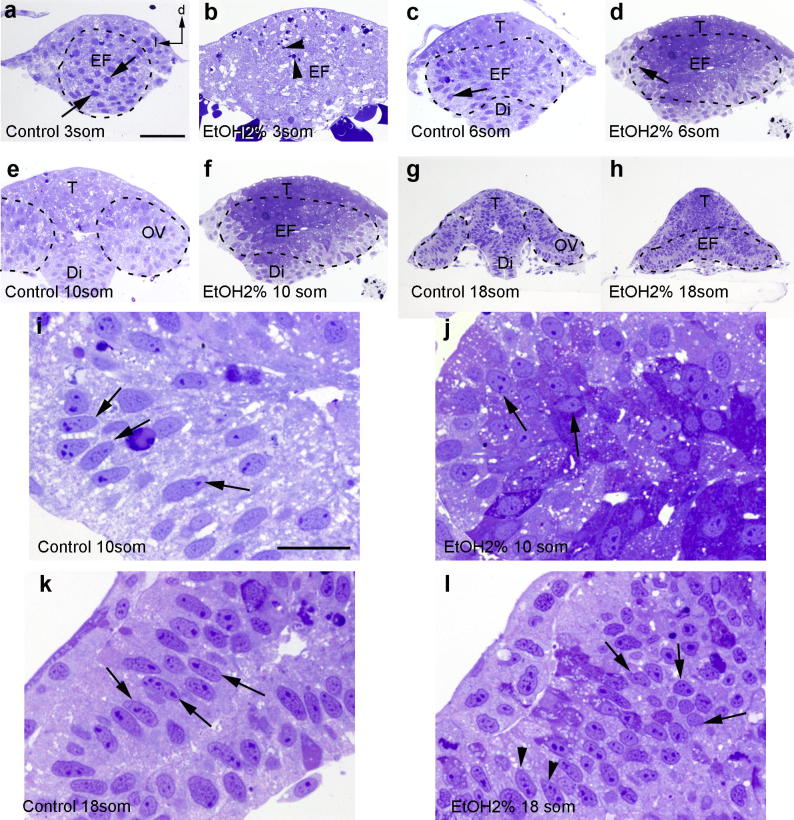
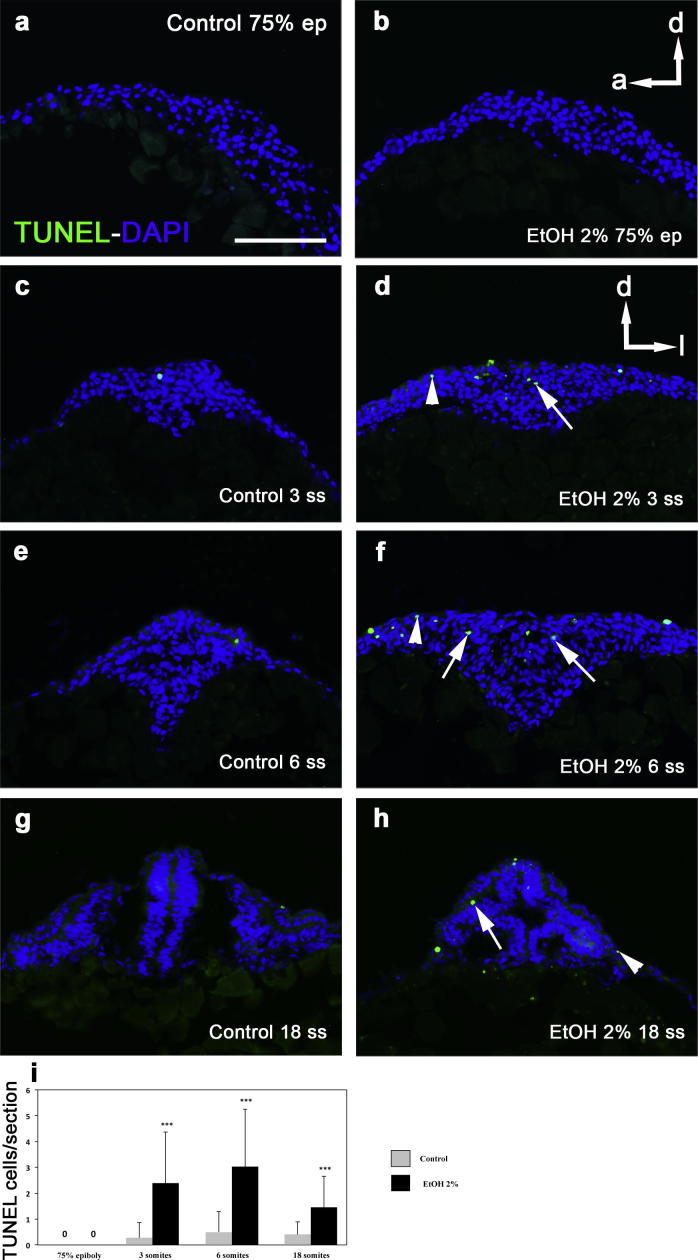
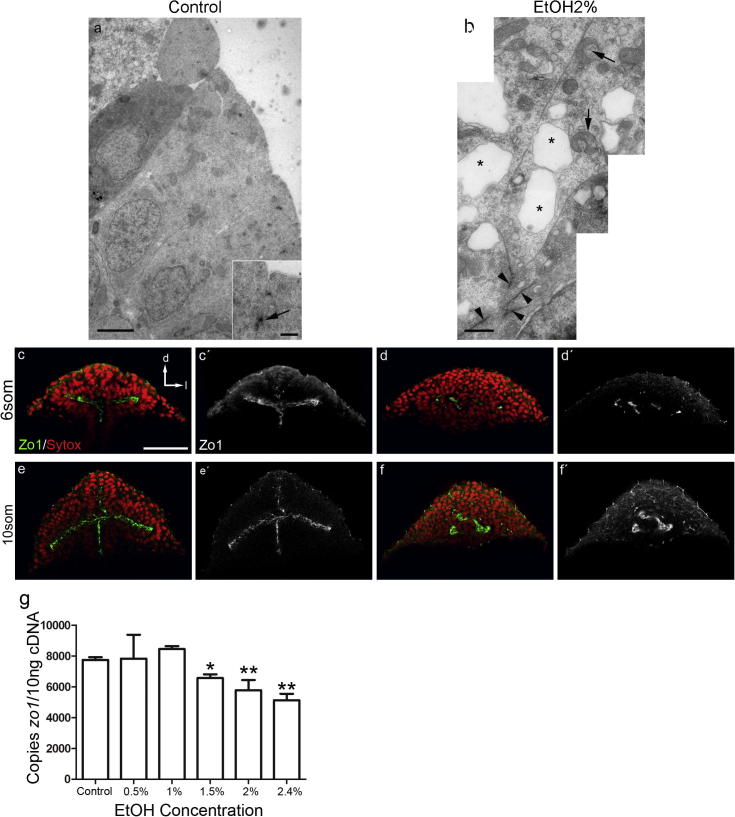
Ethanol has been described as a teratogen in vertebrate development. During early stages of brain formation, ethanol affects the evagination of the optic vesicles, resulting in synophthalmia or cyclopia, phenotypes where the optic vesicles partially or totally fuse. The mechanisms by which ethanol affects the morphogenesis of the optic vesicles are however largely unknown. In this study we make use of in situ hybridization, electron microscopy and immunohistochemistry to show that ethanol has profound effects on cell organization and gene expression during the evagination of the optic vesicles. Exposure to ethanol during early eye development alters the expression patterns of some genes known to be important for eye morphogenesis, such as rx3/1 and six3a. Furthermore, exposure to ethanol interferes with the acquisition of neuroepithelial features by the eye field cells, which is clear at ultrastructual level. Indeed, ethanol disrupts the acquisition of fusiform cellular shapes within the eye field. In addition, tight junctions do not form and retinal progenitors do not properly polarize, as suggested by the mis-localization and down-regulation of zo1. We also show that the ethanol-induced cyclopic phenotype is significantly different to that observed in cyclopic mutants, suggesting a complex effect of ethanol on a variety of targets. Our results show that ethanol not only disrupts the expression pattern of genes involved in retinal morphogenesis, such as rx3 and rx1, but also disrupts the changes in cell polarity that normally occur during eye field splitting. Thus, ethylic teratology seems to be related not only to modifications in gene expression and cell death but also to alterations in cell morphology.
乙醇已被描述为脊椎动物发育中的致畸物。在大脑形成的早期阶段,乙醇会影响视泡的外胚层,导致并眼或独眼,即视泡部分或完全融合的表型。然而,乙醇影响视泡形态发生的机制在很大程度上尚不清楚。在这项研究中,我们利用原位杂交、电子显微镜和免疫组织化学技术,显示乙醇在视泡外胚层形成过程中对细胞组织和基因表达有深远影响。在早期眼发育过程中暴露于乙醇会改变一些已知对眼形态发生很重要的基因的表达模式,如 rx3/1 和 six3a。此外,暴露于乙醇会干扰眼部细胞获得神经上皮特征,这在超微结构水平上很明显。事实上,乙醇破坏了眼部细胞中梭形细胞形状的获得。此外,紧密连接没有形成,视网膜祖细胞不能正确极化,如 zo1 的定位和下调所表明的那样。我们还表明,乙醇诱导的独眼表型与在独眼突变体中观察到的表型明显不同,这表明乙醇对多种靶标有复杂的影响。我们的结果表明,乙醇不仅破坏了参与视网膜形态发生的基因(如 rx3 和 rx1)的表达模式,而且还破坏了眼部分裂过程中通常发生的细胞极性变化。因此,乙醇致畸似乎不仅与基因表达和细胞死亡的改变有关,还与细胞形态的改变有关。