Department of Toxicology, CINVESTAV-IPN, México, DF, Mexico.
Toxicol Lett. 2013 Oct 24;222(2):146-54. doi: 10.1016/j.toxlet.2013.07.012. Epub 2013 Jul 26.
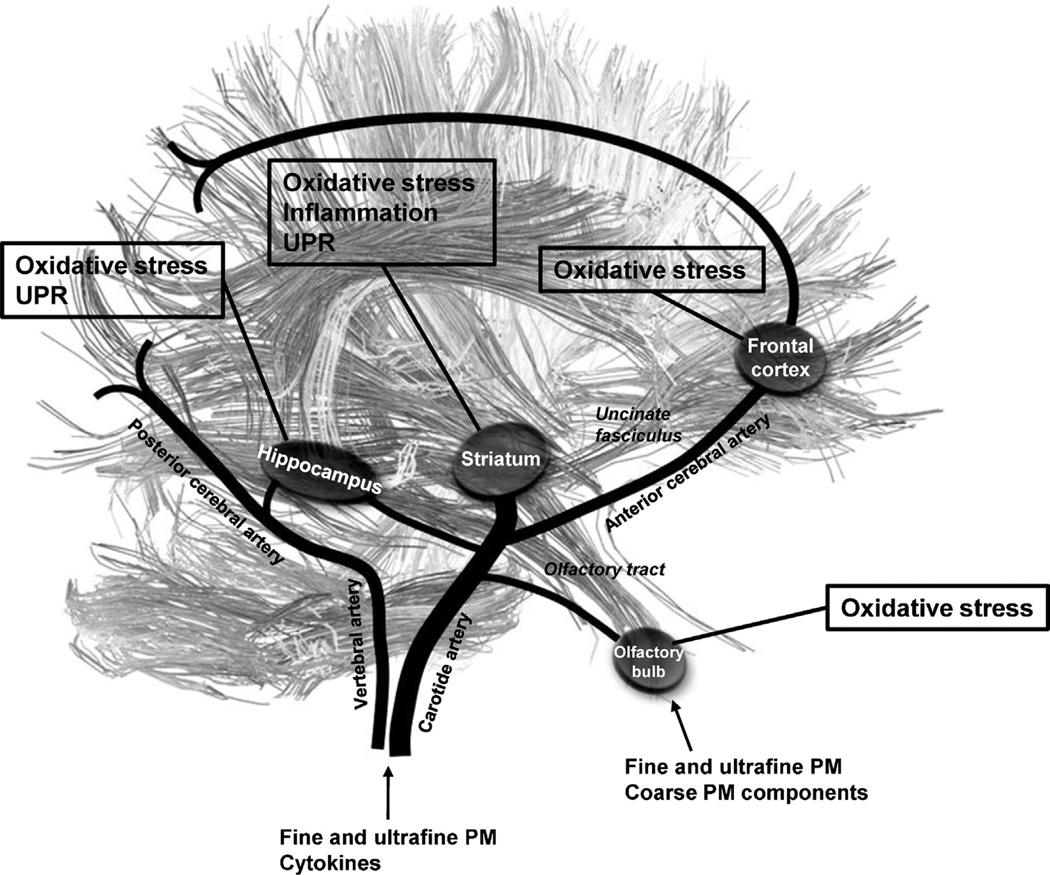
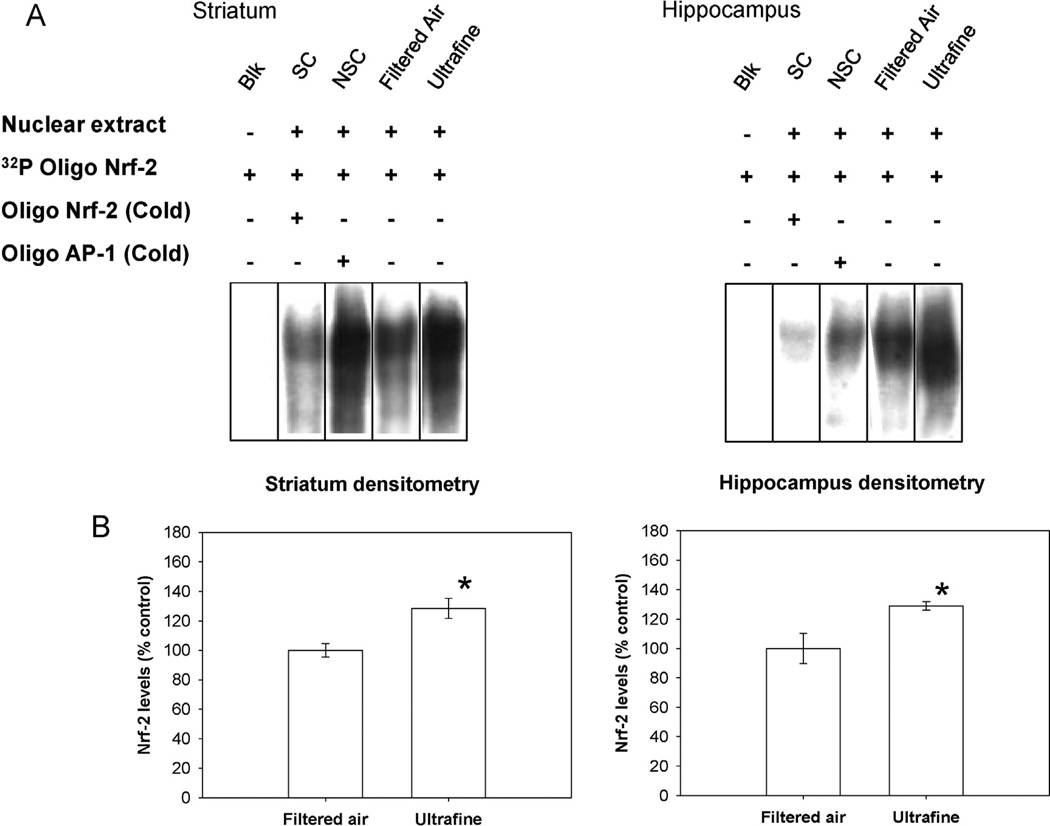
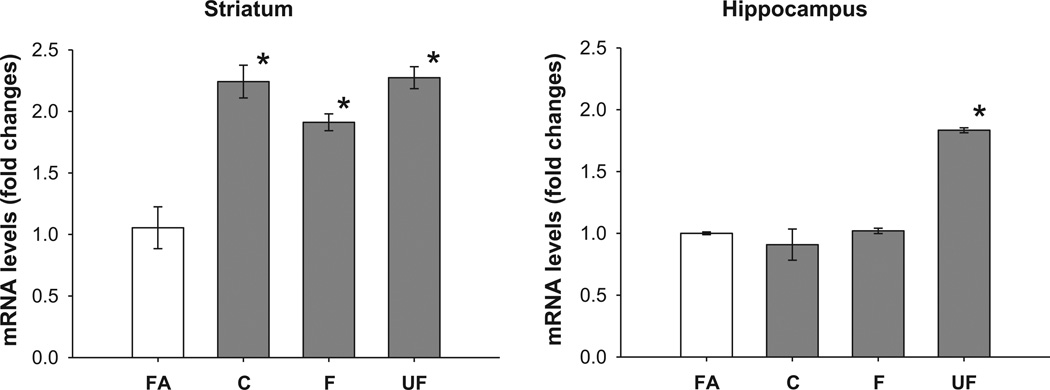
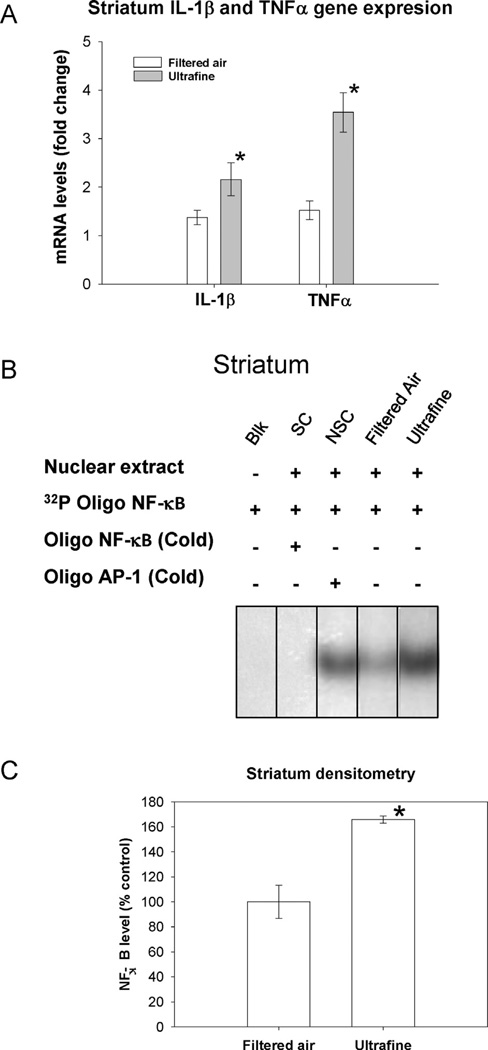
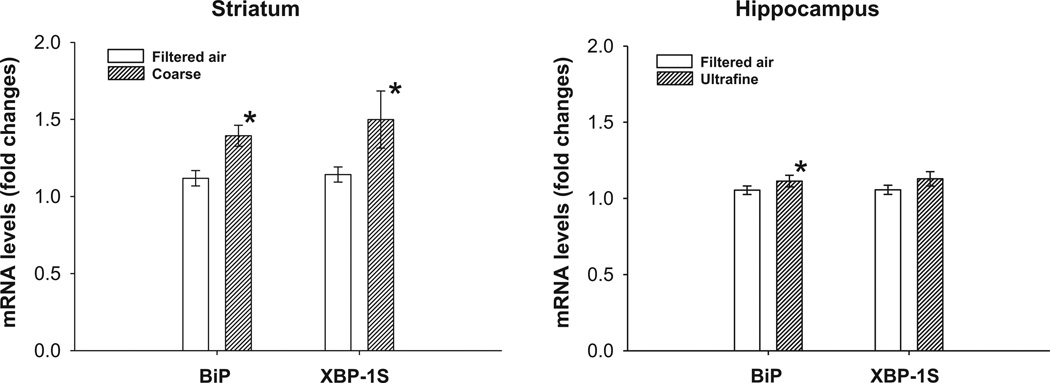
To study central nervous system airborne PM related subchronic toxicity, SD male rats were exposed for eight weeks to either coarse (32 μg/m³), fine (178 μg/m³) or ultrafine (107 μg/m³) concentrated PM or filtered air. Different brain regions (olfactory bulb, frontal cortex, striatum and hippocampus), were harvested from the rats following exposure to airborne PM. Subsequently, prooxidant (HO-1 and SOD-2), and inflammatory markers (IL-1β and TNFα), apoptotic (caspase 3), and unfolded protein response (UPR) markers (XBP-1S and BiP), were also measured using real-time PCR. Activation of nuclear transcription factors Nrf-2 and NF-κB, associated with antioxidant and inflammation processes, respectively, were also analyzed by GSMA. Ultrafine PM increased HO-1 and SOD-2 mRNA levels in the striatum and hippocampus, in the presence of Nrf-2 activation. Also, ultrafine PM activated NF-κB and increased IL-1β and TNFα in the striatum. Activation of UPR was observed after exposure to coarse PM through the increment of XBP-1S and BiP in the striatum, accompanied by an increase in antioxidant response markers HO-1 and SOD-2. Our results indicate that exposure to different size fractions of PM may induce physiological changes (in a neuroanatomical manner) in the central nervous system (CNS), specifically within the striatum, where inflammation, oxidative stress and UPR signals were effectively activated.
为了研究中枢神经系统空气中 PM 相关的亚慢性毒性,雄性 SD 大鼠暴露于粗颗粒(32μg/m³)、细颗粒(178μg/m³)或超细颗粒(107μg/m³)浓缩 PM 或过滤空气中 8 周。暴露于空气中的 PM 后,从大鼠中采集不同的脑区(嗅球、额叶皮层、纹状体和海马体)。随后,使用实时 PCR 测量促氧化剂(HO-1 和 SOD-2)和炎症标志物(IL-1β和 TNFα)、凋亡(caspase 3)和未折叠蛋白反应(UPR)标志物(XBP-1S 和 BiP)。还通过 GSMA 分析与抗氧化和炎症过程分别相关的核转录因子 Nrf-2 和 NF-κB 的激活。超细微粒 PM 在纹状体和海马体中增加了 Nrf-2 激活时的 HO-1 和 SOD-2 mRNA 水平。此外,超细微粒 PM 通过增加纹状体中的 NF-κB 和增加 IL-1β 和 TNFα 来激活 NF-κB。通过粗颗粒暴露观察到 UPR 的激活,通过纹状体中 XBP-1S 和 BiP 的增加以及抗氧化反应标志物 HO-1 和 SOD-2 的增加来实现。我们的结果表明,暴露于不同大小的 PM 可能会以神经解剖学的方式在中枢神经系统(CNS)中引起生理变化,特别是在纹状体中,炎症、氧化应激和 UPR 信号被有效激活。