*Department of Molecular and Cellular Physiology, †Department of Microbiology and Immunology, and ‡Department of Pathology, Louisiana State University Health Sciences Center, Shreveport, Louisiana; and §Department of Immunology and Molecular Microbiology, Texas Tech University Health Sciences Center, Lubbock, Texas.
Inflamm Bowel Dis. 2013 Oct;19(11):2282-94. doi: 10.1097/MIB.0b013e31829c32dd.
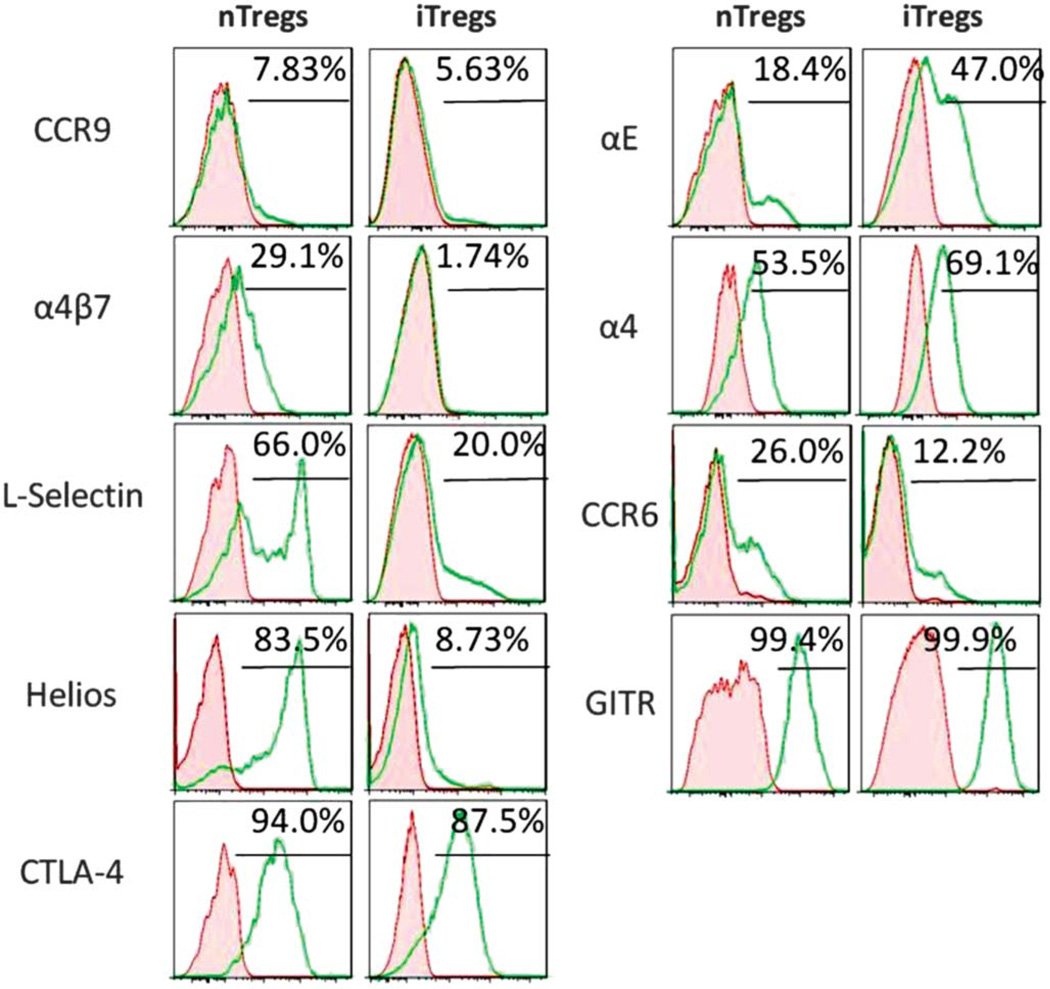
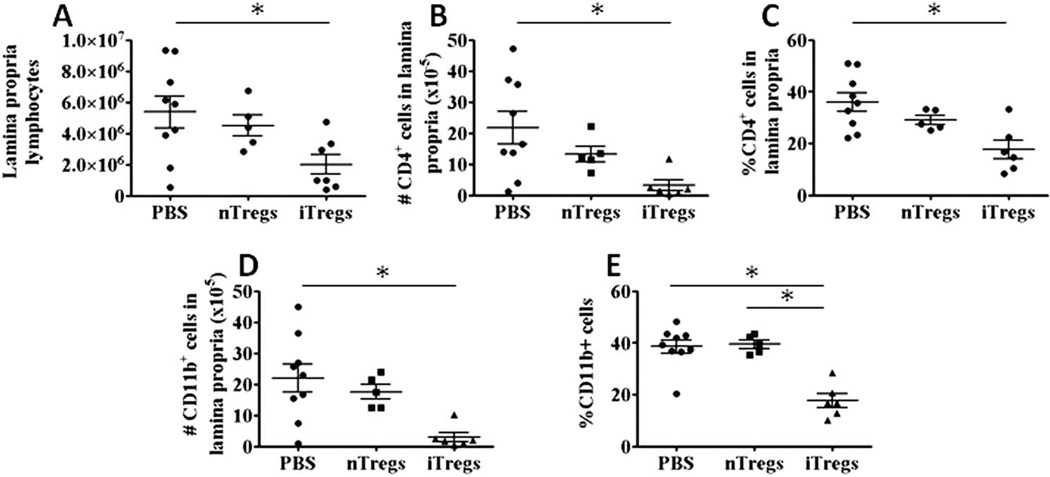
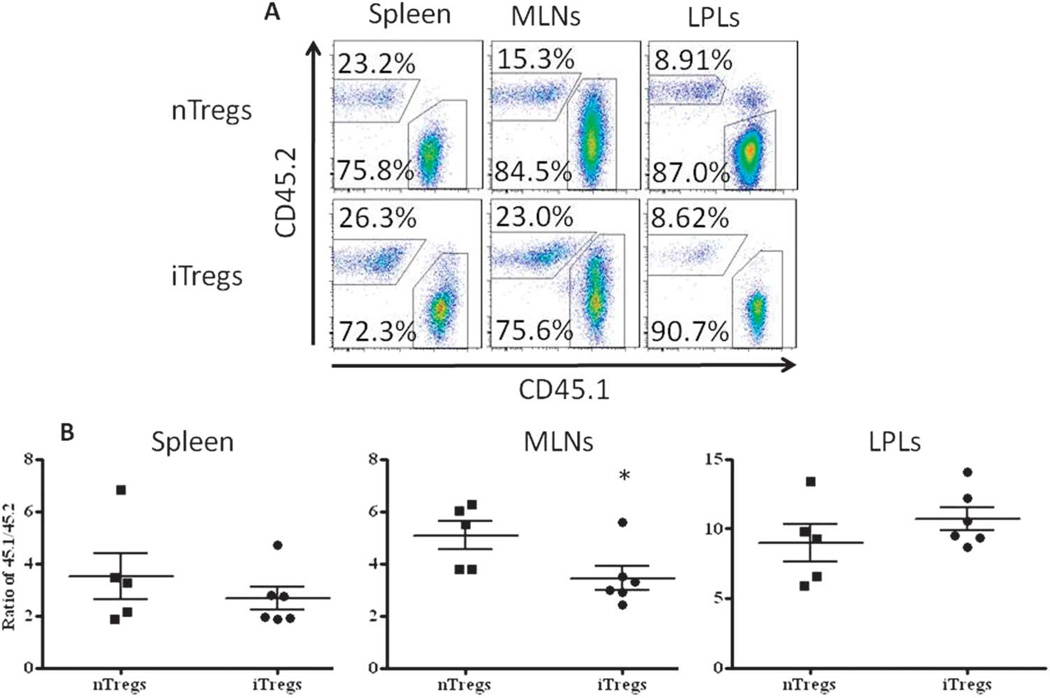
The objectives of this study were to (a) evaluate and compare the ability of ex vivo-generated induced regulatory T cells (iTregs) and freshly isolated natural Tregs (nTregs) to reverse/attenuate preexisting intestinal inflammation in a mouse model of chronic colitis and (b) quantify the Treg-targeted gene expression profiles of these two Treg populations. We found that ex vivo-generated iTregs were significantly more potent than nTregs at attenuating preexisting colitis. This superior therapeutic activity was associated with increased accumulation of iTregs within the mesenteric lymph nodes and large and significant reductions in interleukin (IL)-6 and IL-17A expression in the colons of iTreg- versus nTreg-treated mice. The enhanced immunosuppressive activity of iTregs was not because of increased expression or stability of Foxp3 as iTregs and nTregs obtained from the mesenteric lymph nodes, and colons of reconstituted mice expressed similar levels of this important transcription factor. In addition, we observed a total of 27 genes that were either upregulated or downregulated in iTregs when compared with nTregs. Although iTregs were found to be superior at reversing established disease, their message levels of IL-10 and IL-35 and surface expression of the gut-homing molecules CCR9 and α4β7 were significantly reduced when compared with nTregs. Taken together, our data demonstrate that ex vivo-generated iTregs are significantly more potent than nTregs at attenuating preexisting gut inflammation despite reduced expression of classical regulatory cytokines and gut-homing molecules. Our data suggest that the immunosuppressive activity of iTregs may be because of their ability to directly or indirectly decrease expression of IL-6 and IL-17A within the inflamed bowel.
(a) 评估和比较体外生成的诱导调节性 T 细胞 (iTreg) 和新鲜分离的天然调节性 T 细胞 (nTreg) 逆转/减轻慢性结肠炎小鼠模型中预先存在的肠道炎症的能力;(b) 定量分析这两种 Treg 群体的 Treg 靶向基因表达谱。我们发现,体外生成的 iTreg 在减轻预先存在的结肠炎方面明显比 nTreg 更有效。这种优越的治疗活性与 iTreg 在肠系膜淋巴结中的积累增加以及 iTreg 治疗组小鼠结肠中白细胞介素 (IL)-6 和 IL-17A 表达的显著降低有关。iTreg 的增强的免疫抑制活性不是因为 Foxp3 的表达或稳定性增加,因为从肠系膜淋巴结和再构建小鼠的结肠中获得的 iTreg 和 nTreg 表达相似水平的这种重要转录因子。此外,我们观察到 27 个基因在 iTreg 中与 nTreg 相比要么上调要么下调。尽管与 nTreg 相比,iTreg 在逆转已建立的疾病方面表现出色,但它们的 IL-10 和 IL-35 表达水平以及肠道归巢分子 CCR9 和 α4β7 的表面表达显著降低。总之,我们的数据表明,尽管体外生成的 iTreg 表达经典调节细胞因子和肠道归巢分子的能力降低,但它们在减轻预先存在的肠道炎症方面明显比 nTreg 更有效。我们的数据表明,iTreg 的免疫抑制活性可能是因为它们能够直接或间接降低炎症性肠道中 IL-6 和 IL-17A 的表达。