Department of Radiation Oncology, Comprehensive Cancer Center, University of California at Davis Medical Center , Sacramento, CA , USA.
Front Oncol. 2013 Jul 26;3:197. doi: 10.3389/fonc.2013.00197. eCollection 2013.
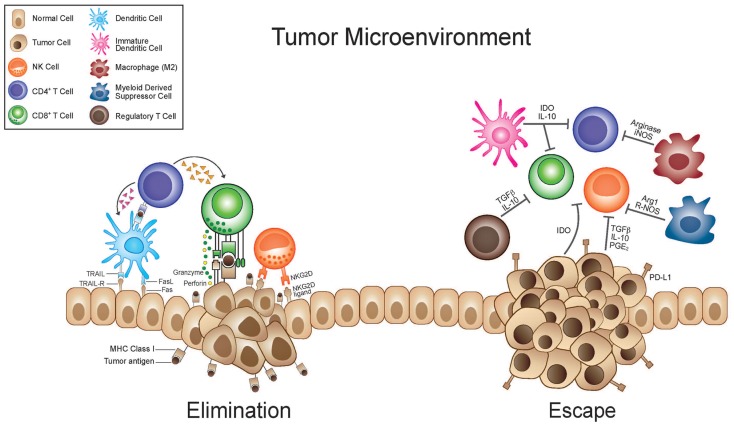
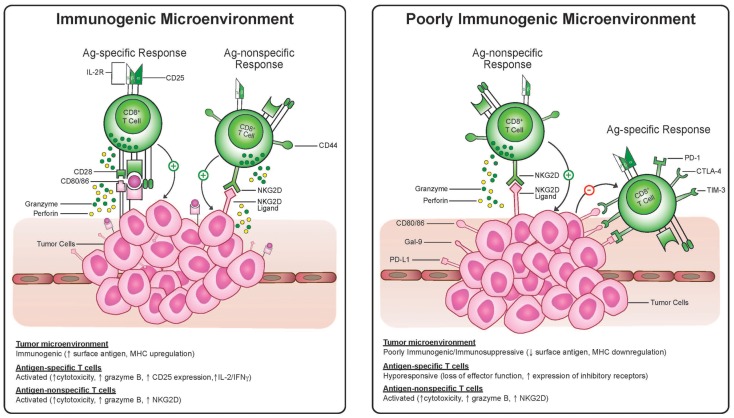
Cancer immunotherapy has emerged as a mainstream therapy option in the battle against cancer. Pre-clinical data demonstrates the ability of immunotherapy to harness the immune system to fight disseminated malignancy. Clinical translation has failed to recapitulate the promising results of pre-clinical studies although there have been some successes. In this review we explore some of the short-comings of cancer immunotherapy that have limited successful clinical translation. We will give special consideration to what we consider the most formidable hurdle to successful cancer immunotherapy: tumor-induced immune suppression and immune escape. We will discuss the need for antigen-specific immune responses for successful immunotherapy but also consider the need for antigen specificity as an Achilles heel of immunotherapy given tumor heterogeneity, immune editing, and antigen loss. Finally, we will discuss how combinatorial strategies may overcome some of the pitfalls of antigen specificity and highlight recent studies from our lab which suggest that the induction of antigen non-specific immune responses may also produce robust anti-tumor effects and bypass the need for antigen specificity.
癌症免疫疗法已成为对抗癌症的主流治疗选择。临床前数据表明,免疫疗法能够利用免疫系统来对抗播散性恶性肿瘤。尽管取得了一些成功,但临床转化未能重现临床前研究的有希望的结果。在这篇综述中,我们探讨了癌症免疫疗法中一些限制其成功临床转化的缺点。我们将特别考虑我们认为成功癌症免疫疗法的最具挑战性的障碍:肿瘤诱导的免疫抑制和免疫逃逸。我们将讨论成功免疫治疗所需的抗原特异性免疫反应,但也考虑到由于肿瘤异质性、免疫编辑和抗原丢失,抗原特异性作为免疫治疗的阿喀琉斯之踵的必要性。最后,我们将讨论组合策略如何克服抗原特异性的一些缺陷,并强调我们实验室的最新研究表明,诱导抗原非特异性免疫反应也可能产生强大的抗肿瘤效果,并绕过对抗原特异性的需求。