1 Department of Urology, Zhongshan Hospital, Fudan University, Shanghai, China. 2 Shanghai Key Laboratory of Organ Transplantation, Shanghai, China.
Transplantation. 2013 Nov 15;96(9):774-81. doi: 10.1097/TP.0b013e3182a1931f.
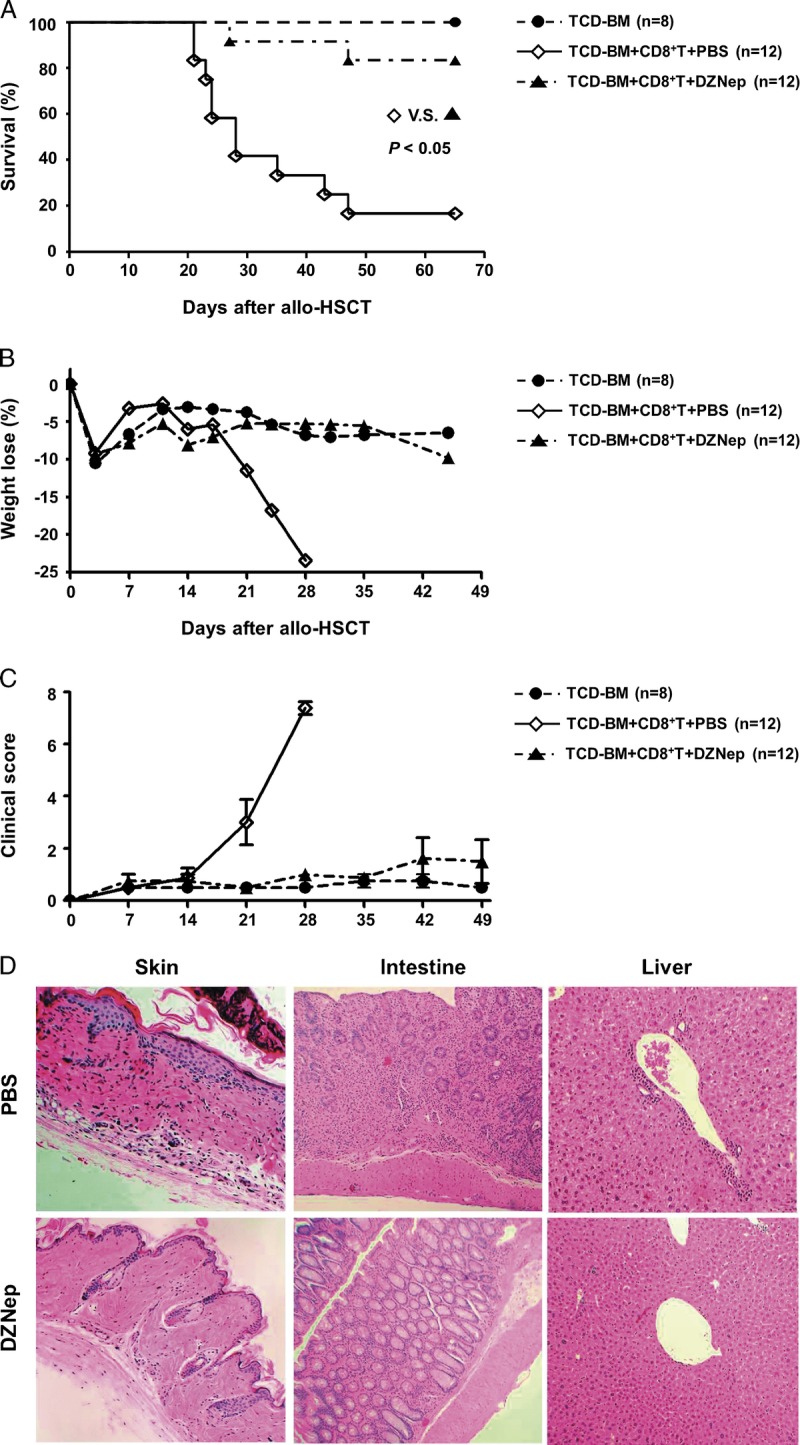
Allogeneic hematopoietic stem cell transplantation (allo-HSCT) combined with solid-organ transplantation is a feasible method to achieve long-lasting organ allograft tolerance through the induction of hematopoietic chimerism in recipients. However, the allo-HSCT engraftment puts recipients at risk of life-threatening graft-versus-host disease (GVHD). Novel immunomodulatory approaches are required to effectively control GVHD while preserving the status of hematopoietic chimerism. We have reported that histone methylation inhibitor 3-deazaneplanocin A (DZNep) can control ongoing GVHD in mice by selectively inducing apoptosis of alloreactive effector T cells.
Using donor-derived CD8 T cell-mediated mouse GVHD model, we further investigated the effect of in vivo administration of DZNep on allogeneic CD8 T cell response and the hematopoietic chimerism in recipients.
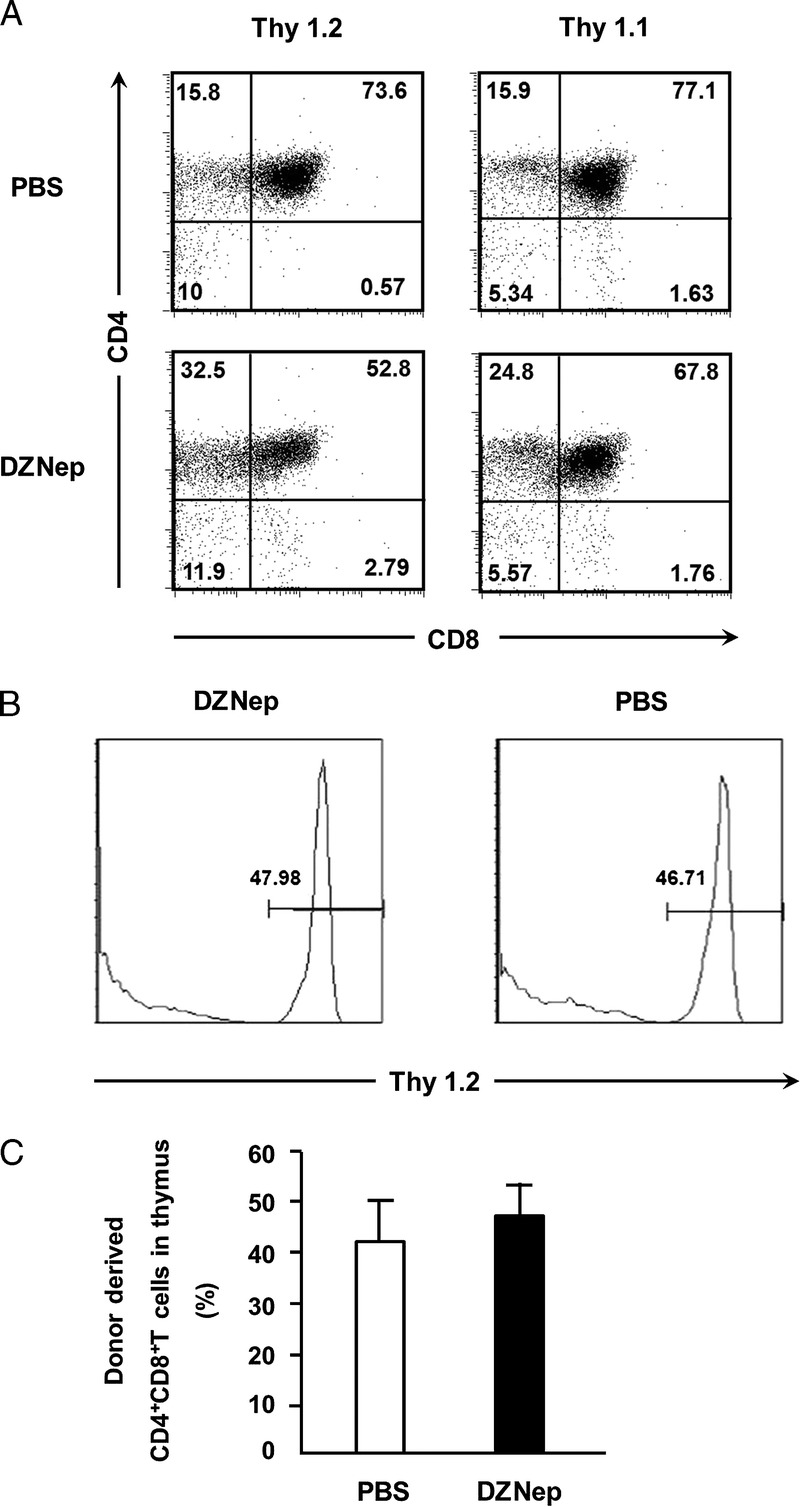
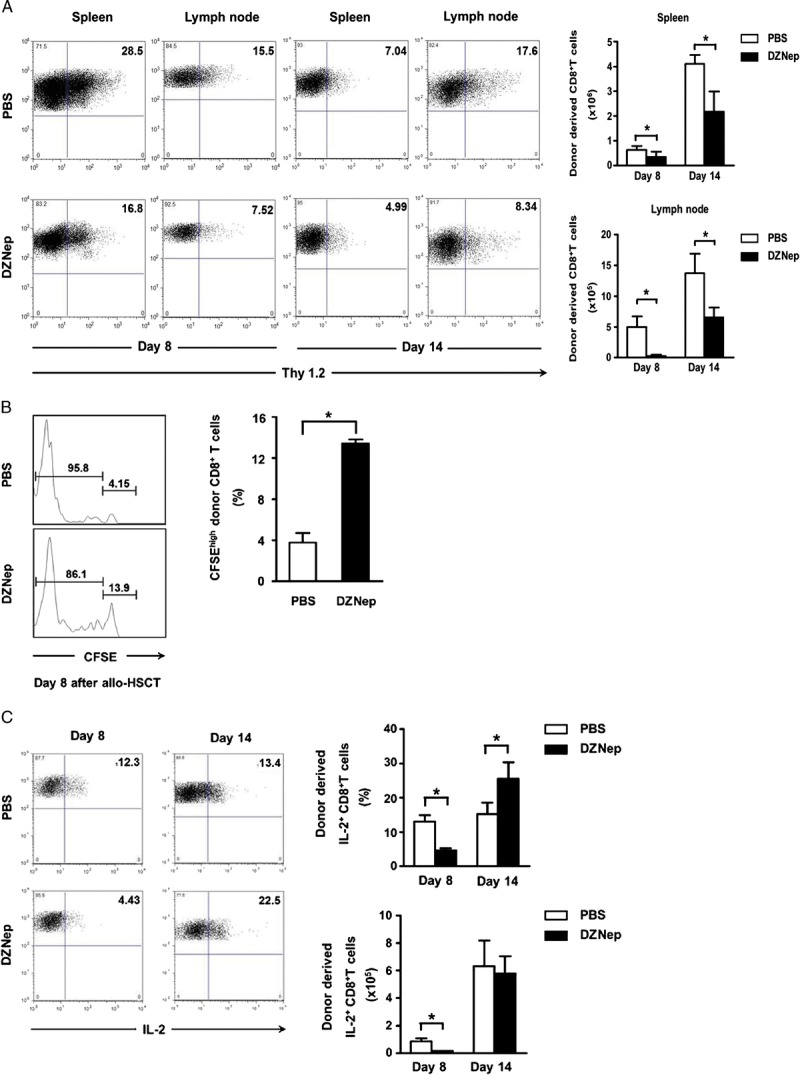
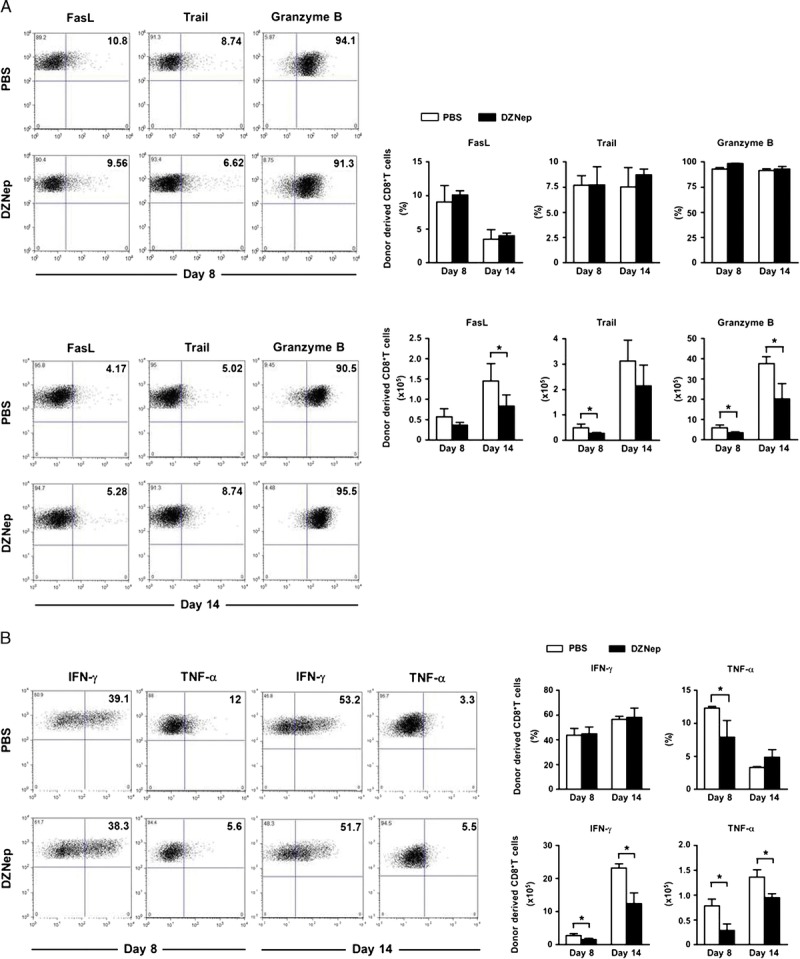
We found that DZNep delayed the in vivo proliferation of donor-derived alloreactive CD8 T cells and also reduced the interleukin-2 production by these T cells. Moreover, DZNep treatment resulted in a significant decrease of interferon-γ, tumor necrosis factor-α, granzyme B, TRAIL, and Fas ligand expressing donor-derived CD8 T cells, suggesting a multilevel modulation role on T-cell survival and effect in vivo. Notably, DZNep treatment did not hamper the generation of hematopoietic chimerism in recipients.
These findings suggest that modulation of histone methylation through DZNep may be a potential strategy for the induction of hematopoietic chimerism to achieve donor-specific organ allograft tolerance through donor allo-HSCT combined with solid-organ transplantation.
异体造血干细胞移植(allo-HSCT)联合实体器官移植是一种通过诱导受者造血嵌合来实现长期器官同种异体移植物耐受的可行方法。然而,allo-HSCT 植入使受者面临危及生命的移植物抗宿主病(GVHD)的风险。需要新的免疫调节方法来有效控制 GVHD,同时保持造血嵌合状态。我们已经报道,组蛋白甲基化抑制剂 3-去氮胞苷(DZNep)可以通过选择性诱导同种反应性效应 T 细胞凋亡来控制小鼠正在发生的 GVHD。
使用供体衍生的 CD8 T 细胞介导的小鼠 GVHD 模型,我们进一步研究了体内给予 DZNep 对同种异体 CD8 T 细胞反应和受者造血嵌合的影响。
我们发现 DZNep 延迟了供体衍生的同种反应性 CD8 T 细胞的体内增殖,并减少了这些 T 细胞产生的白细胞介素-2。此外,DZNep 治疗导致干扰素-γ、肿瘤坏死因子-α、颗粒酶 B、TRAIL 和 Fas 配体表达的供体衍生 CD8 T 细胞显著减少,表明对 T 细胞存活和体内效应具有多层次的调节作用。值得注意的是,DZNep 治疗并未妨碍受者造血嵌合的产生。
这些发现表明,通过 DZNep 调节组蛋白甲基化可能是一种通过供体 allo-HSCT 联合实体器官移植诱导造血嵌合以实现供体特异性器官同种异体移植物耐受的潜在策略。