Burgener R, Wolf M, Ganz T, Baggiolini M
Theodor Kocher Institut, Universität Bern, Switzerland.
Biochem J. 1990 Aug 1;269(3):729-34. doi: 10.1042/bj2690729.
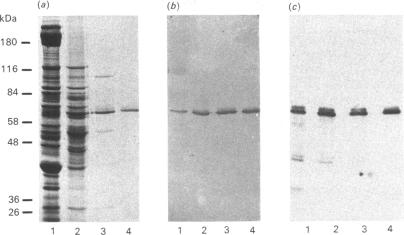
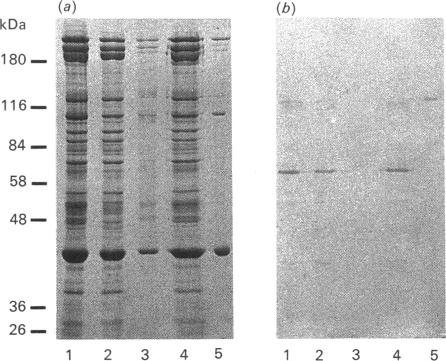
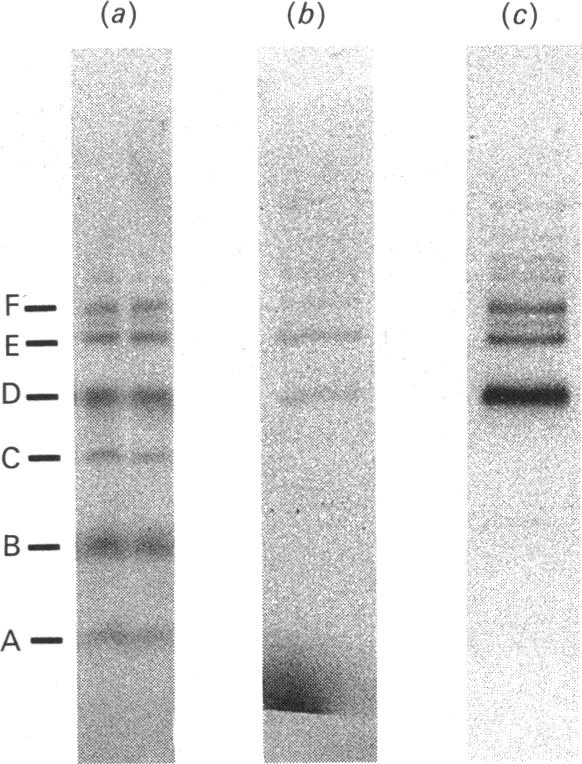
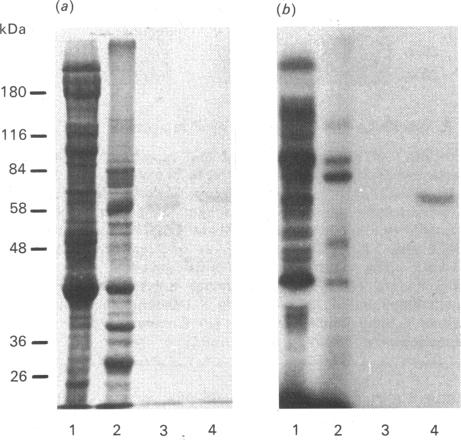
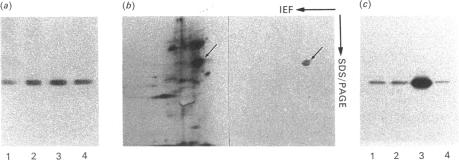
We describe the isolation, lipid-binding properties and partial amino acid sequence of PS-p68, a novel 68 kDa phosphatidylserine-binding protein from human platelets. PS-p68 is an abundant constituent of platelets, accounting for 0.5-0.75% of total cell protein. It was purified from platelet cytosol by affinity chromatography. Amino acid sequence analysis yielded no similarity to identified proteins. In contrast with most known phospholipid-binding proteins, PS-p68 does not bind Ca2+ and does not require Ca2+ for its binding of phosphatidylserine. Phosphatidylserine binding to PS-p68 was inhibited by phosphatidic acid and by alkylphospholipids. PS-p68 was isolated as a major phosphoprotein from 32P-labelled platelets and was found to function as a protein kinase C substrate in vitro. However, treatment of intact platelets with phorbol 12-myristate 13-acetate, thrombin or carbacyclin did not increase PS-p68 phosphorylation. Platelets appear to be the only blood cells containing PS-p68, which was not detected in neutrophils, monocytes and lymphocytes.
我们描述了PS-p68的分离、脂质结合特性及部分氨基酸序列,PS-p68是一种从人血小板中分离出的新型68 kDa磷脂酰丝氨酸结合蛋白。PS-p68是血小板中的一种丰富成分,占细胞总蛋白的0.5 - 0.75%。它通过亲和色谱从血小板胞质溶胶中纯化得到。氨基酸序列分析显示与已鉴定的蛋白质没有相似性。与大多数已知的磷脂结合蛋白不同,PS-p68不结合Ca2+,且其结合磷脂酰丝氨酸不需要Ca2+。磷脂酸和烷基磷脂可抑制磷脂酰丝氨酸与PS-p68的结合。PS-p68是从32P标记的血小板中分离得到的主要磷蛋白,并且发现在体外它可作为蛋白激酶C的底物。然而,用佛波醇12 - 肉豆蔻酸酯13 - 乙酸酯、凝血酶或卡巴前列素处理完整血小板并不会增加PS-p68的磷酸化。血小板似乎是唯一含有PS-p68的血细胞,在中性粒细胞、单核细胞和淋巴细胞中未检测到该蛋白。