Nuffield Department of Clinical Medicine, John Radcliffe Hospital, Oxford, UK.
Int J Nanomedicine. 2013;8:2543-54. doi: 10.2147/IJN.S44013. Epub 2013 Jul 23.
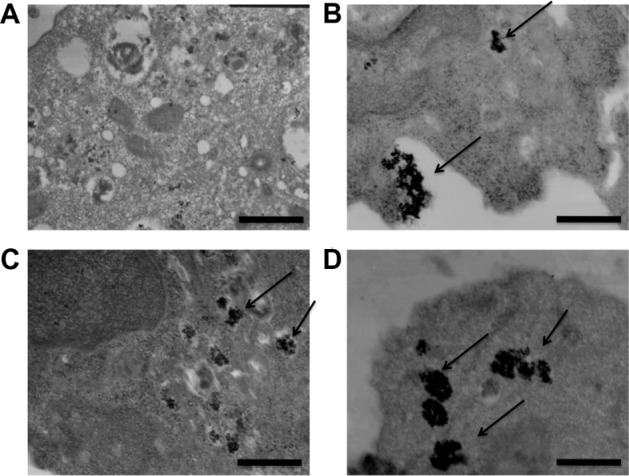
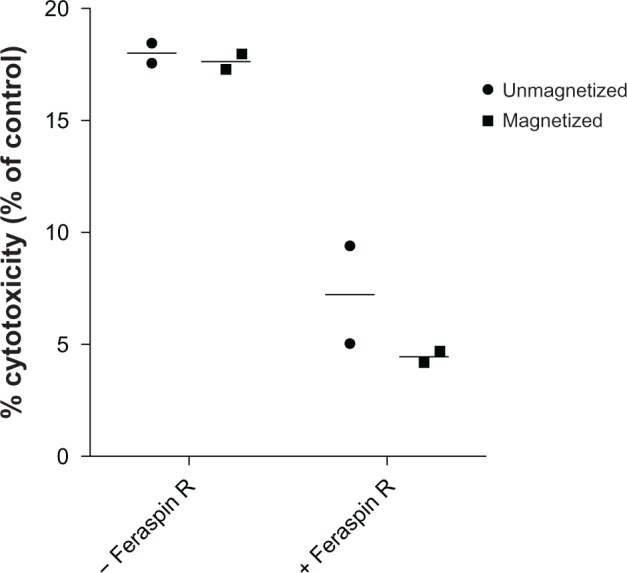
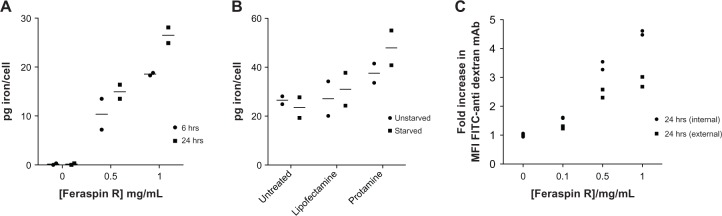
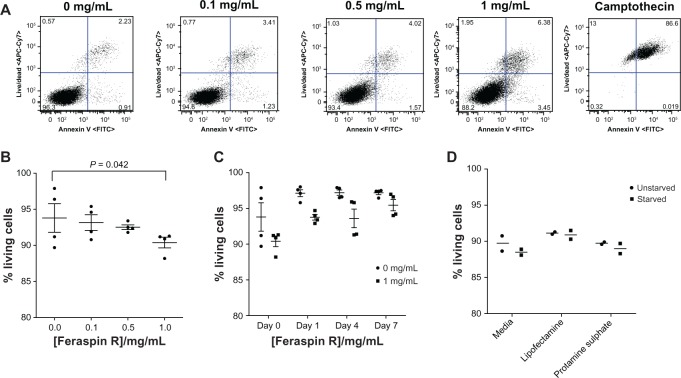
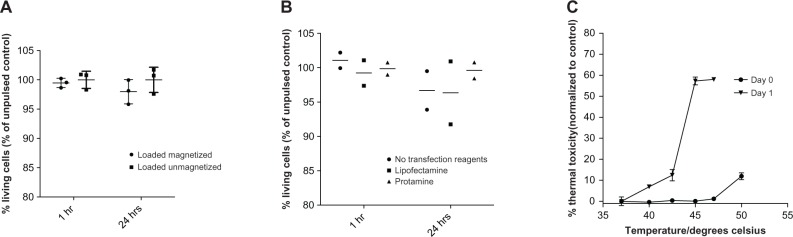
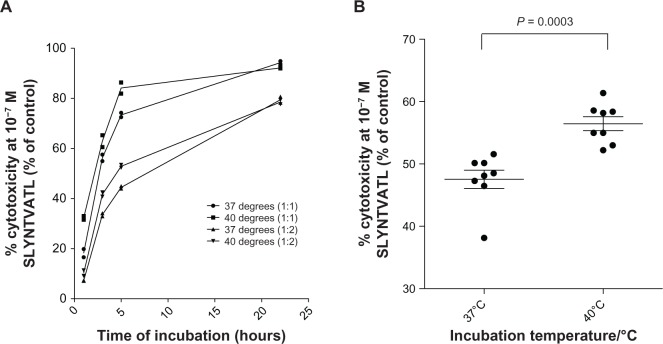
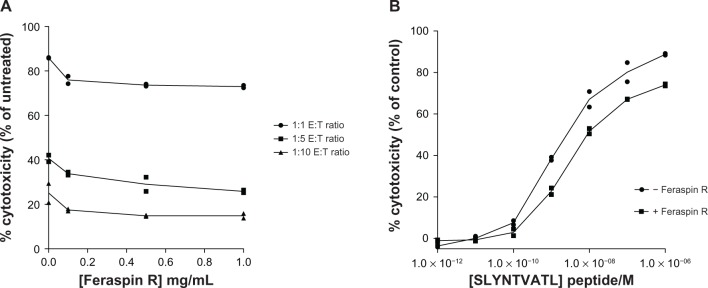
The latent HIV-1 reservoir remains the major barrier to HIV-1 eradication. Although successful at limiting HIV replication, highly active antiretroviral therapy is unable to cure HIV infection, thus novel therapeutic strategies are needed to eliminate the virus. Magnetic field hyperthermia (MFH) generates thermoablative cytotoxic temperatures in target-cell populations, and has delivered promising outcomes in animal models, as well as in several cancer clinical trials. MFH has been proposed as a strategy to improve the killing of HIV-infected cells and for targeting the HIV latent reservoirs. We wished to determine whether MFH could be used to enhance cytotoxic T-lymphocyte (CTL) targeting of HIV-infected cells in a proof-of-concept study. Here, for the first time, we apply MFH to an infectious disease (HIV-1) using the superparamagnetic iron oxide nanoparticle FeraSpin R. We attempt to improve the cytotoxic potential of T-cell receptor-transfected HIV-specific CTLs using thermotherapy, and assess superparamagnetic iron oxide nanoparticle toxicity, uptake, and effect on cell function using more sensitive methods than previously described. FeraSpin R exhibited only limited toxicity, demonstrated efficient uptake and cell-surface attachment, and only modestly impacted T-cell function. In contrast to the cancer models, insufficient MFH was generated to enhance CTL killing of HIV-infected cells. MFH remains an exciting new technology in the field of cancer therapeutics, which, as technology improves, may have significant potential to enhance CTL function and act as an adjunctive therapy in the eradication of latently infected HIV-positive cells.
潜伏的 HIV-1 储存库仍然是 HIV-1 根除的主要障碍。尽管高效抗逆转录病毒疗法在限制 HIV 复制方面非常成功,但它无法治愈 HIV 感染,因此需要新的治疗策略来消除病毒。磁场热疗 (MFH) 在靶细胞群体中产生热消融细胞毒性温度,在动物模型以及几项癌症临床试验中都取得了有希望的结果。MFH 已被提议作为提高杀伤 HIV 感染细胞和靶向 HIV 潜伏储库的策略。我们希望在概念验证研究中确定 MFH 是否可用于增强细胞毒性 T 淋巴细胞 (CTL) 对 HIV 感染细胞的靶向作用。在这里,我们首次将 MFH 应用于传染病 (HIV-1),使用超顺磁氧化铁纳米颗粒 FeraSpin R。我们试图通过热疗来提高 T 细胞受体转染的 HIV 特异性 CTL 的细胞毒性潜力,并使用比以前描述的更敏感的方法评估超顺磁氧化铁纳米颗粒的毒性、摄取和对细胞功能的影响。FeraSpin R 仅表现出有限的毒性,表现出高效的摄取和细胞表面附着,并且仅适度影响 T 细胞功能。与癌症模型不同,产生的 MFH 不足以增强 CTL 对 HIV 感染细胞的杀伤作用。MFH 仍然是癌症治疗领域令人兴奋的新技术,随着技术的进步,它可能具有显著增强 CTL 功能的潜力,并作为潜伏感染 HIV 阳性细胞根除的辅助治疗。