Fujii Chieko
Faculty of Nursing and Medical Care, Keio University, Kanagawa, Japan.
Vasc Health Risk Manag. 2013;9:381-90. doi: 10.2147/VHRM.S47490. Epub 2013 Jul 23.
Complications resulting from venipuncture include vein and nerve damage, hematoma, and neuropathic pain. Although the basic procedures are understood, few analyses of actual data exist. It is important to improve the safety standards of this technique during venipuncture. This study aimed to obtain data on actual needle movement during vacuum venipuncture in order to develop appropriate educational procedures.
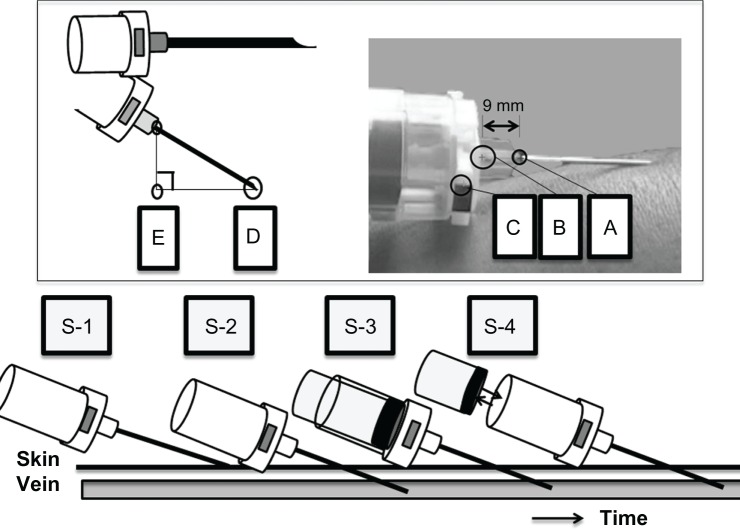
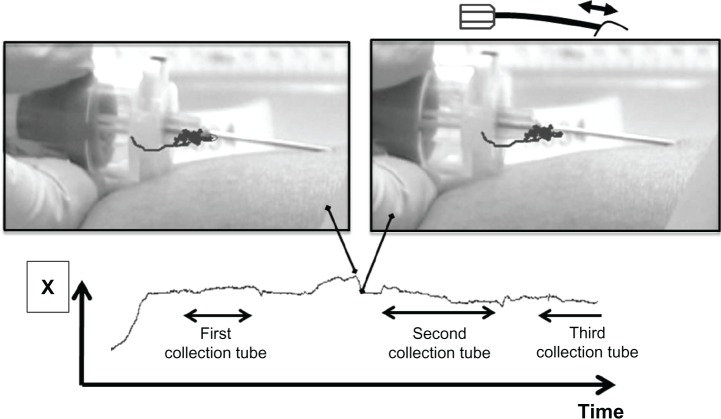
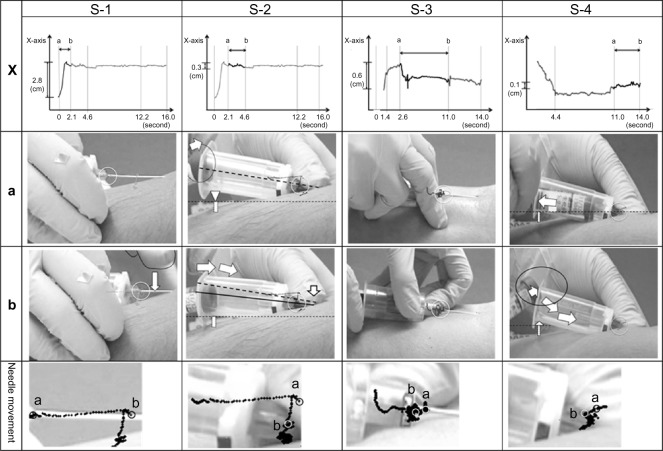
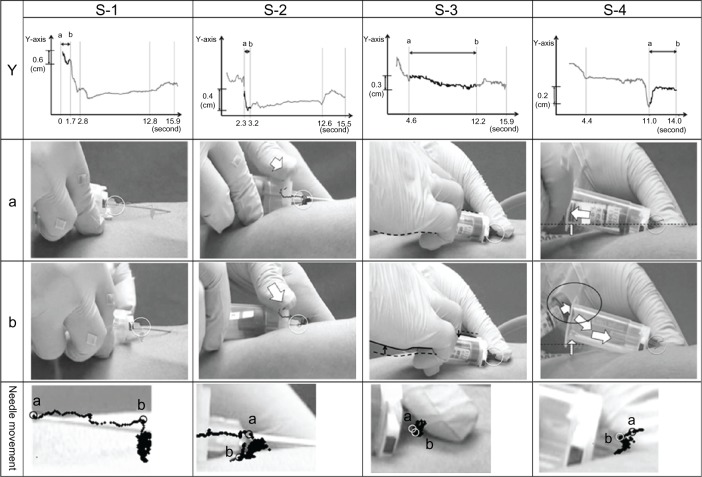
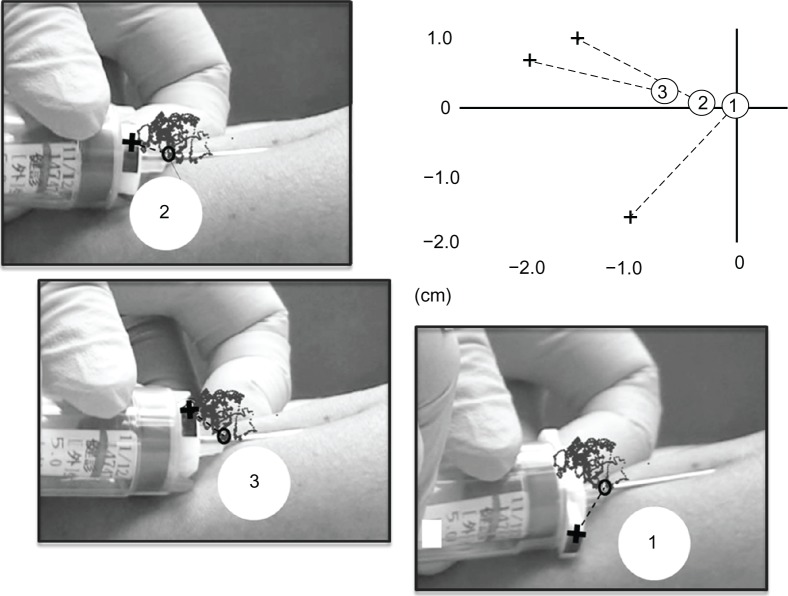
Six experienced nurses were recruited to collect blood samples from 64 subjects. These procedures were recorded using a digital camera. Software was then used to track and analyze motion without the use of a marker in order to maintain the sterility of the needle. Movement along the X- and Y-axes during blood sampling was examined.
Approximately 2.5 cm of the needle was inserted into the body, of which 6 mm resulted from advancing or moving the needle following puncture. The mean calculated puncture angle was 15.2°. Given the hazards posed by attaching and removing the blood collection tube, as well as by manipulating the needle to fix its position, the needle became unstable whether it was fixed or not fixed.
This study examined venipuncture procedures and showed that the method was influenced by increased needle movement. Focusing on skills for puncturing the skin, inserting the needle into the vein, and changing hands while being conscious of needle-tip stability may be essential for improving the safety of venipuncture.
静脉穿刺引起的并发症包括静脉和神经损伤、血肿以及神经性疼痛。尽管基本操作为人所知,但实际数据的分析却很少。在静脉穿刺过程中提高该技术的安全标准很重要。本研究旨在获取真空静脉穿刺过程中实际进针动作的数据,以便制定合适的培训流程。
招募6名经验丰富的护士从64名受试者身上采集血样。这些操作过程用数码相机记录下来。然后使用软件在不使用标记物的情况下跟踪和分析动作,以保持针头的无菌状态。检查采血过程中沿X轴和Y轴的移动情况。
大约2.5厘米的针头插入体内,其中6毫米是穿刺后推进或移动针头所致。计算出的平均穿刺角度为15.2°。鉴于连接和取下采血管以及操纵针头固定其位置所带来的风险,无论针头是否固定,其都会变得不稳定。
本研究对静脉穿刺操作进行了检查,结果表明该方法受针头移动增加的影响。注重皮肤穿刺、将针头插入静脉以及在注意针尖稳定性的同时换手等技能,可能对提高静脉穿刺的安全性至关重要。