Fujii Chieko
Faculty of Nursing and Medical Care, Keio University, Fujisawa, Kanagawa, Japan.
Vasc Health Risk Manag. 2013;9:457-64. doi: 10.2147/VHRM.S49702. Epub 2013 Aug 5.
The purpose of this study was to assess specific vacuum-venipuncture skills and the influence of the time involved in skin puncture and blood collection.
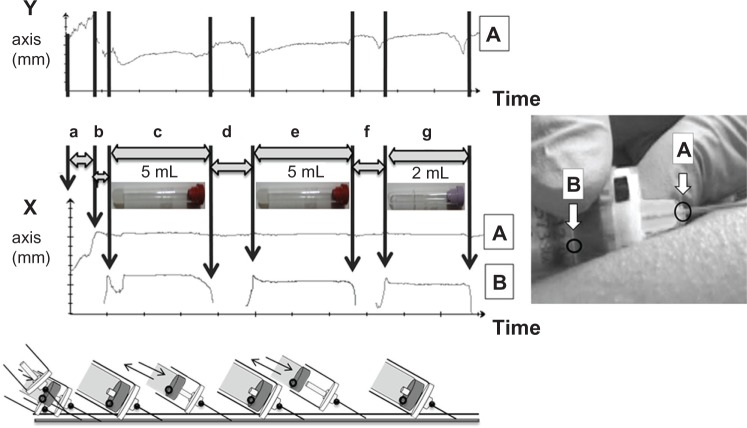
Thirty subjects undergoing venipuncture in which video analysis was possible were included. These procedures were carried out by four nurses and recorded with a digital camera. Venipuncture skills classified by our observations were delineated on the basis of frame-by-frame video images, and a graph of x and y coordinates was created.
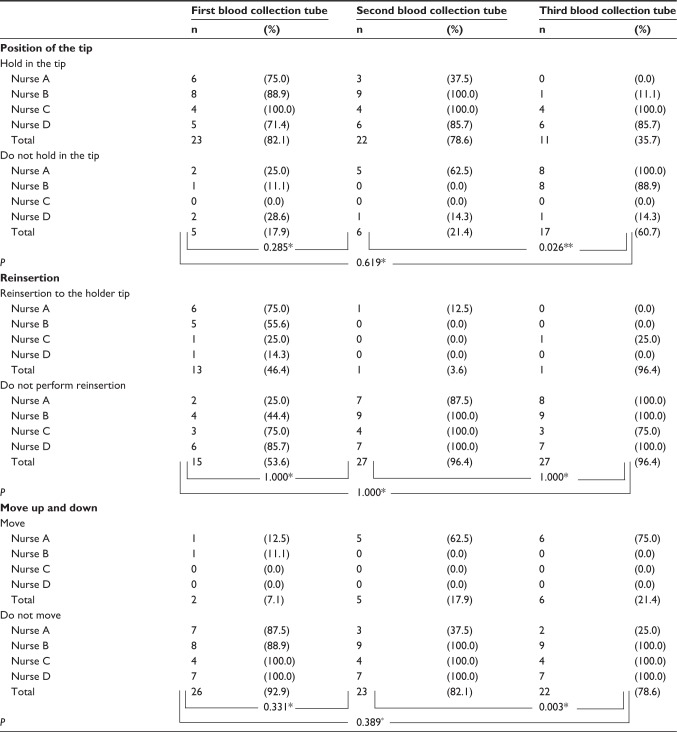
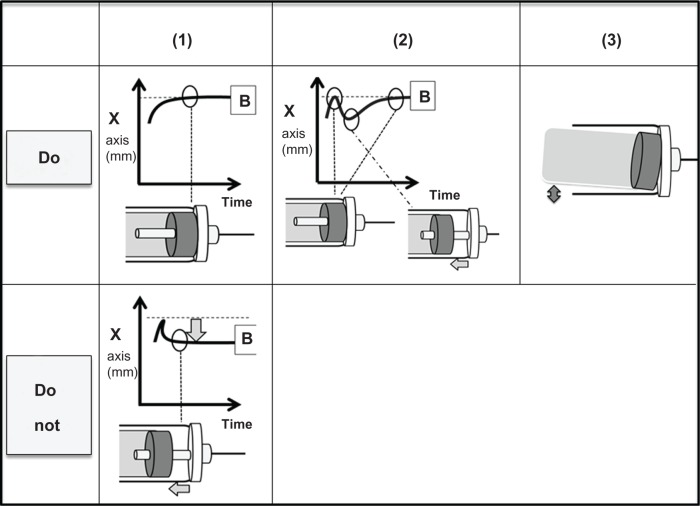
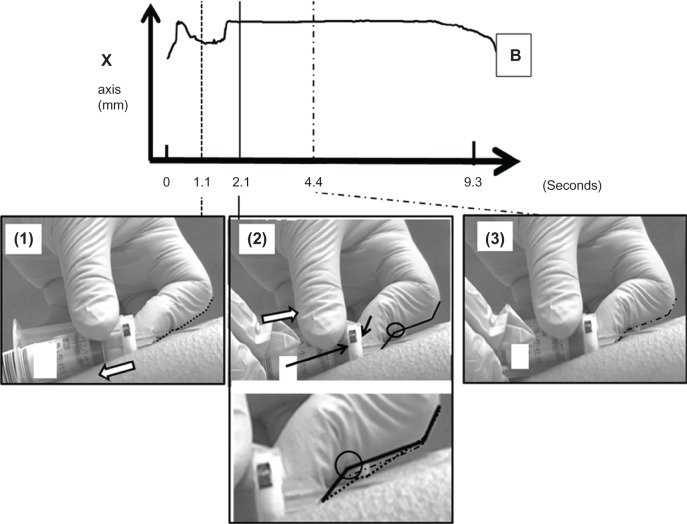
With the first blood-collection tube, strong blood flow required the practitioner to push the tube back in to compensate for the strong repulsive force in approximately 46% of cases. By the third blood-collection tube, the blood flow had weakened; therefore, the tube was moved up and down. In cases that required a second venipuncture, the tube was already pierced, so the time required to fill it to 5 mL was significantly longer.
Hand movement of the practitioner is adjusted according to blood flow. Reflex movement in response to strong blood flow may increase the risk of pushing the needle through the vein with excessive force. The time required to fill the tube varies among nurses, tube order, and level of venipuncture skills.
本研究旨在评估特定的真空静脉穿刺技术以及皮肤穿刺和采血时间的影响。
纳入30名可进行视频分析的接受静脉穿刺的受试者。这些操作由四名护士进行,并用数码相机记录。根据逐帧视频图像描绘我们观察到的静脉穿刺技术,并创建x和y坐标图。
使用第一支采血管时,约46%的情况下,血流强劲时需要操作者将采血管向后推以补偿强大的排斥力。到第三支采血管时,血流已经减弱;因此,采血管上下移动。在需要第二次静脉穿刺的情况下,采血管已经被刺穿,所以将其填充至5毫升所需的时间明显更长。
操作者的手部动作根据血流情况进行调整。对强劲血流的反射动作可能会增加用力过猛将针头穿透静脉的风险。填充采血管所需的时间因护士、采血管顺序和静脉穿刺技术水平而异。