Parkland Center for Clinical Innovation, , Dallas, Texas, USA.
BMJ Qual Saf. 2013 Dec;22(12):998-1005. doi: 10.1136/bmjqs-2013-001901. Epub 2013 Jul 31.
To test a multidisciplinary approach to reduce heart failure (HF) readmissions that tailors the intensity of care transition intervention to the risk of the patient using a suite of electronic medical record (EMR)-enabled programmes.
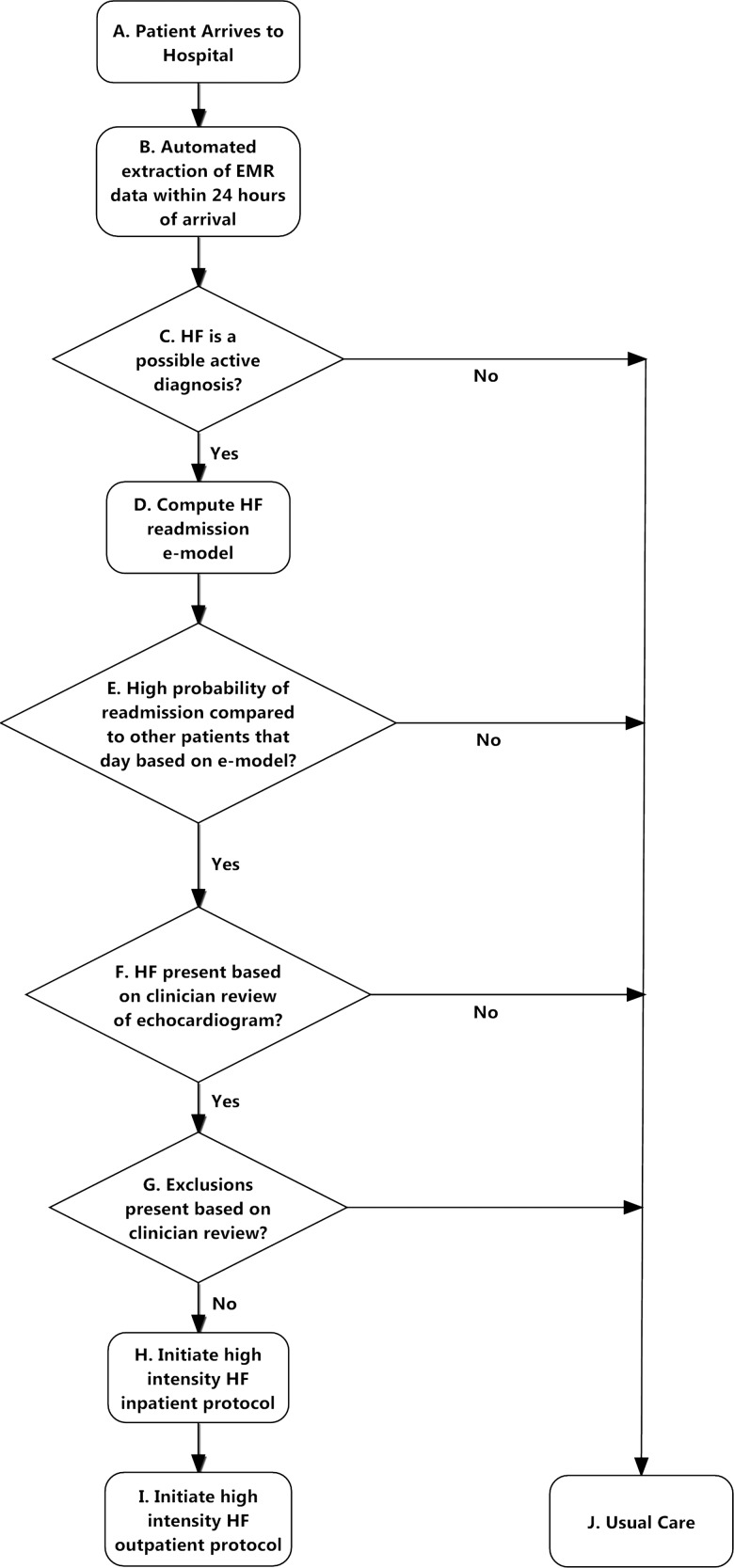
A prospective controlled before and after study of adult inpatients admitted with HF and two concurrent control conditions (acute myocardial infarction (AMI) and pneumonia (PNA)) was performed between 1 December 2008 and 1 December 2010 at a large urban public teaching hospital. An EMR-based software platform stratified all patients admitted with HF on a daily basis by their 30-day readmission risk using a published electronic predictive model. Patients at highest risk received an intensive set of evidence-based interventions designed to reduce readmission using existing resources. The main outcome measure was readmission for any cause and to any hospital within 30 days of discharge.
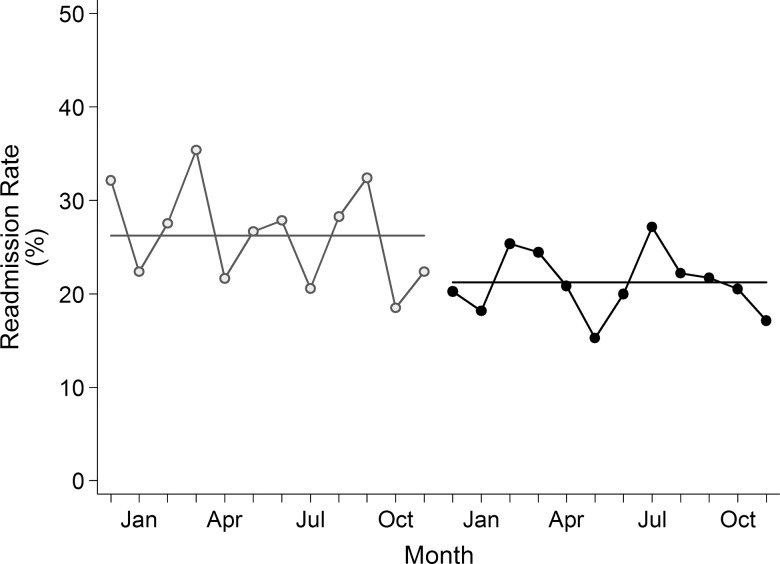
There were 834 HF admissions in the pre-intervention period and 913 in the post-intervention period. The unadjusted readmission rate declined from 26.2% in the pre-intervention period to 21.2% in the post-intervention period (p=0.01), a decline that persisted in adjusted analyses (adjusted OR (AOR)=0.73; 95% CI 0.58 to 0.93, p=0.01). In contrast, there was no significant change in the unadjusted and adjusted readmission rates for PNA and AMI over the same period. There were 45 fewer readmissions with 913 patients enrolled and 228 patients receiving intervention, resulting in a number needed to treat (NNT) ratio of 20.
An EMR-enabled strategy that targeted scarce care transition resources to high-risk HF patients significantly reduced the risk-adjusted odds of readmission.
采用多学科方法降低心力衰竭(HF)再入院率,通过一套电子病历(EMR)启用程序,根据患者的风险调整护理过渡干预的强度。
2008 年 12 月 1 日至 2010 年 12 月 1 日,在一家大型城市公立教学医院,对成人因 HF 入院的患者进行了前瞻性对照前后研究,并同时对两种对照条件(急性心肌梗死(AMI)和肺炎(PNA))进行了研究。基于 EMR 的软件平台每天根据发表的电子预测模型对所有因 HF 入院的患者进行 30 天再入院风险分层。风险最高的患者接受了一整套强化的基于证据的干预措施,旨在利用现有资源减少再入院。主要结局指标为出院后 30 天内任何原因和任何医院的再入院。
干预前有 834 例 HF 入院,干预后有 913 例。未调整的再入院率从干预前的 26.2%下降到干预后的 21.2%(p=0.01),调整分析后仍持续下降(调整后的 OR(AOR)=0.73;95%CI 0.58 至 0.93,p=0.01)。相比之下,同期 PNA 和 AMI 的未调整和调整后再入院率没有显著变化。在纳入 913 例患者和 228 例接受干预的患者中,有 45 例再入院,导致需要治疗的人数(NNT)比为 20。
针对高危 HF 患者的 EMR 启用策略,将稀缺的护理过渡资源集中用于高危患者,显著降低了风险调整后的再入院几率。