German Center for Neurodegenerative Diseases (DZNE), Bonn, Germany.
Cell Death Dis. 2013 Aug 1;4(8):e752. doi: 10.1038/cddis.2013.276.
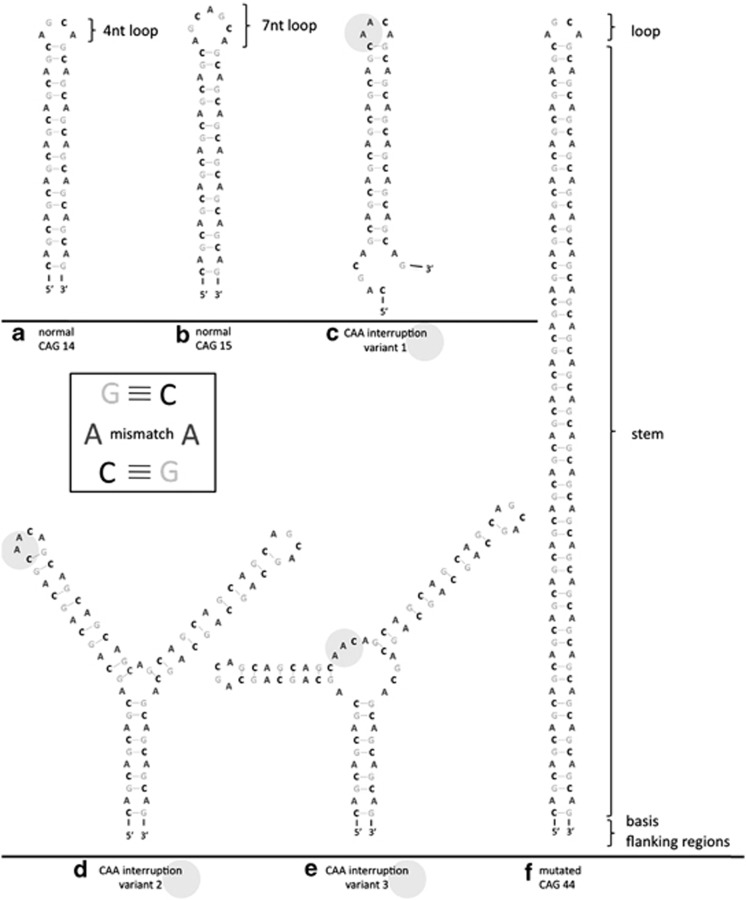
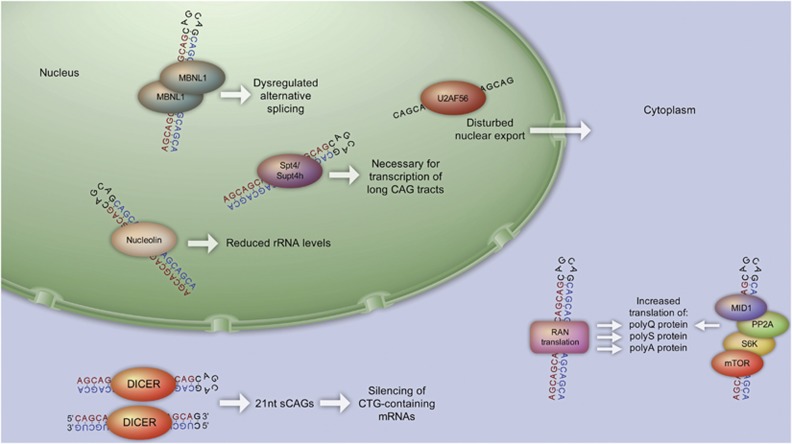
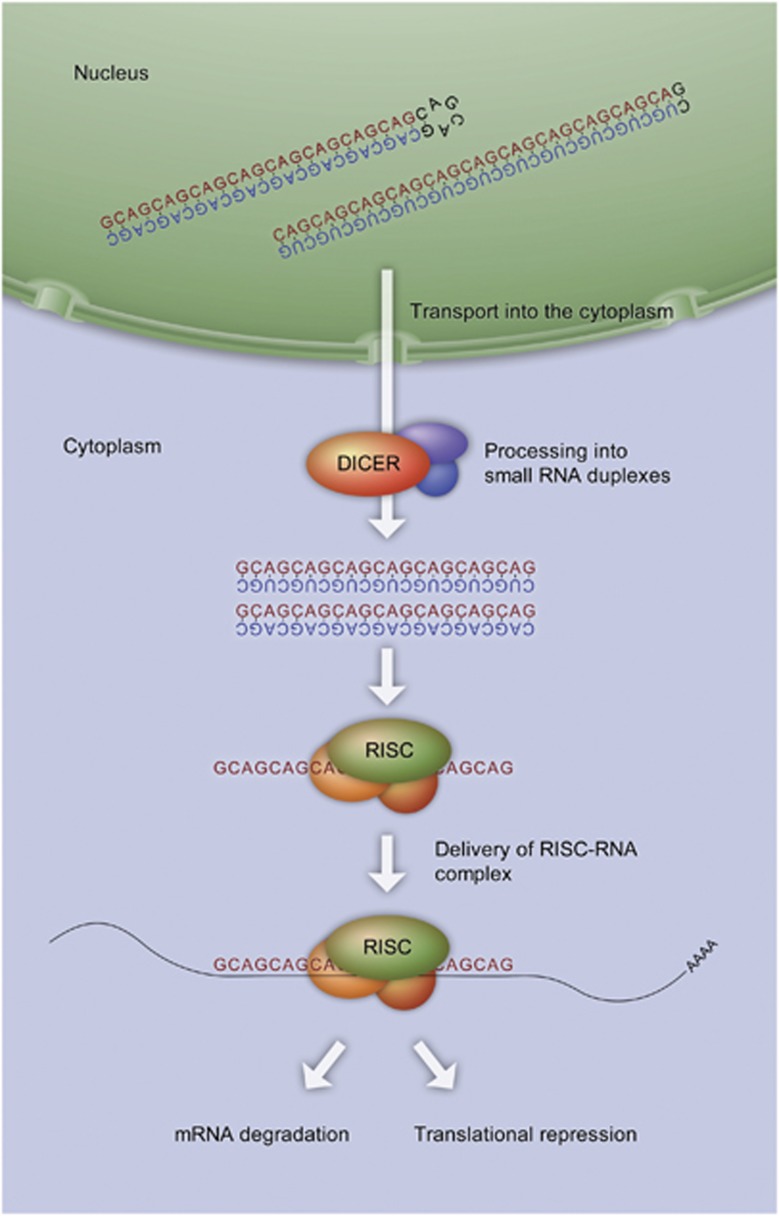
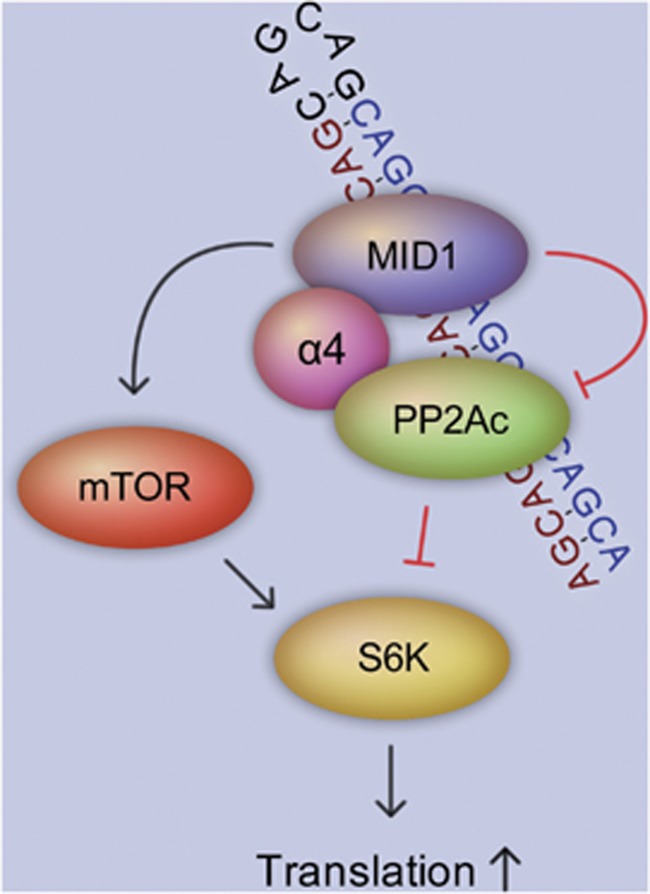
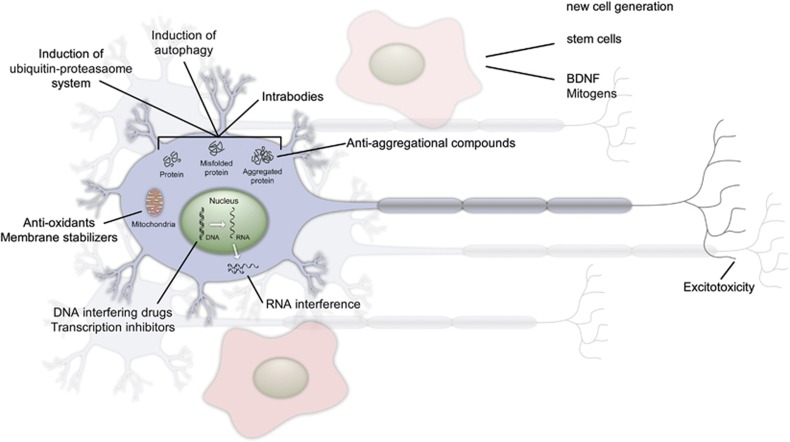
Several inherited neurodegenerative disorders are caused by CAG trinucleotide repeat expansions, which can be located either in the coding region or in the untranslated region (UTR) of the respective genes. Polyglutamine diseases (polyQ diseases) are caused by an expansion of a stretch of CAG repeats within the coding region, translating into a polyQ tract. The polyQ tract expansions result in conformational changes, eventually leading to aggregate formation. It is widely believed that the aggregation of polyQ proteins is linked with disease development. In addition, in the last couple of years, it has been shown that RNA-mediated mechanisms also have a profound role in neurotoxicity in both polyQ diseases and diseases caused by elongated CAG repeat motifs in their UTRs. Here, we review the different molecular mechanisms assigned to mRNAs with expanded CAG repeats. One aspect is the mRNA folding of CAG repeats. Furthermore, pathogenic mechanisms assigned to CAG repeat mRNAs are discussed. First, we discuss mechanisms that involve the sequestration of the diverse proteins to the expanded CAG repeat mRNA molecules. As a result of this, several cellular mechanisms are aberrantly regulated. These include the sequestration of MBNL1, leading to misregulated splicing; sequestration of nucleolin, leading to reduced cellular rRNA; and sequestration of proteins of the siRNA machinery, resulting in the production of short silencing RNAs that affect gene expression. Second, we discuss the effect of expanded CAG repeats on the subcellular localization, transcription and translation of the CAG repeat mRNA itself. Here we focus on the MID1 protein complex that triggers an increased translation of expanded CAG repeat mRNAs and a mechanism called repeat-associated non-ATG translation, which leads to proteins aberrantly translated from CAG repeat mRNAs. In addition, therapeutic approaches for CAG repeat disorders are discussed. Together, all the findings summarized here show that mutant mRNA has a fundamental role in the pathogenesis of CAG repeat diseases.
几种遗传性神经退行性疾病是由 CAG 三核苷酸重复扩展引起的,这些扩展可以位于相应基因的编码区或非翻译区 (UTR) 中。多聚谷氨酰胺疾病(polyQ 疾病)是由于编码区中 CAG 重复序列的扩展,翻译成多聚谷氨酰胺链。多聚谷氨酰胺链的扩展导致构象变化,最终导致聚集体的形成。人们普遍认为,polyQ 蛋白的聚集与疾病的发展有关。此外,在过去的几年中,已经表明 RNA 介导的机制在 polyQ 疾病和其 UTR 中具有长 CAG 重复基序的疾病的神经毒性中也具有深远的作用。在这里,我们回顾了与扩展的 CAG 重复 mRNA 相关的不同分子机制。一方面是 CAG 重复的 mRNA 折叠。此外,还讨论了与 CAG 重复 mRNA 相关的致病机制。首先,我们讨论了涉及将各种蛋白质隔离到扩展的 CAG 重复 mRNA 分子的机制。由于这种情况,几个细胞机制被异常调节。这些机制包括将 MBNL1 隔离到异常调节剪接;将核仁蛋白隔离到减少细胞 rRNA;以及将 siRNA 机制的蛋白质隔离,导致产生影响基因表达的短沉默 RNA。其次,我们讨论了扩展的 CAG 重复对 CAG 重复 mRNA 本身的亚细胞定位、转录和翻译的影响。在这里,我们专注于触发扩展的 CAG 重复 mRNA 翻译增加的 MID1 蛋白复合物,以及一种称为重复相关非 ATG 翻译的机制,该机制导致从 CAG 重复 mRNA 异常翻译的蛋白质。此外,还讨论了治疗 CAG 重复障碍的方法。总的来说,这里总结的所有发现表明,突变的 mRNA 在 CAG 重复疾病的发病机制中起着至关重要的作用。