Gont Alexander, Hanson Jennifer E L, Lavictoire Sylvie J, Parolin Doris A, Daneshmand Manijeh, Restall Ian J, Soucie Mathieu, Nicholas Garth, Woulfe John, Kassam Amin, Da Silva Vasco F, Lorimer Ian A J
Centre for Cancer Therapeutics, Ottawa Hospital Research Institute, 501 Smyth Road, Ottawa, K1H 8L6, Canada.
Oncotarget. 2013 Aug;4(8):1266-79. doi: 10.18632/oncotarget.1164.
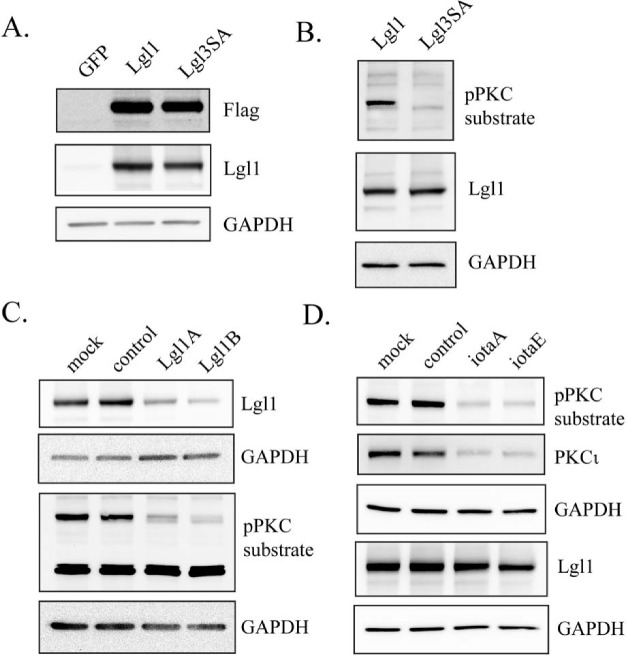
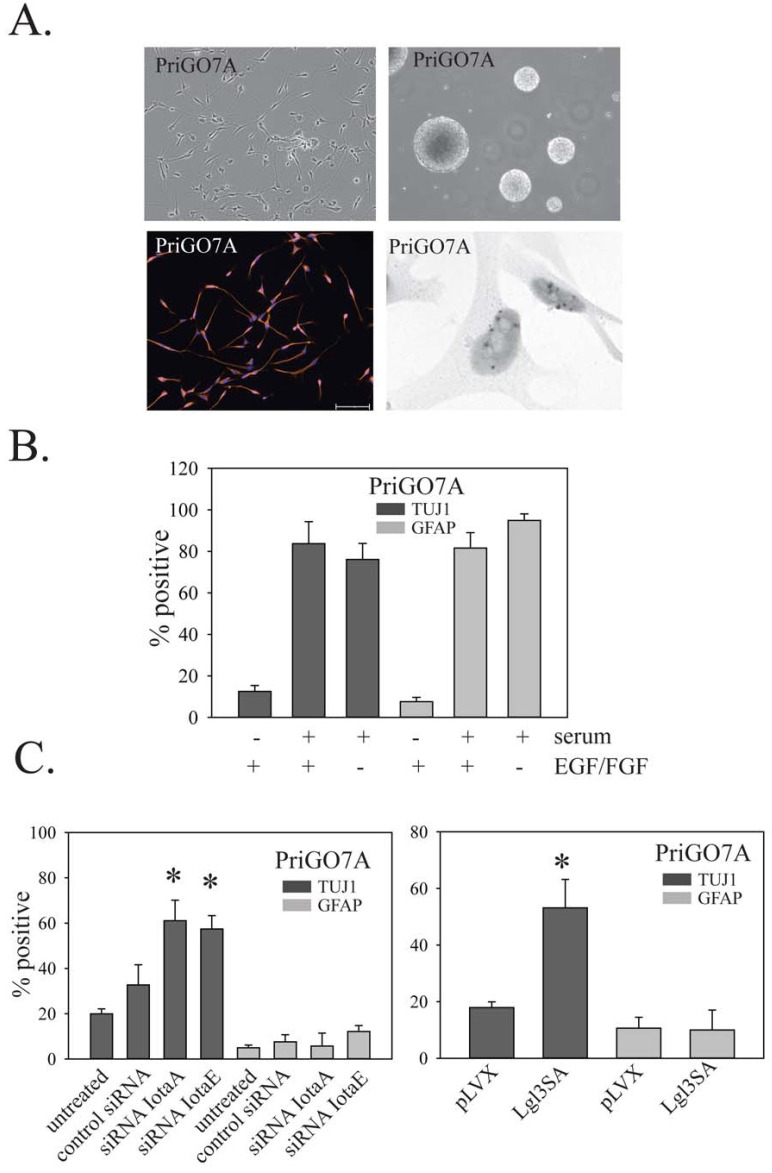
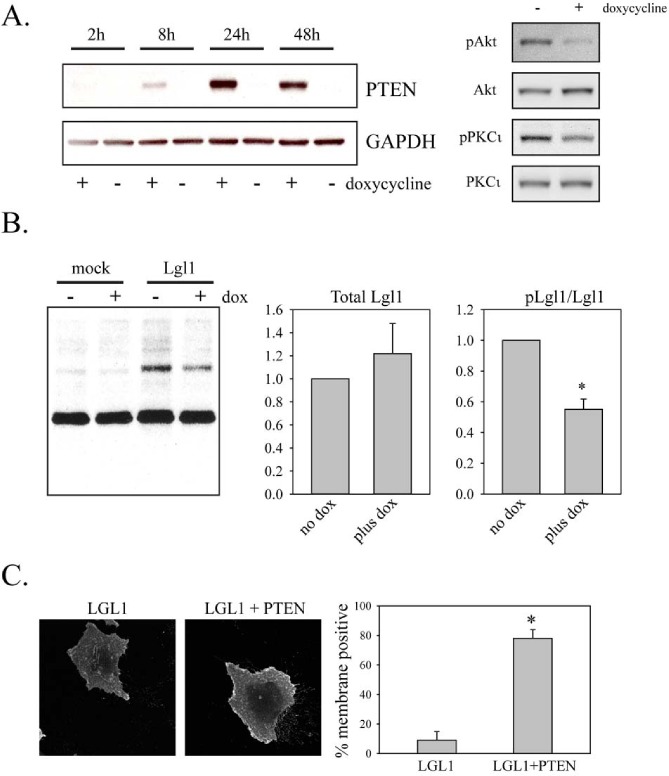
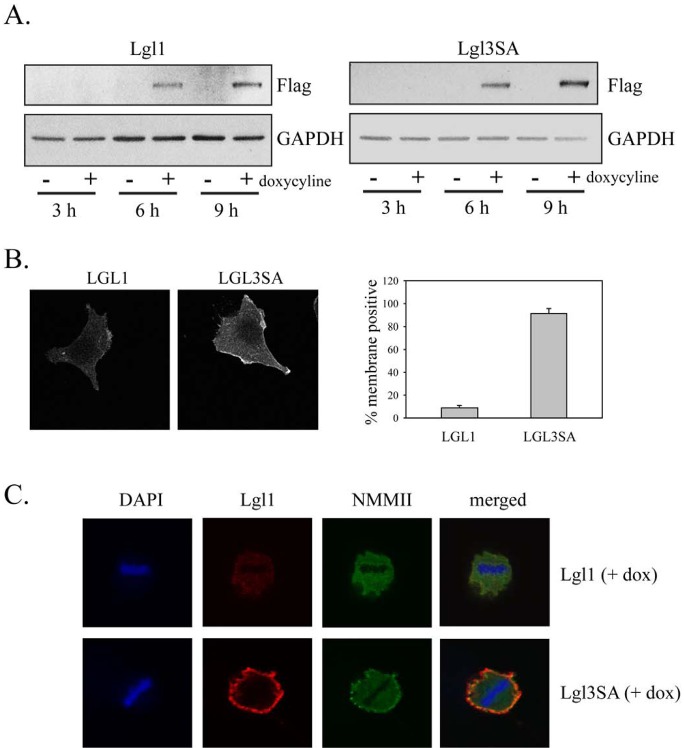
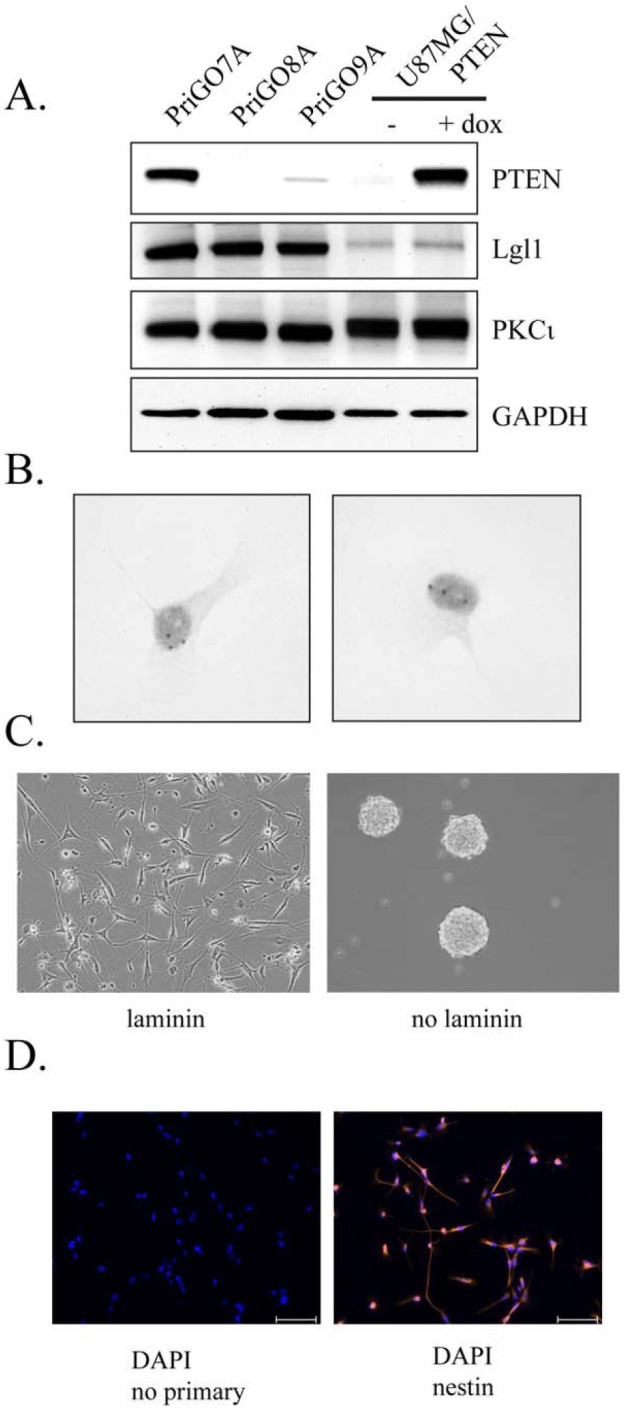
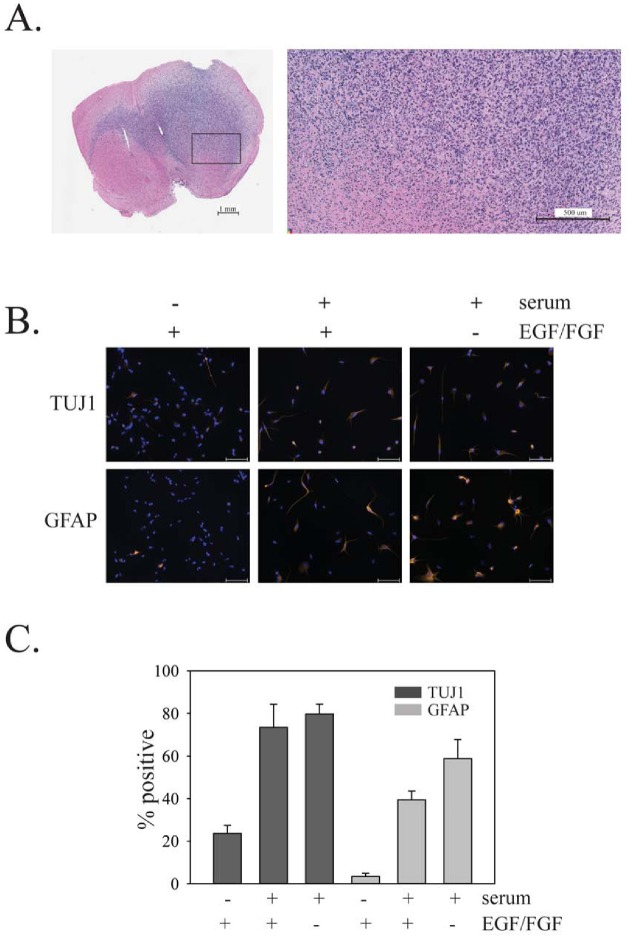
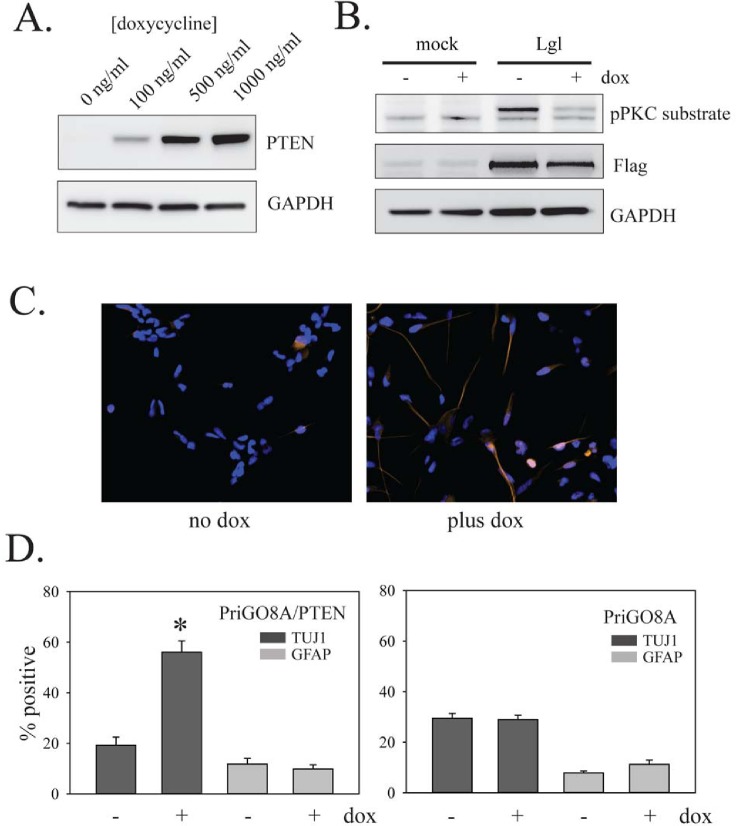
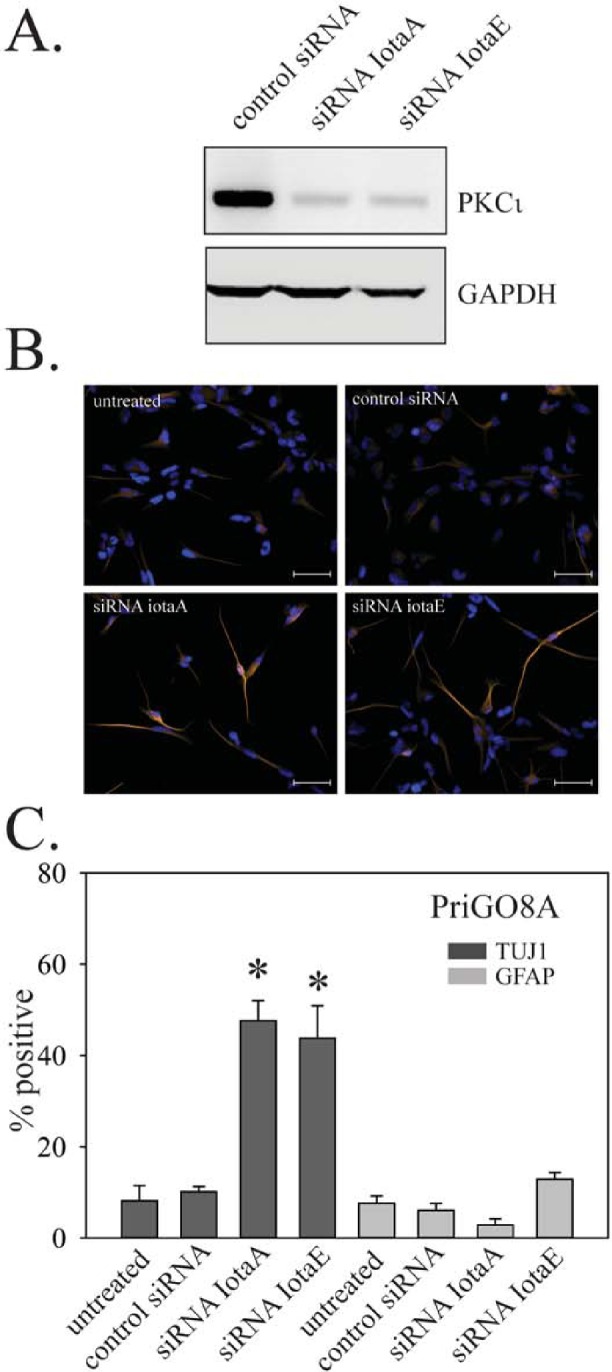
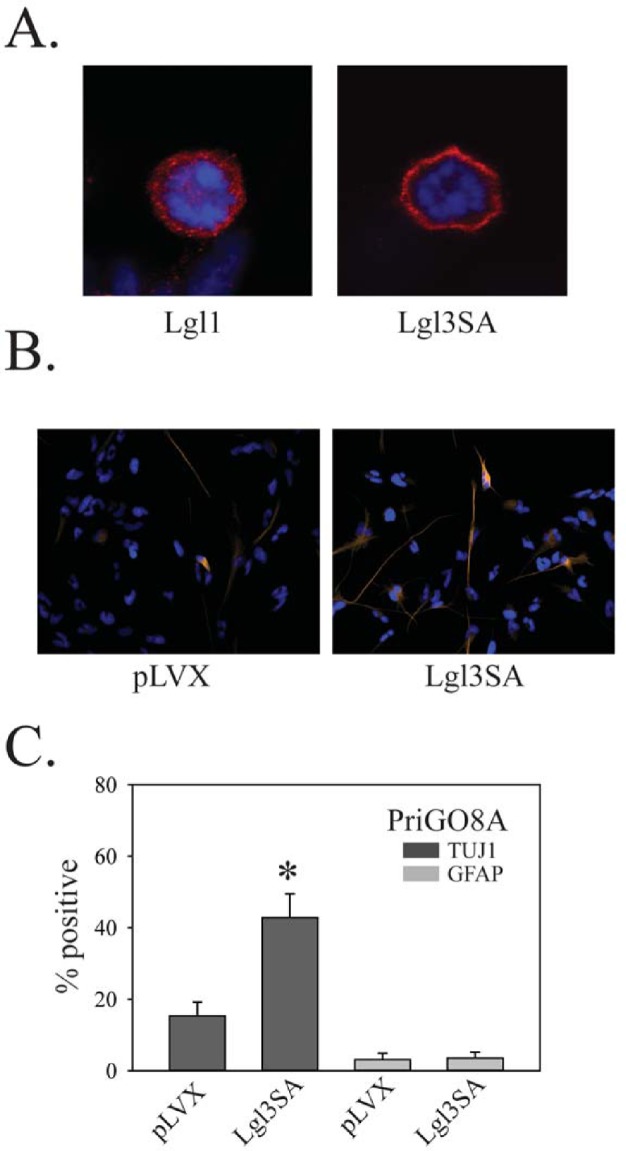
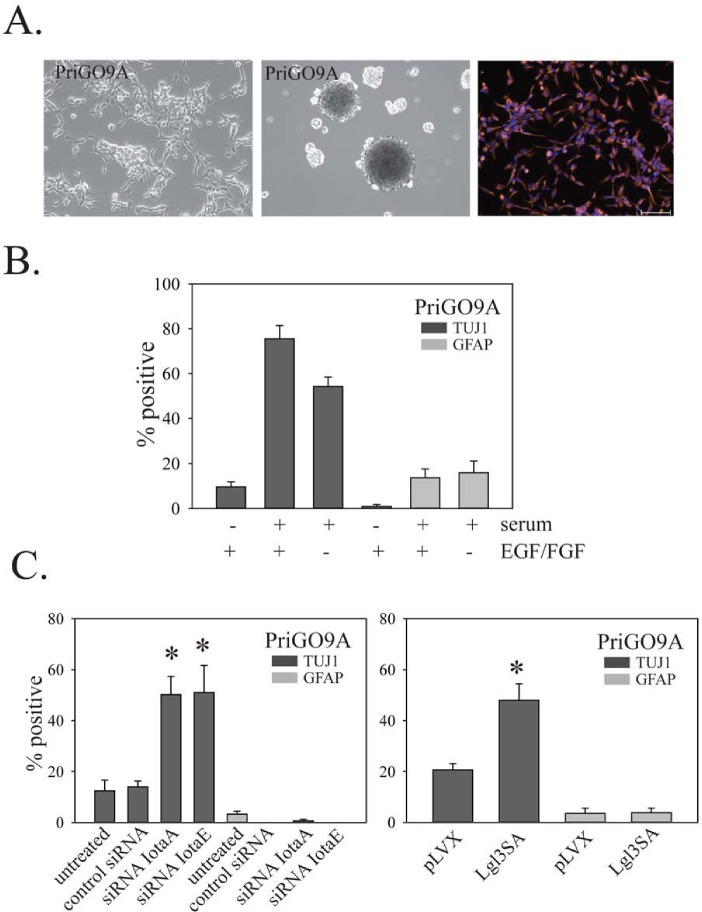
Glioblastoma multiforme is an aggressive and incurable type of brain tumor. A subset of undifferentiated glioblastoma cells, known as glioblastoma tumor initiating cells (GTICs), has an essential role in the malignancy of this disease and also appears to mediate resistance to radiation therapy and chemotherapy. GTICs retain the ability to differentiate into cells with reduced malignant potential, but the signaling pathways controlling differentiation are not fully understood at this time. PTEN loss is a very common in glioblastoma multiforme and leads to aberrant activation of the phosphoinositide 3-kinase pathway. Increased signalling through this pathway leads to activation of multiple protein kinases, including atypical protein kinase C. In Drosophila, active atypical protein kinase C has been shown to promote the self-renewal of neuroblasts, inhibiting their differentiation along a neuronal lineage. This effect is mediated by atypical protein kinase c-mediated phosphorylation and inactivation of Lgl, a protein that was first characterized as a tumour suppressor in Drosophila. The effects of the atypical protein kinase C/Lgl pathway on the differentiation status of GTICs, and its potential link to PTEN loss, have not been assessed previously. Here we show that PTEN loss leads to the phosphorylation and inactivation of Lgl by atypical protein kinase C in glioblastoma cells. Re-expression of PTEN in GTICs promoted their differentiation along a neuronal lineage. This effect was also seen when atypical protein kinase C was knocked down using RNA interference, and when a non-phosphorylatable, constitutively active form of Lgl was expressed in GTICs. Thus PTEN loss, acting via atypical protein kinase C activation and Lgl inactivation, helps to maintain GTICs in an undifferentiated state.
多形性胶质母细胞瘤是一种侵袭性且无法治愈的脑肿瘤类型。未分化的胶质母细胞瘤细胞亚群,即胶质母细胞瘤肿瘤起始细胞(GTICs),在该疾病的恶性发展中起关键作用,并且似乎还介导对放射治疗和化疗的抗性。GTICs保留了分化为恶性潜能降低的细胞的能力,但目前对控制分化的信号通路尚未完全了解。PTEN缺失在多形性胶质母细胞瘤中非常常见,并导致磷酸肌醇3激酶途径的异常激活。通过该途径增加的信号传导导致多种蛋白激酶的激活,包括非典型蛋白激酶C。在果蝇中,已显示活性非典型蛋白激酶C促进神经母细胞的自我更新,抑制它们沿神经元谱系的分化。这种作用是由非典型蛋白激酶C介导的Lgl磷酸化和失活介导的,Lgl是一种最初在果蝇中被鉴定为肿瘤抑制因子的蛋白质。非典型蛋白激酶C/Lgl途径对GTICs分化状态的影响及其与PTEN缺失的潜在联系,此前尚未评估。在这里,我们表明PTEN缺失导致胶质母细胞瘤细胞中Lgl被非典型蛋白激酶C磷酸化并失活。GTICs中PTEN的重新表达促进了它们沿神经元谱系的分化。当使用RNA干扰敲低非典型蛋白激酶C时,以及当在GTICs中表达不可磷酸化的、组成型活性形式的Lgl时,也观察到了这种效果。因此,PTEN缺失通过非典型蛋白激酶C激活和Lgl失活起作用,有助于将GTICs维持在未分化状态。