Higgins Dominique M, Wang Ruisi, Milligan Brian, Schroeder Mark, Carlson Brett, Pokorny Jenny, Cheshier Samuel H, Meyer Fredric B, Weissman Irving L, Sarkaria Jann N, Henley John R
Medical Scientist Training Program, Mayo Clinic: College of Medicine, Rochester, Minnesota, USA.
Oncotarget. 2013 May;4(5):792-801. doi: 10.18632/oncotarget.1059.
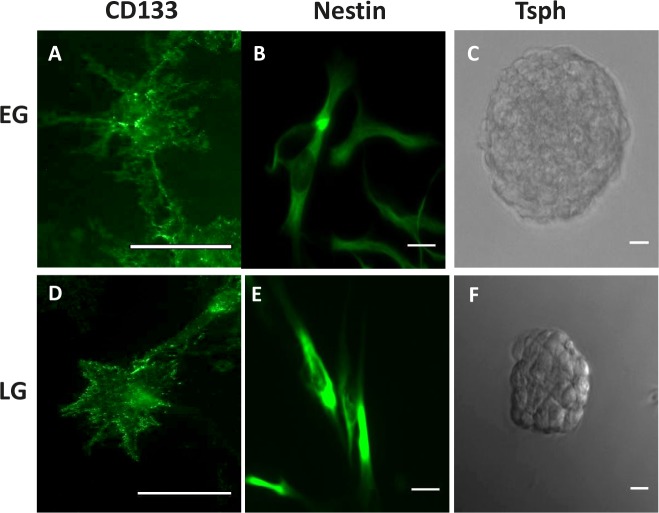
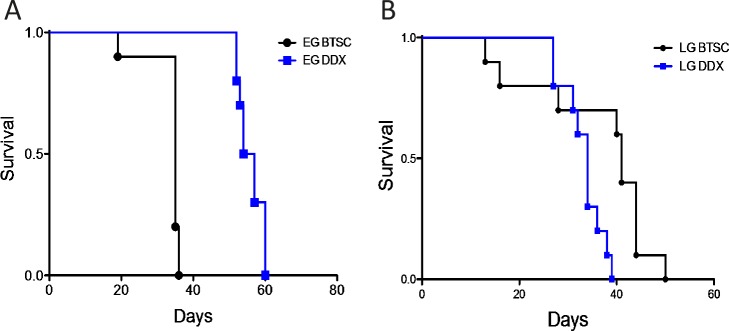
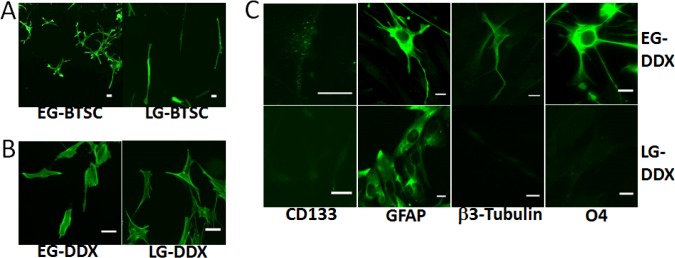
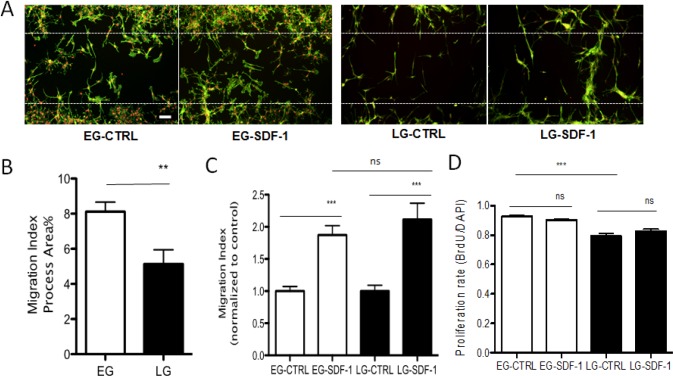
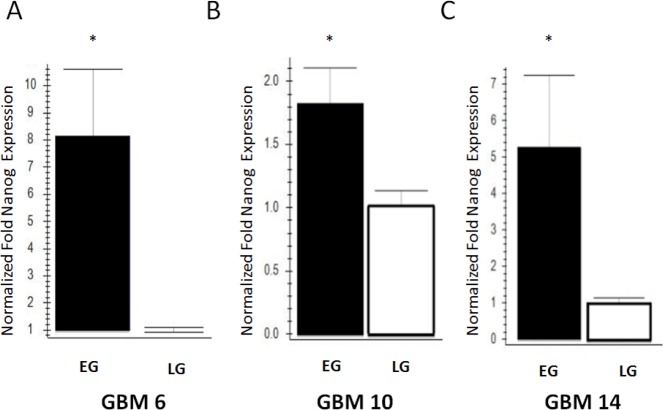
Glioblastoma multiforme (GBM) is the most common primary brain tumor, with a median survival of only 15 months. A subpopulation of cells, the brain tumor stem cells (BTSCs), may be responsible for the malignancy of this disease. Xenografts have proven to be a robust model of human BTSCs, but the effects of long-term passaging have yet to be determined. Here we present a study detailing changes in BTSC multipotency, invasive migration, and proliferation after serial passaging of human GBM xenografts. Immunocytochemistry and tumorsphere formation assays demonstrated the presence of BTSCs in both early generation (EG-BTSCs; less than 15 passages) and late generation (LG-BTSCs; more than 24 passages) xenografts. The EG-BTSCs upregulated expression of lineage markers for neurons and oligodendrocytes upon differentiation, indicating multipotency. In contrast, the LG-BTSCs were restricted to an astrocytic differentiation. Quantitative migration and proliferation assays showed that EG-BTSCs are more migratory and proliferative than LG-BTSCs. However, both populations respond similarly to the chemokine SDF-1 by increasing invasive migration. These differences between the EG- and LG-BTSCs were correlated with a significant decrease in nanog expression as determined by qRT-PCR. Mice implanted intracranially with EG-BTSCs showed shorter survival when compared to LG-BTSCs. Moreover, differentiation prior to implantation of EG-BTSCs, but not LG-BTSCs, led to increased survival. Thus, nanog may identify multipotent BTSCs. Furthermore, limited passaging of xenografts preserves these multipotent BTSCs, which may be an essential underlying feature of GBM lethality.
多形性胶质母细胞瘤(GBM)是最常见的原发性脑肿瘤,中位生存期仅为15个月。脑肿瘤干细胞(BTSCs)这一细胞亚群可能是该疾病恶性程度的原因。异种移植已被证明是人类BTSCs的一个可靠模型,但长期传代的影响尚未确定。在此,我们展示了一项研究,详细阐述了人类GBM异种移植连续传代后BTSC多能性、侵袭性迁移和增殖的变化。免疫细胞化学和肿瘤球形成试验证明,早期传代(EG - BTSCs;少于15代)和晚期传代(LG - BTSCs;超过24代)的异种移植中均存在BTSCs。EG - BTSCs在分化时上调神经元和少突胶质细胞谱系标志物的表达,表明具有多能性。相比之下,LG - BTSCs仅限于星形胶质细胞分化。定量迁移和增殖试验表明,EG - BTSCs比LG - BTSCs更具迁移性和增殖性。然而,两个群体对趋化因子SDF - 1的反应相似,侵袭性迁移均增加。EG - BTSCs和LG - BTSCs之间的这些差异与qRT - PCR测定的nanog表达显著降低相关。与LG - BTSCs相比,颅内植入EG - BTSCs的小鼠生存期更短。此外,EG - BTSCs而非LG - BTSCs在植入前进行分化会导致生存期延长。因此,nanog可能识别多能BTSCs。此外,异种移植的有限传代保留了这些多能BTSCs,这可能是GBM致死性的一个基本潜在特征。