Department of Psychiatry and Neurobehavioral Sciences, University of Virginia, 1670 Discovery Drive, Charlottesville, VA 22911, USA.
Behav Genet. 2013 Sep;43(5):436-44. doi: 10.1007/s10519-013-9605-y. Epub 2013 Aug 4.
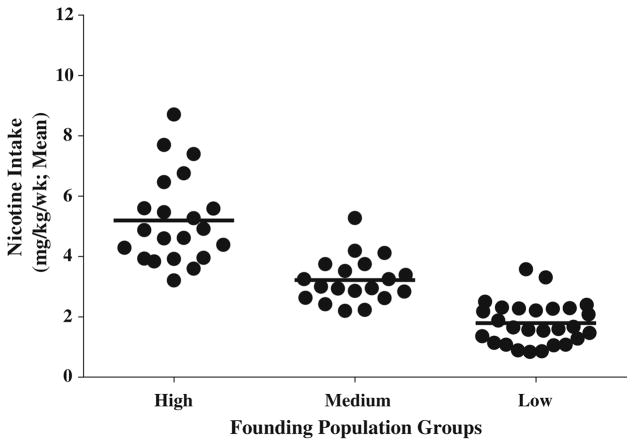
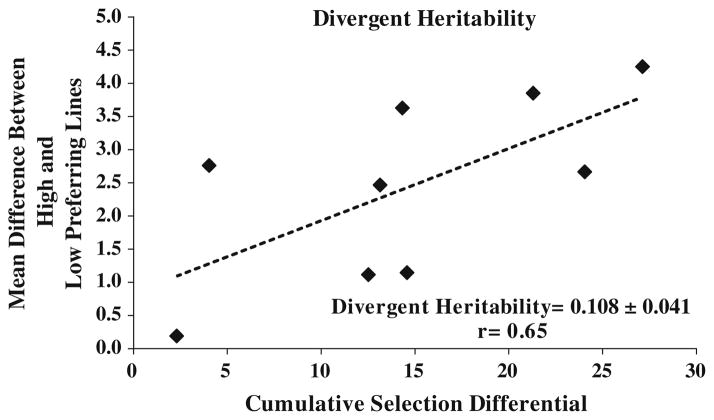
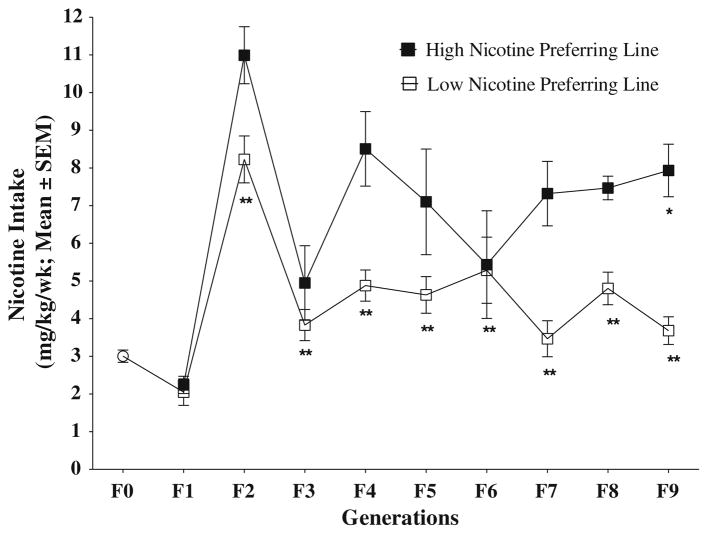
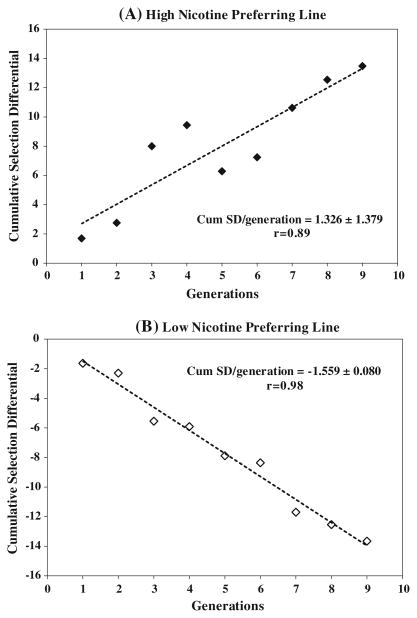
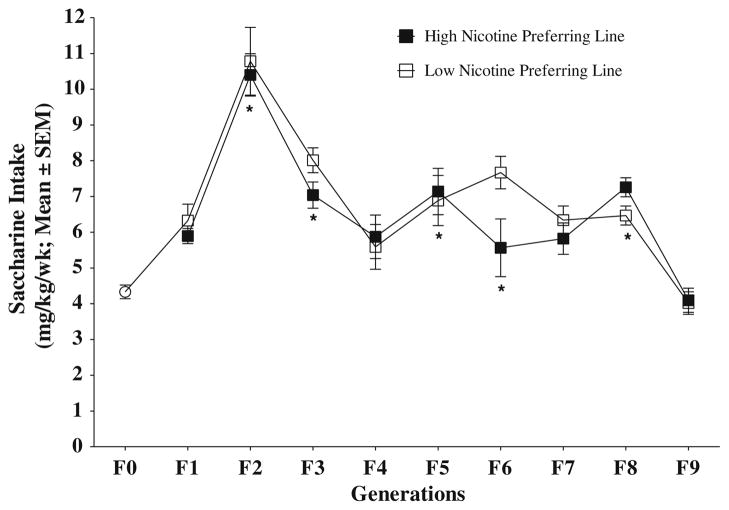
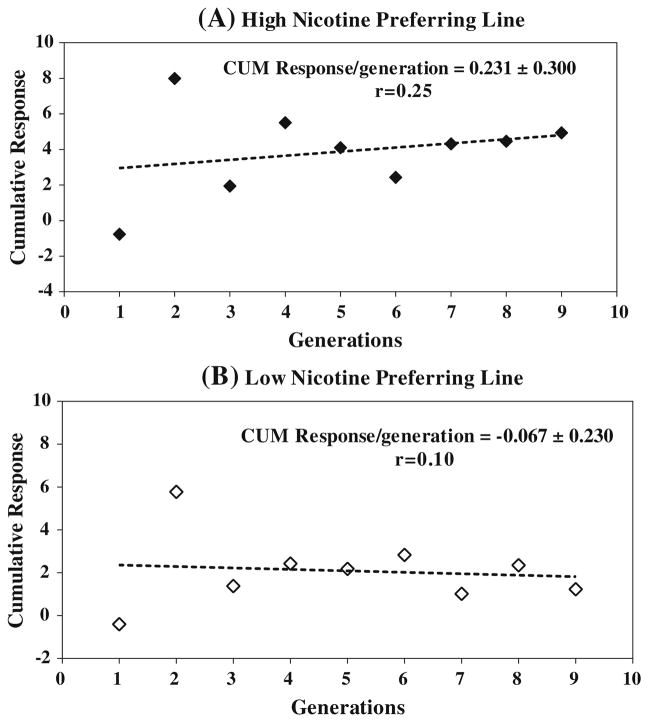
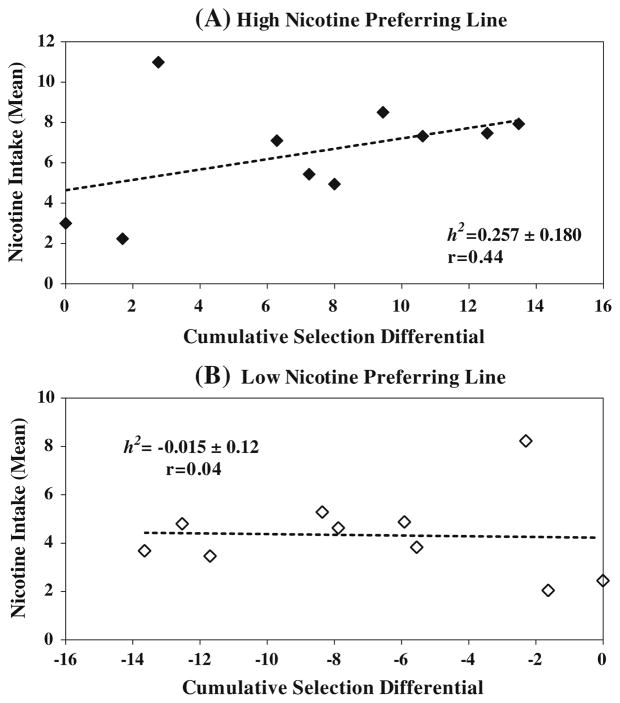
Previous animal studies have revealed significant involvement of genetics in nicotine intake; however, the extent of the genetic contribution to this behavior has not been well addressed. We report the first study of nine generations of selection for high and low voluntary nicotine intake in outbred Sprague-Dawley rats. Bidirectional mass selection resulted in progressively greater nicotine consumption in the high nicotine-preferring line but no decrease in nicotine intake in the low nicotine-preferring line across generations. Our estimated realized heritability for high voluntary nicotine intake is 0.26 vs close to zero for low voluntary nicotine intake. In contrast, we found no differences between the lines across generations for saccharine intake. These selected lines may provide useful animal models for identifying susceptibility and resistance genes and variants for controlling voluntary nicotine intake in rodents, although we recognize that more generations of selection of these two lines and independent replication of our selection for high and low nicotine-preferring lines are needed.
先前的动物研究表明,遗传因素在尼古丁摄入中起着重要作用;然而,遗传因素对这种行为的贡献程度尚未得到很好的解决。我们报告了第一个关于选择高和低自愿尼古丁摄入的 9 个世代的研究,该研究在杂交 Sprague-Dawley 大鼠中进行。双向质量选择导致高尼古丁偏好品系的尼古丁摄入量逐渐增加,但在几代人中,低尼古丁偏好品系的尼古丁摄入量没有下降。我们估计高自愿性尼古丁摄入的实际遗传力为 0.26,而低自愿性尼古丁摄入的遗传力接近零。相比之下,我们在几代人中没有发现两条线之间在蔗糖摄入方面存在差异。这些选定的品系可能为鉴定控制啮齿动物自愿性尼古丁摄入的易感性和抗性基因和变体提供有用的动物模型,尽管我们认识到需要对这两条线进行更多代的选择,并对我们选择的高和低尼古丁偏好品系进行独立复制。