University of Kentucky.
Health Psychol. 2014 Jul;33(7):720-8. doi: 10.1037/a0033506. Epub 2013 Aug 5.
Self-rated health (SRH) predicts mortality above and beyond objective health risks and, as such, comprises an important aspect of health. Established contributors to SRH include affect, age, and disease, but neither their dynamic nor their synergistic contributions to SRH have been comprehensively tested.
The present study employed older adults (N = 150; Mage = 75 years) and a longitudinal design with 6-month waves over a period up to 5 years. Positive (PA) and negative affect (NA), chronic disease, and SRH were assessed at each wave.
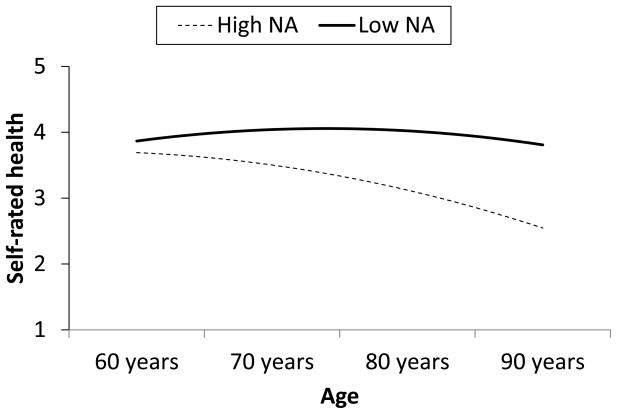
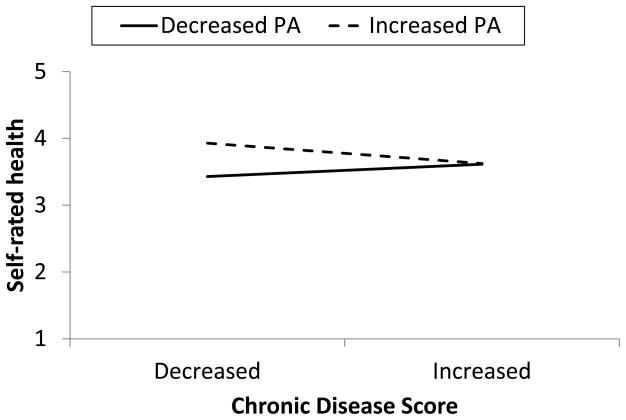
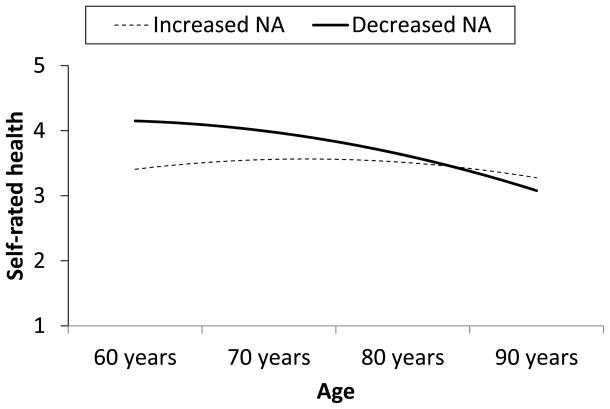
In multilevel models with single predictors, older age, more chronic disease, and higher NA predicted worse SRH, whereas higher PA predicted better SRH. Affect predicted SRH both between and within people. In multilevel models with interactions between affect and age or disease, individual differences in NA predicted worse SRH primarily in older people. Within people, changes in NA were associated with changes in SRH, but more so in younger than in older people. Within people, changes in PA were associated with changes in SRH, but only when health was better than usual.
There were both dynamic and synergistic relationships between affect and SRH that could only emerge in a multilevel, multivariable design. In the case of NA, between-person, trait NA had the opposite relationship to SRH and age compared to within-person, state NA. Which component of this relationship predicts mortality is an important question for future research.
自评健康(SRH)预测死亡率超过客观健康风险,因此是健康的一个重要方面。影响自评健康的因素包括情绪、年龄和疾病,但它们对自评健康的动态和协同作用尚未得到全面检验。
本研究采用老年人(N=150;平均年龄=75 岁)和纵向设计,每个波次的时间跨度为 6 个月,最长可达 5 年。在每个波次中评估积极情绪(PA)和消极情绪(NA)、慢性疾病和 SRH。
在具有单一预测因子的多层次模型中,年龄较大、慢性疾病较多和 NA 较高预测 SRH 较差,而 PA 较高预测 SRH 较好。情绪在个体间和个体内均预测 SRH。在具有情绪与年龄或疾病之间相互作用的多层次模型中,NA 的个体差异主要在老年人中预测 SRH 较差。在个体内,NA 的变化与 SRH 的变化相关,但在年轻人中比在老年人中更为明显。在个体内,PA 的变化与 SRH 的变化相关,但只有在健康状况好于平时时才相关。
情绪与 SRH 之间存在动态和协同关系,只有在多层次、多变量设计中才能显现出来。在 NA 的情况下,个体间的特质性 NA 与 SRH 和年龄的关系与个体内的状态性 NA 相反。这种关系的哪个组成部分预测死亡率是未来研究的一个重要问题。