BMC Complement Altern Med. 2013 Aug 4;13:204. doi: 10.1186/1472-6882-13-204.
In order to gain insight into neuroprotective effects of ECa 233, a standardized extract of Centella asiatica, previously demonstrated in animal models of memory impairment induced by transient global ischemia or intracerebroventricular injection of β-amyloid, the effect of ECa 233 on neurite outgrowth of human IMR-32 neuroblastoma cell line was investigated.
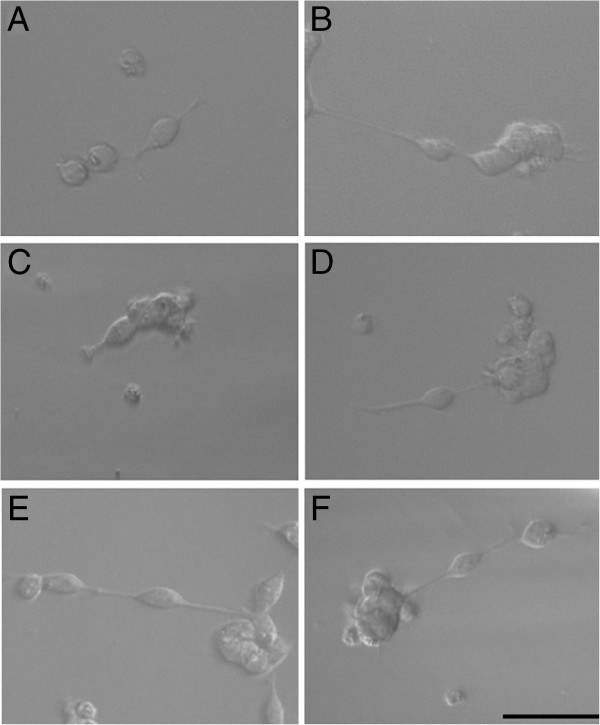
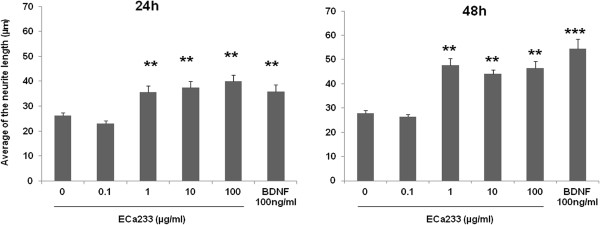
Cells were seeded and incubated with various concentrations of ECa 233. Morphometric analysis was carried out by a measurement of the longest neurite growth of cells at 24 and 48 h. Contributing signaling pathways possibly involved were subsequently elucidated by western blot analysis.
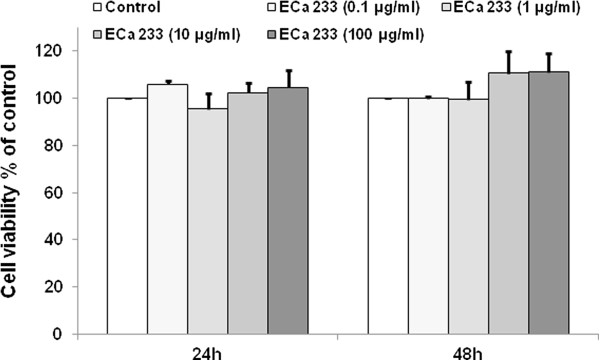
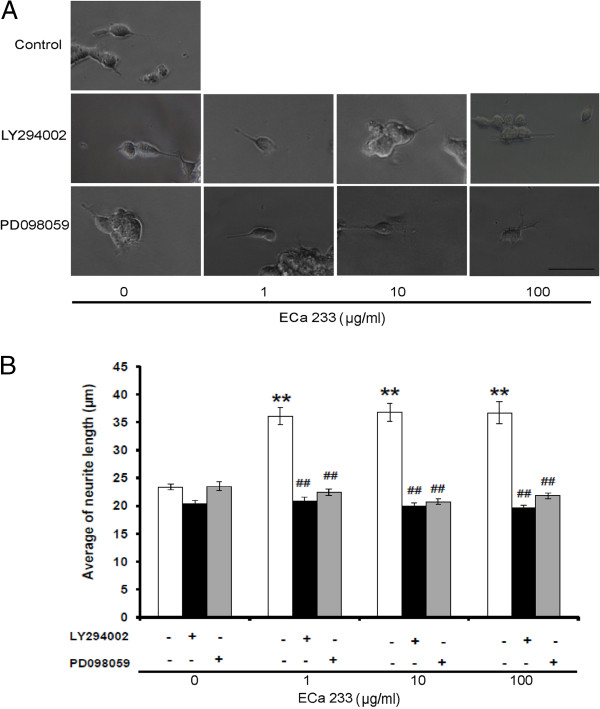
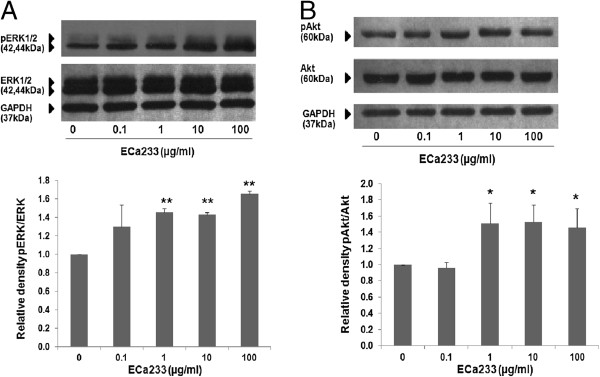
While ECa 233 had only limited effects on cell viability, it significantly enhanced neurite outgrowth of IMR-32 cells at the concentrations of 1-100 μg/ml. Western blot analysis revealed that ECa 233 significantly upregulated the level of activated ERK1/2 and Akt of the treated cells suggesting their involvement in the neuritogenic effect observed, which was subsequently verified by the finding that an addition of their respective inhibitors could reverse the effect of ECa 233 on these cells.
The present study clearly demonstrated neurite outgrowth promoting activity of ECa 233. ERK1/2 and Akt signaling pathways seemed to account for the neurotrophic effect observed. In conjunction with in vivo neuroprotective effect of ECa 233 previously reported, the results obtained support further development of ECa 233 for clinical use in neuronal injury or neurodegenerative diseases.
为了深入了解积雪草酸(Centella asiatica 的标准化提取物)的神经保护作用,该研究先前在动物模型中观察到其对短暂全脑缺血或脑室内注射β-淀粉样蛋白引起的记忆障碍具有保护作用,本研究旨在探讨 ECa 233 对人 IMR-32 神经母细胞瘤细胞系的突起生长的影响。
细胞接种并与不同浓度的 ECa 233 孵育。在 24 和 48 小时测量细胞最长突起的生长,进行形态计量分析。随后通过 Western blot 分析阐明可能涉及的信号通路。
虽然 ECa 233 对细胞活力仅有有限的影响,但它在 1-100μg/ml 的浓度下显著增强了 IMR-32 细胞的突起生长。Western blot 分析显示,ECa 233 显著上调了处理细胞中激活的 ERK1/2 和 Akt 的水平,提示它们参与了观察到的促突起生成作用,随后发现添加各自的抑制剂可以逆转 ECa 233 对这些细胞的作用。
本研究清楚地表明 ECa 233 具有促进突起生长的活性。ERK1/2 和 Akt 信号通路似乎解释了观察到的神经营养作用。结合先前报道的 ECa 233 在体内的神经保护作用,这些结果支持进一步开发 ECa 233 用于神经元损伤或神经退行性疾病的临床应用。