Franceschini Vincenzo, Chillemi Claudio
Department of Orthopaedics and Traumatology, Sapienza University of Rome, ICOT, via Faggiana 1668, 04100 Latina, Italy.
Open Orthop J. 2013 Jun 28;7:243-9. doi: 10.2174/1874325001307010243. Print 2013.
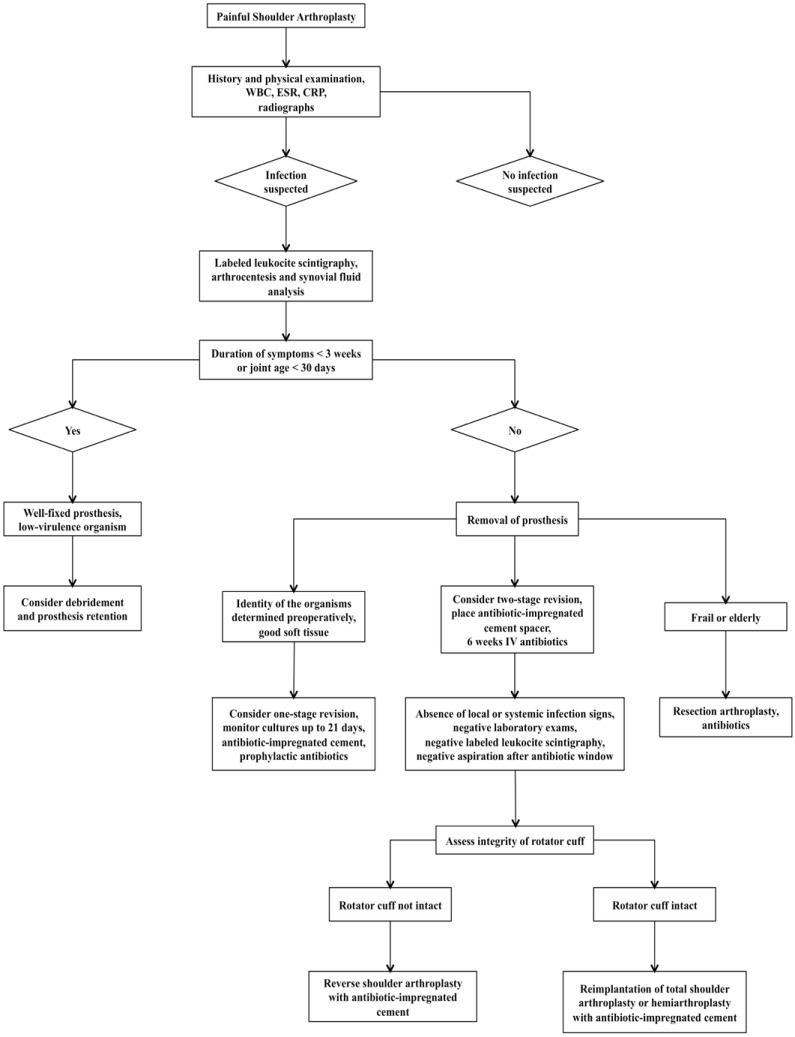
Shoulder arthroplasty is considered the most effective surgical procedure for endstage shoulder pain from different causes including osteoarthritis, cuff-tear arthropathy, trauma, and tumors. Although uncommon and less frequent than knee or hip periprosthetic infection, periprosthetic shoulder infection represents a devastating complication and, despite treatment, is associated with unsatisfactory results. The most commonly identified microorganisms in periprosthetic shoulder infections are Staphylococcus aureus, coagulase-negative Staphylococci and Propionibacterium acnes. Diagnosis is not always easy and mainly derives from the integration of clinical symptoms, laboratory exams, radiological studies and microbiological swabs. Different options are available for treatment, including antibiotic therapy, lavage and debridement with retention of the prosthesis, one-stage reimplantation, two-stage reimplantation with antibiotic-impregnated cement spacer and resection arthroplasty. The aim of this review is to describe the current knowledge regarding risk factors, etiology, diagnosis and treatment of periprosthetic shoulder infection.
肩关节置换术被认为是治疗由多种原因引起的终末期肩部疼痛的最有效手术方法,这些原因包括骨关节炎、肩袖撕裂性关节病、创伤和肿瘤。虽然与膝关节或髋关节假体周围感染相比,假体周围肩部感染并不常见且发生率较低,但它是一种毁灭性的并发症,并且尽管进行了治疗,结果仍不尽人意。假体周围肩部感染中最常鉴定出的微生物是金黄色葡萄球菌、凝固酶阴性葡萄球菌和痤疮丙酸杆菌。诊断并不总是容易的,主要基于临床症状、实验室检查、影像学研究和微生物拭子检查结果的综合判断。治疗有多种选择,包括抗生素治疗、保留假体的灌洗和清创、一期再植入、使用含抗生素骨水泥间隔物的二期再植入以及关节切除成形术。本综述的目的是描述目前关于假体周围肩部感染的危险因素、病因、诊断和治疗的知识。