School of Pharmacy and Pharmaceutical Sciences, University of Manchester, Manchester, United Kingdom.
PLoS One. 2013 Jul 29;8(7):e68723. doi: 10.1371/journal.pone.0068723. Print 2013.
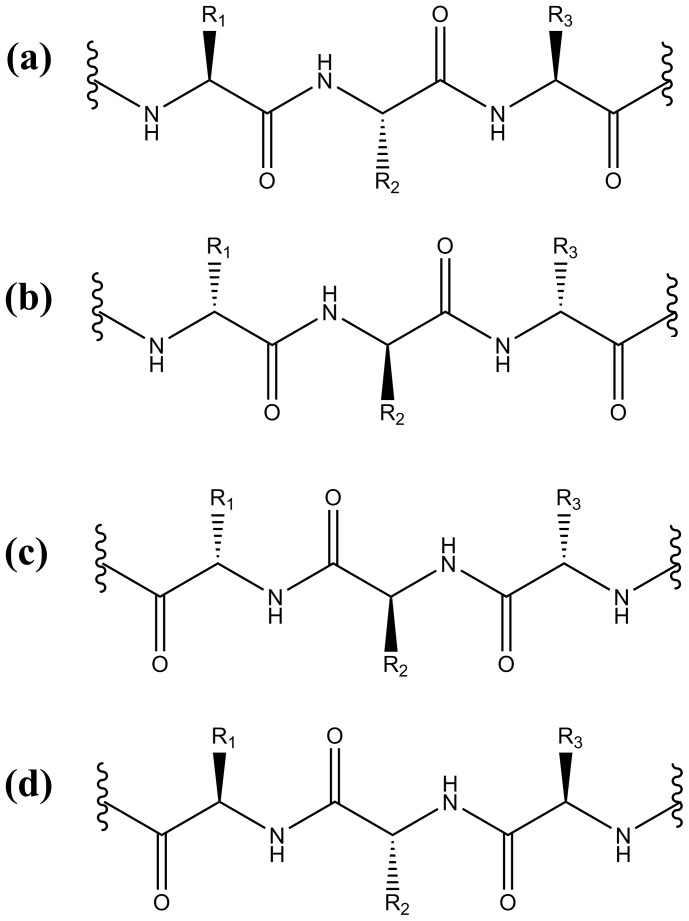
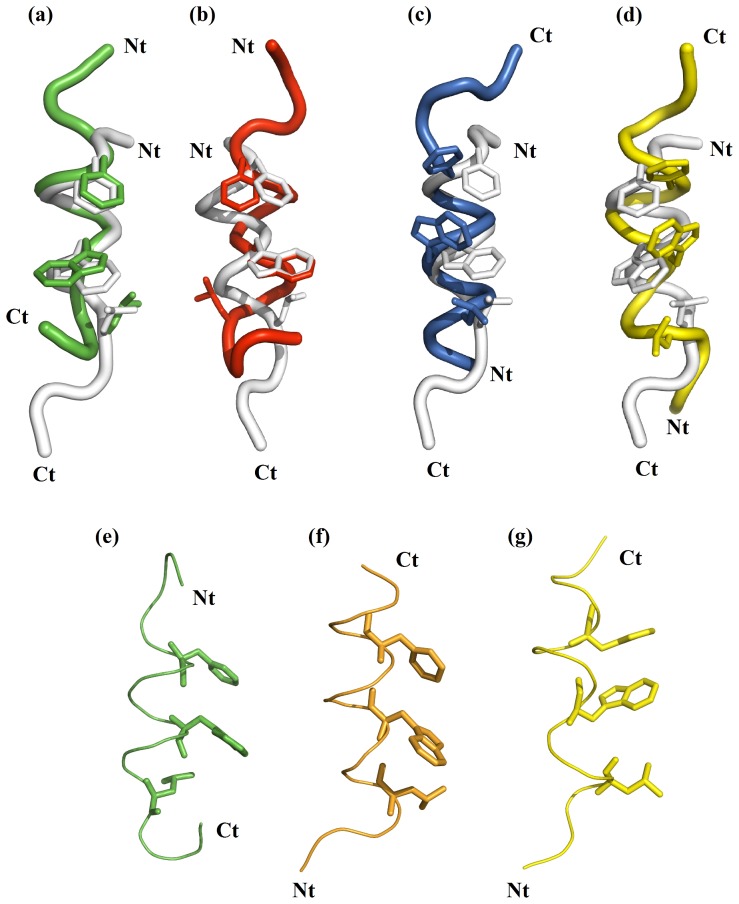
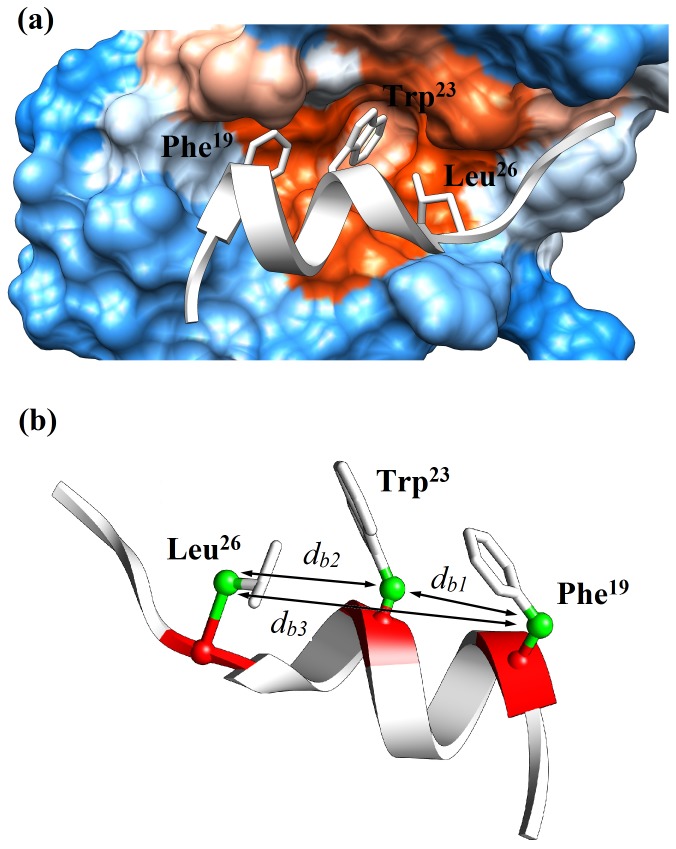
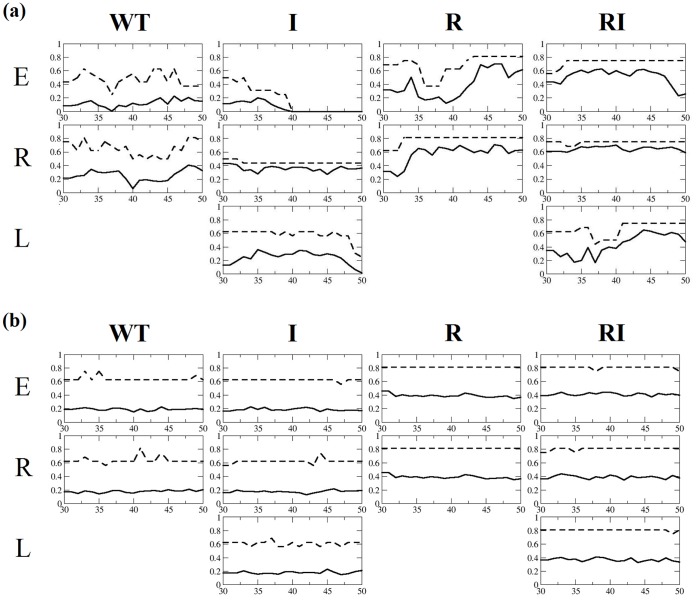
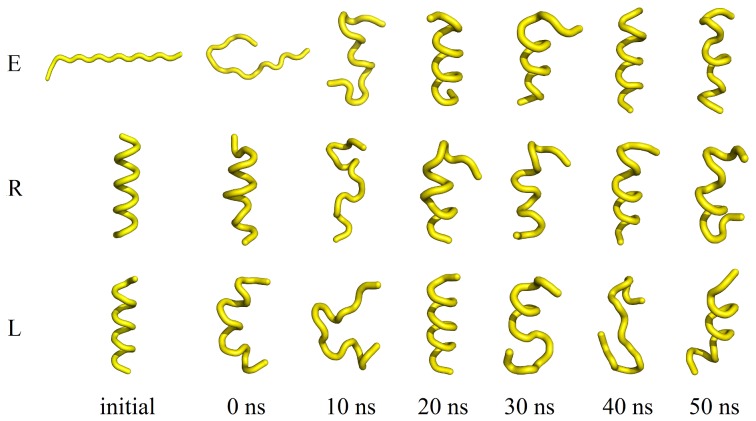
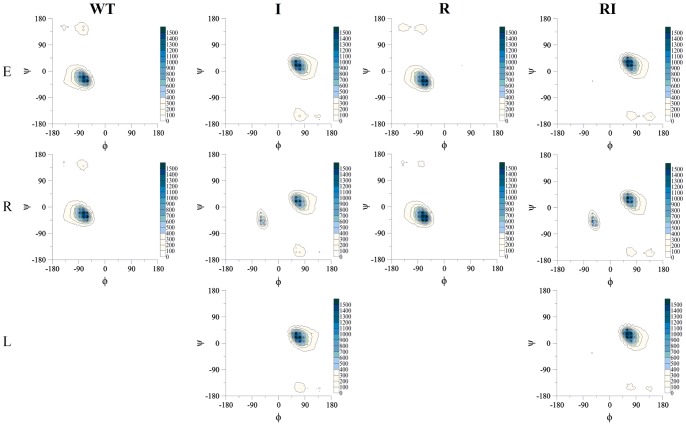
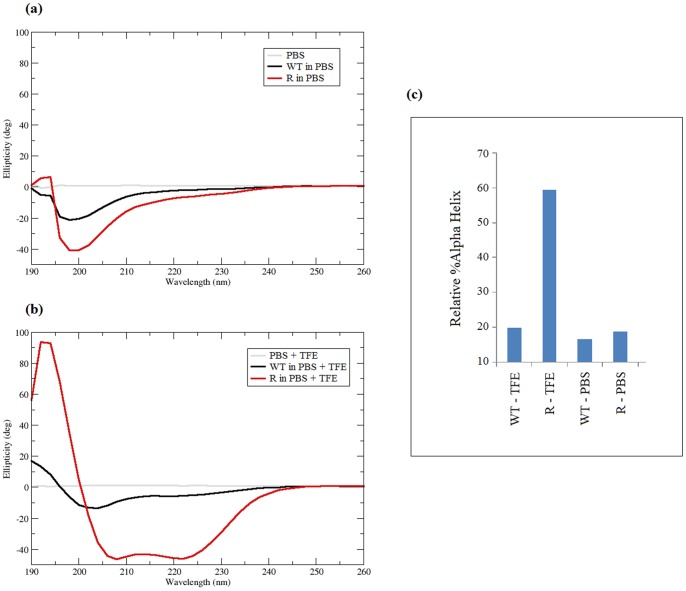
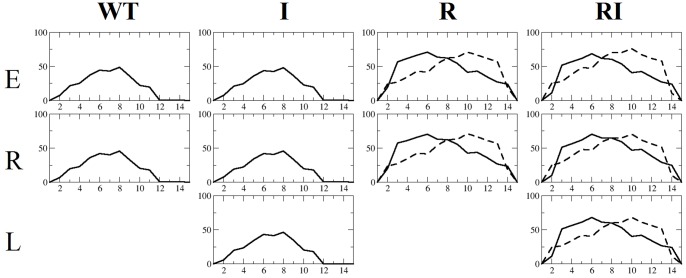
Peptidomimetics effective in modulating protein-protein interactions and resistant to proteolysis have potential in therapeutic applications. An appealing yet underperforming peptidomimetic strategy is to employ D-amino acids and reversed sequences to mimic a lead peptide conformation, either separately or as the combined retro-inverso peptide. In this work, we examine the conformations of inverse, reverse and retro-inverso peptides of p53(15-29) using implicit solvent molecular dynamics simulation and circular dichroism spectroscopy. In order to obtain converged ensembles for the peptides, we find enhanced sampling is required via the replica exchange molecular dynamics method. From these replica exchange simulations, the D-peptide analogues of p53(15-29) result in a predominantly left-handed helical conformation. When the parent sequence is reversed sequence as either the L-peptide and D-peptide, these peptides display a greater helical propensity, feature reflected by NMR and CD studies in TFE/water solvent. The simulations also indicate that, while approximately similar orientations of the side-chains are possible by the peptide analogues, their ability to mimic the parent peptide is severely compromised by backbone orientation (for D-amino acids) and side-chain orientation (for reversed sequences). A retro-inverso peptide is disadvantaged as a mimic in both aspects, and further chemical modification is required to enable this concept to be used fruitfully in peptidomimetic design. The replica exchange molecular simulation approach adopted here, with its ability to provide detailed conformational insights into modified peptides, has potential as a tool to guide structure-based design of new improved peptidomimetics.
肽模拟物在调节蛋白质-蛋白质相互作用方面非常有效,并且能够抵抗蛋白水解,因此在治疗应用中有很大的潜力。一种有吸引力但表现不佳的肽模拟策略是使用 D-氨基酸和反向序列来模拟先导肽的构象,无论是单独使用还是作为组合的反式-反式肽。在这项工作中,我们使用隐式溶剂分子动力学模拟和圆二色性光谱研究了 p53(15-29)的反向、反转和反式-反式肽的构象。为了获得肽的收敛集合,我们发现需要通过复制交换分子动力学方法增强采样。从这些复制交换模拟中,p53(15-29)的 D-肽类似物导致主要的左手螺旋构象。当母体序列为反向序列时,无论是 L-肽还是 D-肽,这些肽都显示出更大的螺旋倾向,这一特征反映在 TFE/水溶剂中的 NMR 和 CD 研究中。模拟还表明,虽然通过肽类似物可以实现侧链的近似相似取向,但它们模拟母体肽的能力受到骨架取向(对于 D-氨基酸)和侧链取向(对于反向序列)的严重限制。反式-反式肽在这两个方面都处于劣势,需要进一步的化学修饰才能使这个概念在肽模拟设计中得到有效应用。这里采用的复制交换分子模拟方法,能够提供对修饰肽的详细构象见解,有可能成为指导基于结构的新型改良肽模拟物设计的工具。