CIRI, International Center for Infectiology Research, Mucosal immunity, Vaccination & Biotherapies Team, Université de Lyon, Lyon, France.
PLoS One. 2013 Jul 26;8(7):e69183. doi: 10.1371/journal.pone.0069183. Print 2013.
Anaphylaxis is a life-threatening outcome of immediate-type hypersensitivity to allergen, consecutive to mast cell degranulation by allergen-specific IgE. Regulatory T cells (Treg) can control allergic sensitization and mast cell degranulation, yet their clinical benefit on anaphylactic symptoms is poorly documented. Here we investigated whether Treg action during the effector arm of the allergic response alleviates anaphylaxis.
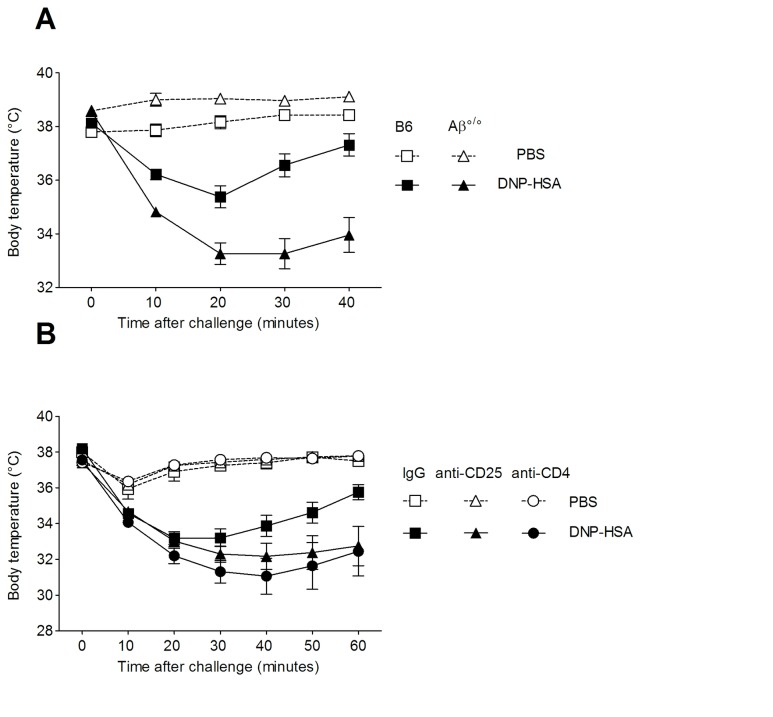
We used a validated model of IgE-mediated passive systemic anaphylaxis, induced by intravenous challenge with DNP-HSA in mice passively sensitized with DNP-specific IgE. Anaphylaxis was monitored by the drop in body temperature as well as plasma histamine and serum mMCP1 levels. The role of Treg was analyzed using MHC class II-deficient (Aβ(°/°)) mice, treatment with anti-CD25 or anti-CD4 mAbs and conditional ablation of Foxp3(+) Treg in DEREG mice. Therapeutic efficacy of Treg was also evaluated by transfer experiments using FoxP3-eGFP knock-in mice.
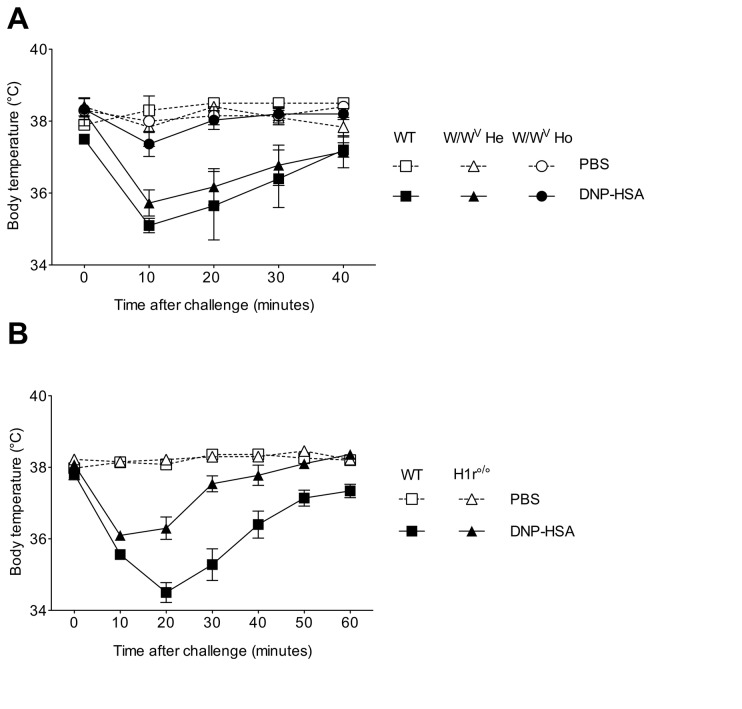
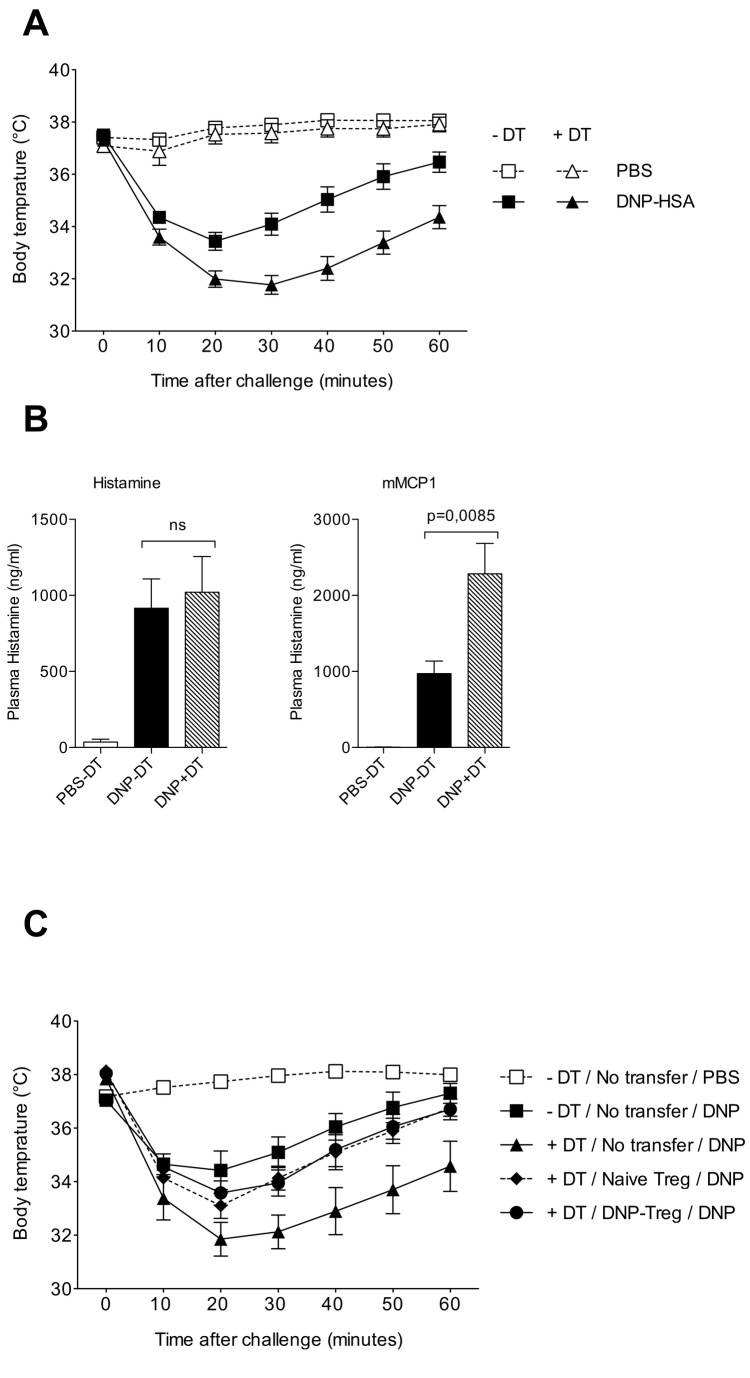
Anaphylaxis did not occur in mast cell-deficient W/W(v) mutant mice and was only moderate and transient in mice deficient for histamine receptor-1. Defects in constitutive Treg, either genetic or induced by antibody or toxin treatment resulted in a more severe and/or sustained hypothermia, associated with a rise in serum mMCP1, but not histamine. Adoptive transfer of Foxp3(+) Treg from either naïve or DNP-sensitized donors similarly alleviated body temperature loss in Treg-deficient DEREG mice.
Constitutive Foxp3(+) Treg can control the symptomatic phase of mast cell and IgE-dependent anaphylaxis in mice. This might open up new therapeutic avenues using constitutive rather than Ag-specific Treg for inducing tolerance in allergic patients.
过敏反应是一种危及生命的过敏反应,由过敏原特异性 IgE 引起肥大细胞脱颗粒导致。调节性 T 细胞(Treg)可以控制过敏致敏和肥大细胞脱颗粒,但它们对过敏症状的临床益处记录不佳。在这里,我们研究了 Treg 在过敏反应效应阶段的作用是否可以缓解过敏反应。
我们使用了一种经过验证的 IgE 介导的被动全身性过敏反应模型,通过静脉内用 DNP-HSA 对 DNP 特异性 IgE 被动致敏的小鼠进行挑战来诱导。通过体温下降以及血浆组织胺和血清 mMCP1 水平来监测过敏反应。使用 MHC 类 II 缺陷(Aβ(°/°))小鼠、用抗-CD25 或抗-CD4 mAb 治疗以及在 DEREG 小鼠中条件性消融 Foxp3(+)Treg 来分析 Treg 的作用。通过使用 FoxP3-eGFP 敲入小鼠的转移实验也评估了 Treg 的治疗效果。
肥大细胞缺陷型 W/W(v)突变小鼠不会发生过敏反应,组胺受体-1 缺陷型小鼠的过敏反应仅为中度和短暂性。固有 Treg 缺陷,无论是遗传缺陷还是抗体或毒素治疗诱导的缺陷,都会导致更严重和/或持续的体温下降,伴有血清 mMCP1 升高,但组织胺没有升高。从幼稚或 DNP 致敏供体中过继转移 Foxp3(+)Treg 同样可以缓解 Treg 缺陷型 DEREG 小鼠的体温下降。
固有 Foxp3(+)Treg 可以控制小鼠肥大细胞和 IgE 依赖性过敏反应的症状阶段。这可能为使用固有而非 Ag 特异性 Treg 在过敏患者中诱导耐受开辟了新的治疗途径。