Department of Industrial Engineering and Management, Yuan-Ze University, Taoyuan, Taiwan, ROC.
PLoS One. 2013 Jul 26;8(7):e69471. doi: 10.1371/journal.pone.0069471. Print 2013.
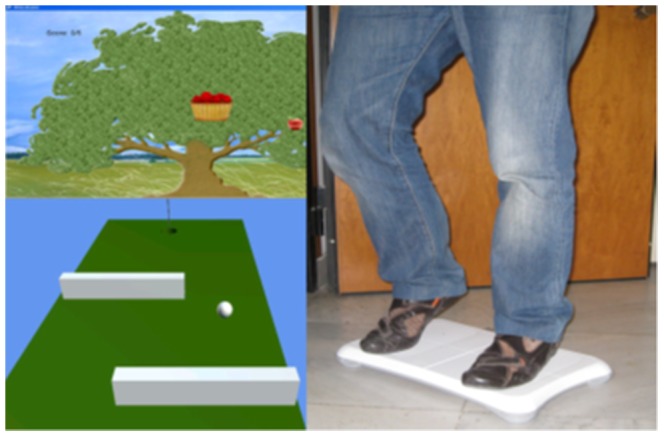
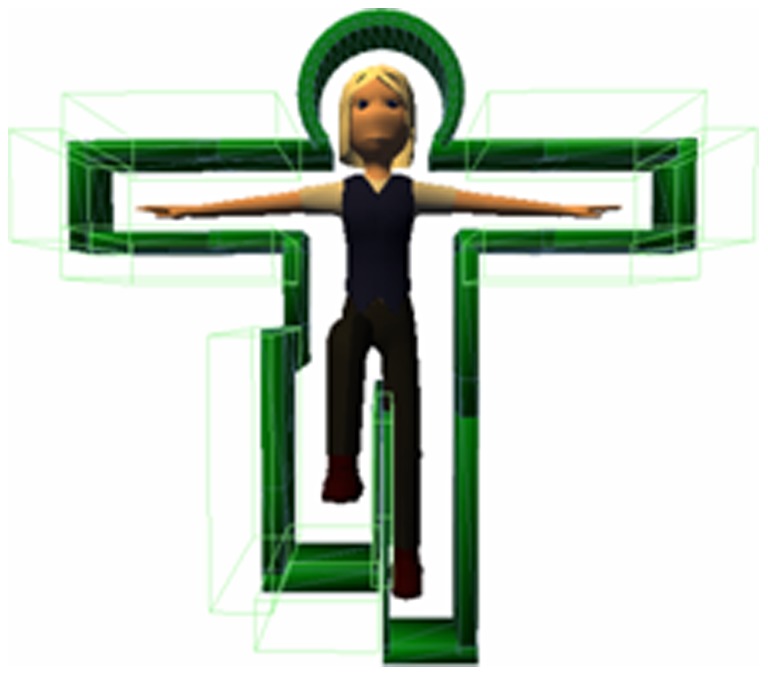
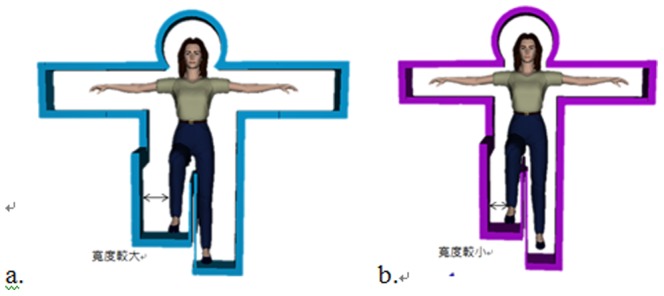
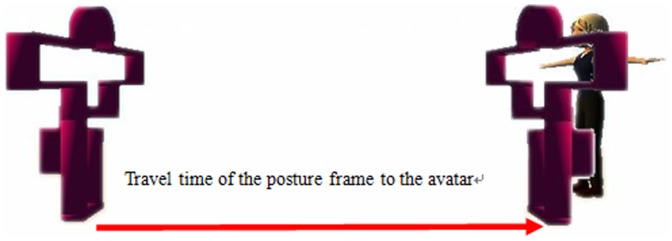
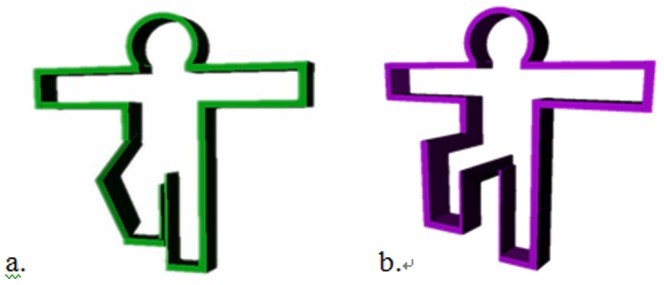
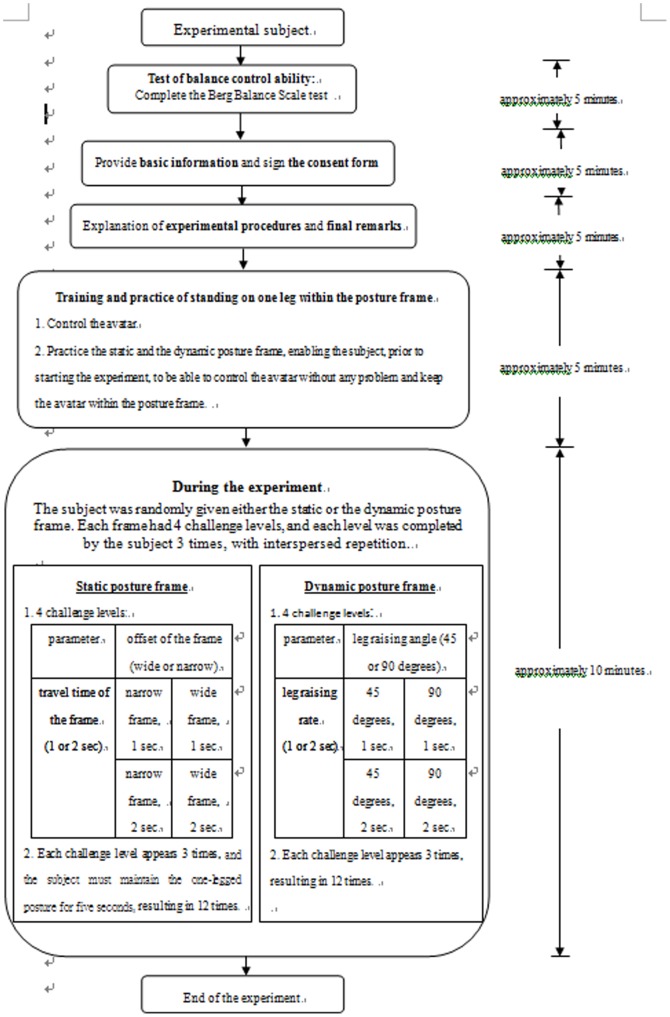
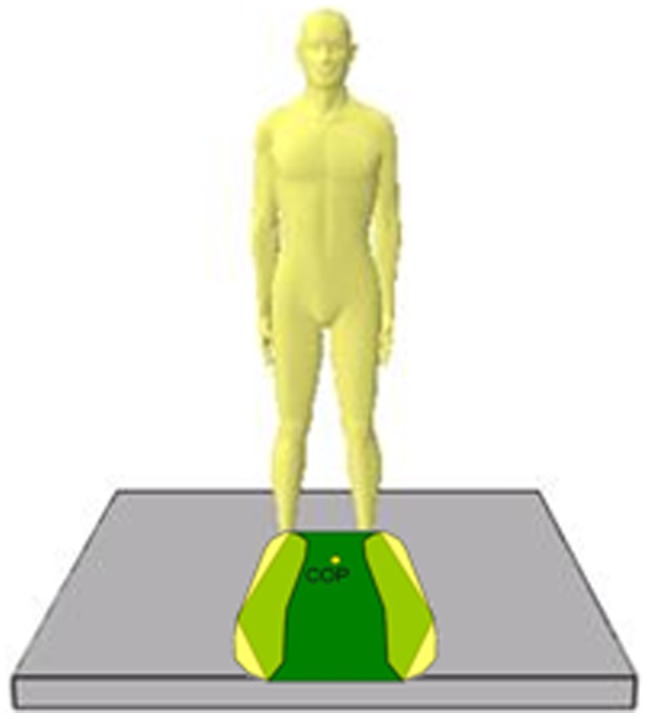
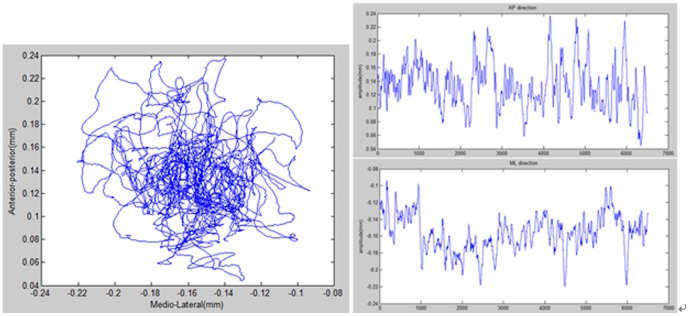
Kinect-based exergames allow players to undertake physical exercise in an interactive manner with visual stimulation. Previous studies focused on investigating physical fitness based on calories or heart rate to ascertain the effectiveness of exergames. However, designing an exergame for specific training purposes, with intensity levels suited to the needs and skills of the players, requires the investigation of motion performance to study player experience. This study investigates how parameters of a Kinect-based exergame, combined with balance training exercises, influence the balance control ability and intensity level the player can tolerate, by analyzing both objective and gameplay-based player experience, and taking enjoyment and difficulty levels into account. The exergame tested required participants to maintain their balance standing on one leg within a posture frame (PF) while a force plate evaluated the player's balance control ability in both static and dynamic gaming modes. The number of collisions with the PF depended on the frame's travel time for static PFs, and the leg-raising rate and angle for dynamic PFs. In terms of center of pressure (COP) metrics, significant impacts were caused by the frame's travel time on MDIST-AP for static PFs, and the leg-raising rate on MDIST-ML and TOTEX for dynamic PFs. The best static PF balance control performance was observed with a larger frame offset by a travel time of 2 seconds, and the worst performance with a smaller frame and a travel time of 1 second. The best dynamic PF performance was with a leg-raising rate of 1 second at a 45-degree angle, while the worst performance was with a rate of 2 seconds at a 90-degree angle. The results demonstrated that different evaluation methods for player experience could result in different findings, making it harder to study the design of those exergames with training purposes based on player experience.
基于 Kinect 的运动游戏允许玩家通过视觉刺激以互动的方式进行体育锻炼。以前的研究侧重于基于卡路里或心率来调查身体健康状况,以确定运动游戏的效果。然而,设计具有特定训练目的的运动游戏,其强度水平适合玩家的需求和技能,需要研究运动表现,以研究玩家体验。本研究通过分析基于客观和游戏的玩家体验,并考虑到娱乐性和难度水平,调查了基于 Kinect 的运动游戏的参数如何结合平衡训练练习来影响玩家的平衡控制能力和可承受的强度水平。测试的运动游戏要求参与者在一个姿势框架(PF)中用单脚站立来保持平衡,同时力板评估玩家在静态和动态游戏模式下的平衡控制能力。与 PF 的碰撞次数取决于静态 PF 的框架行进时间,以及动态 PF 的抬腿率和角度。就压力中心(COP)指标而言,框架行进时间对静态 PF 的 MDIST-AP 以及抬腿率对动态 PF 的 MDIST-ML 和 TOTEX 产生了显著影响。观察到较大的框架偏移 2 秒的行进时间具有最佳的静态 PF 平衡控制性能,而较小的框架和 1 秒的行进时间具有最差的性能。最佳的动态 PF 性能是在 45 度角度下以 1 秒的抬腿率实现的,而最差的性能是在 90 度角度下以 2 秒的抬腿率实现的。结果表明,不同的玩家体验评估方法可能会得出不同的结果,这使得基于玩家体验研究那些具有训练目的的运动游戏的设计变得更加困难。