Institute of Bioscience and Biotechnology, National Taiwan Ocean University, Keelung, Taiwan.
PLoS One. 2013 Jul 26;8(7):e69788. doi: 10.1371/journal.pone.0069788. Print 2013.
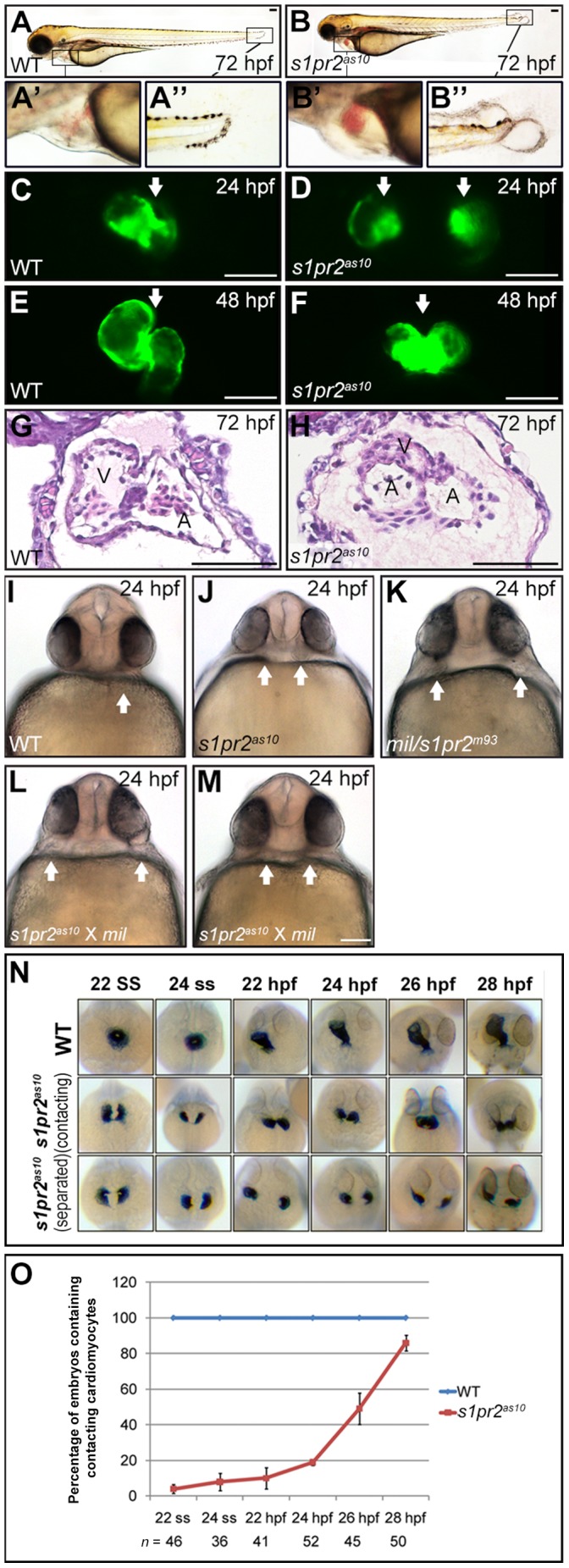
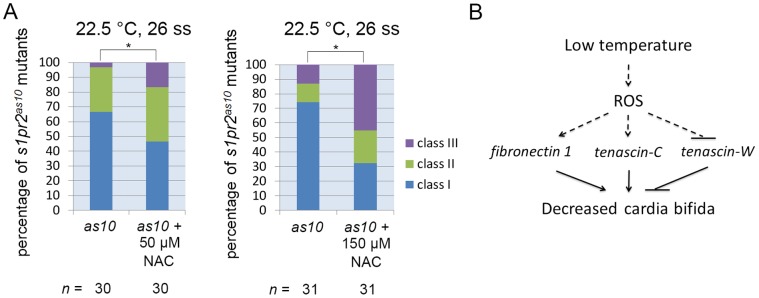
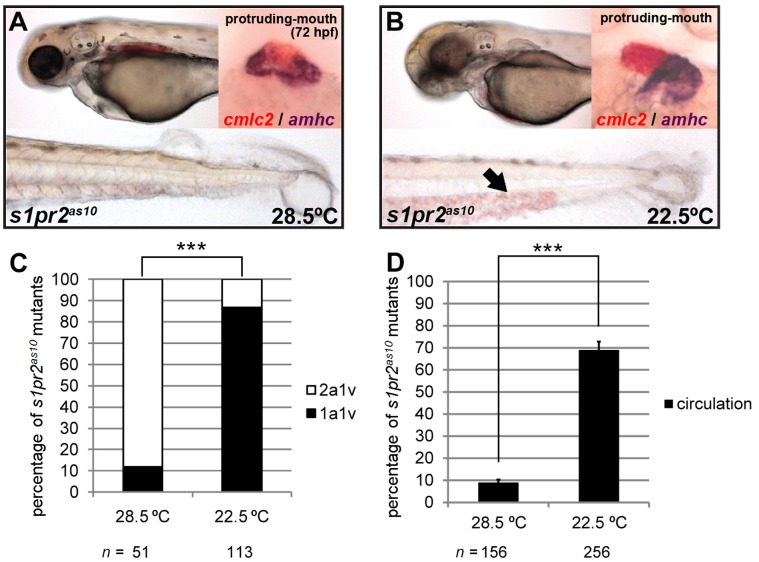
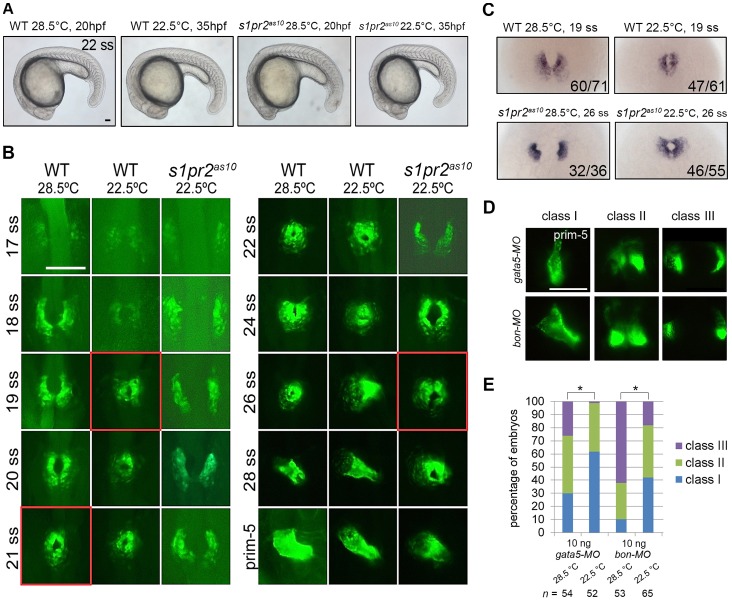
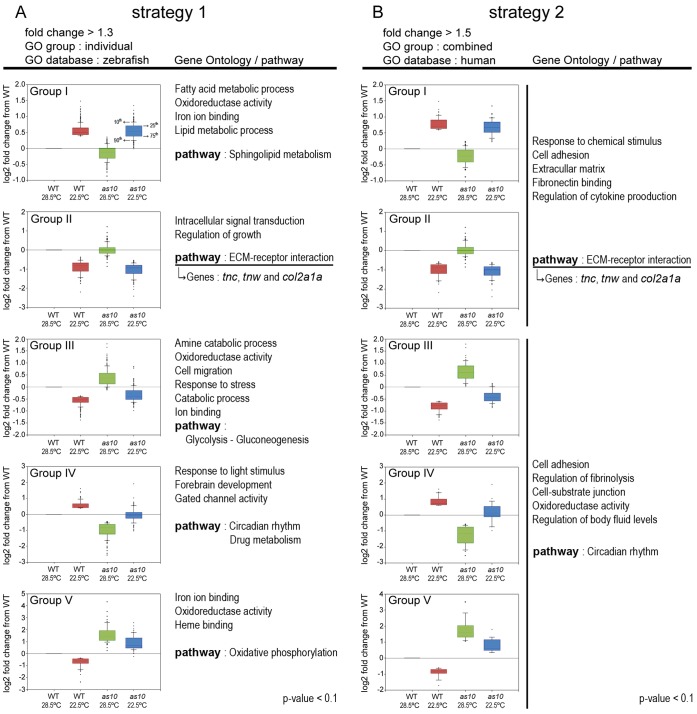
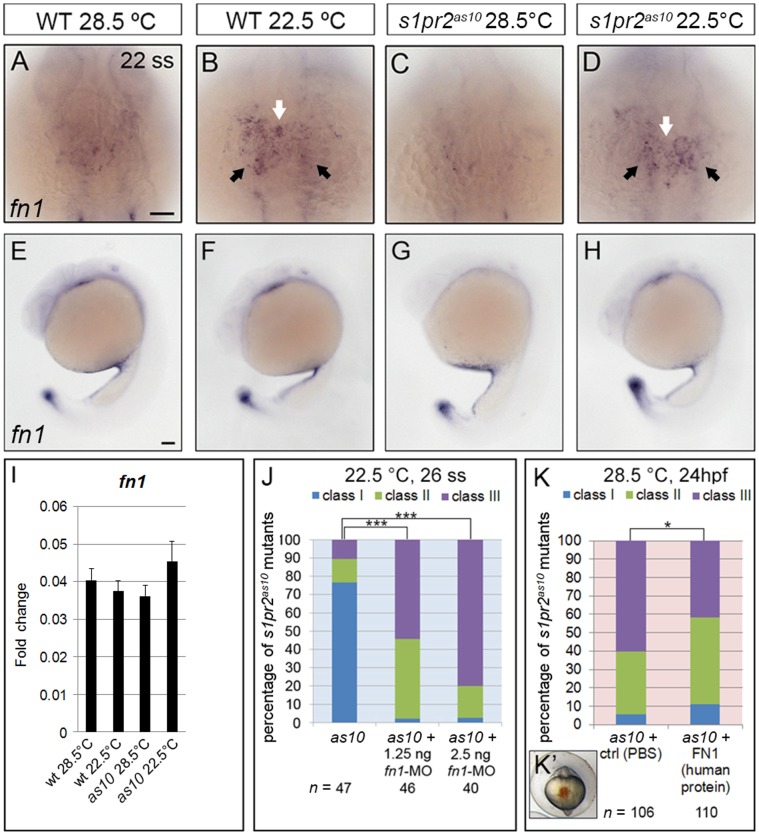
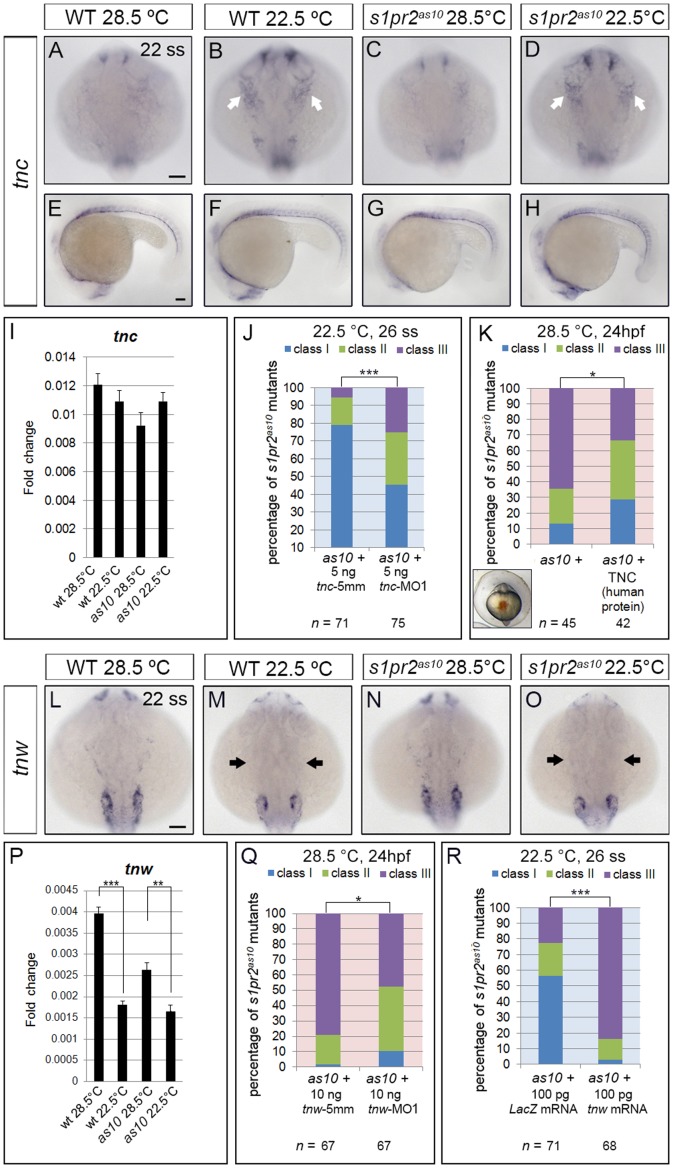
The coordinated migration of bilateral cardiomyocytes and the formation of the cardiac cone are essential for heart tube formation. We investigated gene regulatory mechanisms involved in myocardial migration, and regulation of the timing of cardiac cone formation in zebrafish embryos. Through screening of zebrafish treated with ethylnitrosourea, we isolated a mutant with a hypomorphic allele of mil (s1pr2)/edg5, called s1pr2(as10) (as10). Mutant embryos with this allele expressed less mil/edg5 mRNA and exhibited cardia bifida prior to 28 hours post-fertilization. Although the bilateral hearts of the mutants gradually fused together, the resulting formation of two atria and one tightly-packed ventricle failed to support normal blood circulation. Interestingly, cardia bifida of s1pr2(as10) embryos could be rescued and normal circulation could be restored by incubating the embryos at low temperature (22.5°C). Rescue was also observed in gata5 and bon cardia bifida morphants raised at 22.5 °C. The use of DNA microarrays, digital gene expression analyses, loss-of-function, as well as mRNA and protein rescue experiments, revealed that low temperature mitigates cardia bifida by regulating the expression of genes encoding components of the extracellular matrix (fibronectin 1, tenascin-c, tenascin-w). Furthermore, the addition of N-acetyl cysteine (NAC), a reactive oxygen species (ROS) scavenger, significantly decreased the effect of low temperature on mitigating cardia bifida in s1pr2(as10) embryos. Our study reveals that temperature coordinates the development of the heart tube and somitogenesis, and that extracellular matrix genes (fibronectin 1, tenascin-c and tenascin-w) are involved.
心脏管的形成需要双侧心肌细胞的协调迁移和心锥的形成。我们研究了斑马鱼胚胎中参与心肌迁移和心锥形成时间调控的基因调控机制。通过对乙基硝基亚硝基胍处理的斑马鱼进行筛选,我们分离到一个 mil(s1pr2)/edg5 功能减弱等位基因的突变体,称为 s1pr2(as10)(as10)。该等位基因的突变胚胎表达较少的 mil/edg5 mRNA,并在受精后 28 小时前表现出心脏二分。虽然突变体的双侧心脏逐渐融合在一起,但形成的两个心房和一个紧密包装的心室无法支持正常的血液循环。有趣的是,在低温(22.5°C)孵育条件下,s1pr2(as10) 胚胎的心二分可以得到挽救,正常循环可以得到恢复。在 22.5°C 条件下培养的 gata5 和 bon 心脏二分突变体也观察到了挽救。利用 DNA 微阵列、数字基因表达分析、功能丧失以及 mRNA 和蛋白质挽救实验,揭示了低温通过调节细胞外基质(纤维连接蛋白 1、腱糖蛋白 C、腱糖蛋白 W)成分编码基因的表达来减轻心脏二分。此外,添加活性氧(ROS)清除剂 N-乙酰半胱氨酸(NAC)可显著降低低温对 s1pr2(as10) 胚胎减轻心脏二分的作用。我们的研究揭示了温度协调心脏管和体节的发育,并且细胞外基质基因(纤维连接蛋白 1、腱糖蛋白 C 和腱糖蛋白 W)参与其中。