Department of Clinical Radiology, Kuopio University Hospital, Kuopio, Finland.
PLoS One. 2013 Jul 29;8(7):e69905. doi: 10.1371/journal.pone.0069905. Print 2013.
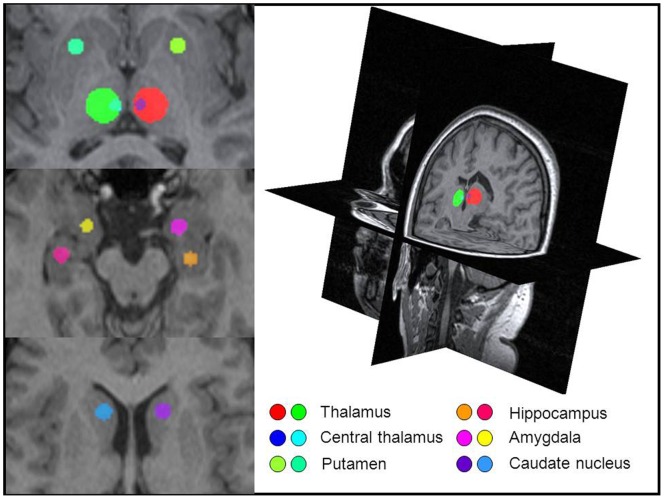
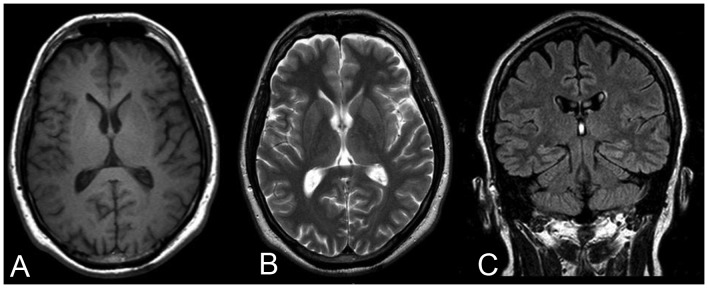
Progressive myoclonic epilepsy type 1 (EPM1) is an autosomal recessively inherited neurodegenerative disorder characterized by young onset age, myoclonus and tonic-clonic epileptic seizures. At the time of diagnosis, the visual assessment of the brain MRI is usually normal, with no major changes found later. Therefore, we utilized texture analysis (TA) to characterize and classify the underlying properties of the affected brain tissue by means of 3D texture features. Sixteen genetically verified patients with EPM1 and 16 healthy controls were included in the study. TA was performed upon 3D volumes of interest that were placed bilaterally in the thalamus, amygdala, hippocampus, caudate nucleus and putamen. Compared to the healthy controls, EPM1 patients had significant textural differences especially in the thalamus and right putamen. The most significantly differing texture features included parameters that measure the complexity and heterogeneity of the tissue, such as the co-occurrence matrix-based entropy and angular second moment, and also the run-length matrix-based parameters of gray-level non-uniformity, short run emphasis and long run emphasis. This study demonstrates the usability of 3D TA for extracting additional information from MR images. Textural alterations which suggest complex, coarse and heterogeneous appearance were found bilaterally in the thalamus, supporting the previous literature on thalamic pathology in EPM1. The observed putamenal involvement is a novel finding. Our results encourage further studies on the clinical applications, feasibility, reproducibility and reliability of 3D TA.
进行性肌阵挛癫痫 1 型(EPM1)是一种常染色体隐性遗传性神经退行性疾病,其特征为发病年龄早、肌阵挛和强直阵挛性癫痫发作。在诊断时,脑 MRI 的视觉评估通常正常,随后也没有发现重大变化。因此,我们利用纹理分析(TA)通过 3D 纹理特征来描述和分类受影响脑组织的潜在特性。本研究纳入了 16 名经基因证实的 EPM1 患者和 16 名健康对照者。TA 是在双侧丘脑、杏仁核、海马体、尾状核和壳核的 3D 感兴趣区容积上进行的。与健康对照组相比,EPM1 患者的纹理存在显著差异,尤其是在丘脑和右侧壳核。差异最显著的纹理特征包括测量组织复杂性和异质性的参数,如基于共生矩阵的熵和角二阶矩,以及基于游程长度矩阵的灰度不均匀性、短游程强调和长游程强调的参数。本研究证明了 3D TA 从 MR 图像中提取额外信息的可用性。在丘脑双侧发现了纹理改变,提示存在复杂、粗糙和异质性外观,这支持了先前关于 EPM1 中丘脑病理学的文献。观察到壳核受累是一个新发现。我们的研究结果鼓励进一步研究 3D TA 的临床应用、可行性、可重复性和可靠性。