Centre for Microbial Innovation, School of Biological Sciences, The University of Auckland, Auckland, New Zealand.
PLoS One. 2013 Jul 26;8(7):e70316. doi: 10.1371/journal.pone.0070316. Print 2013.
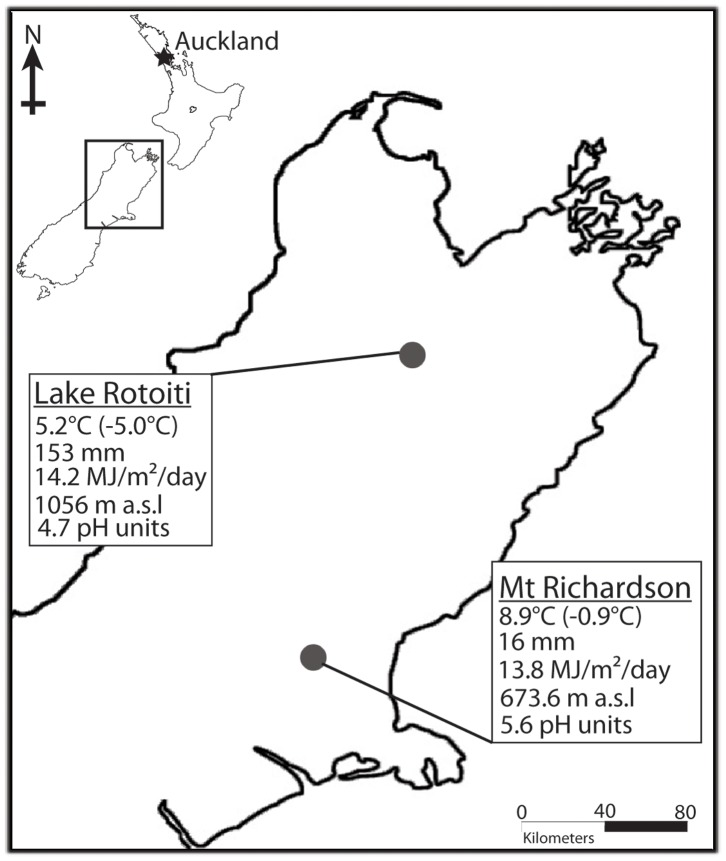
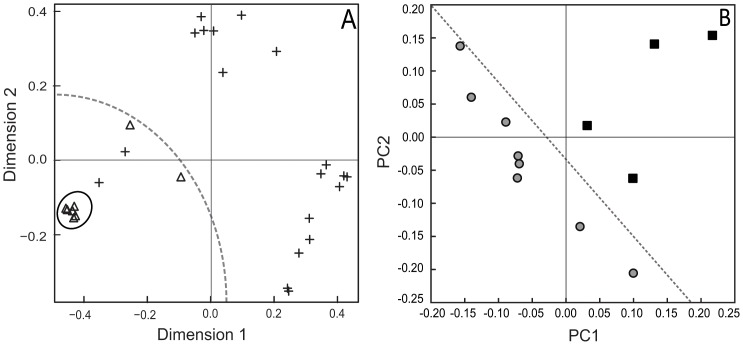
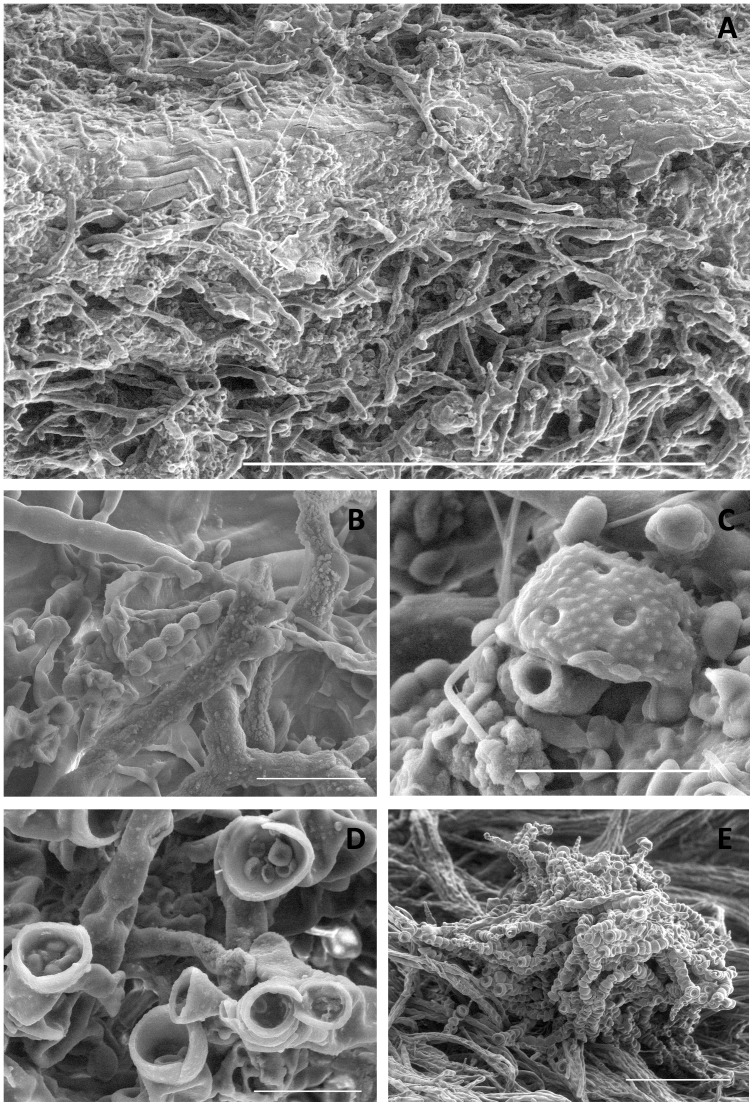
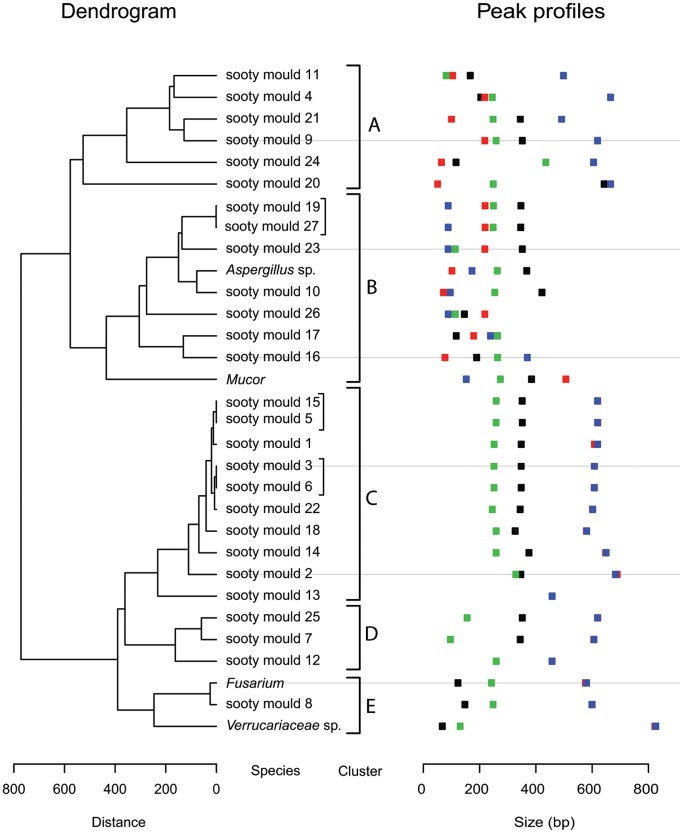
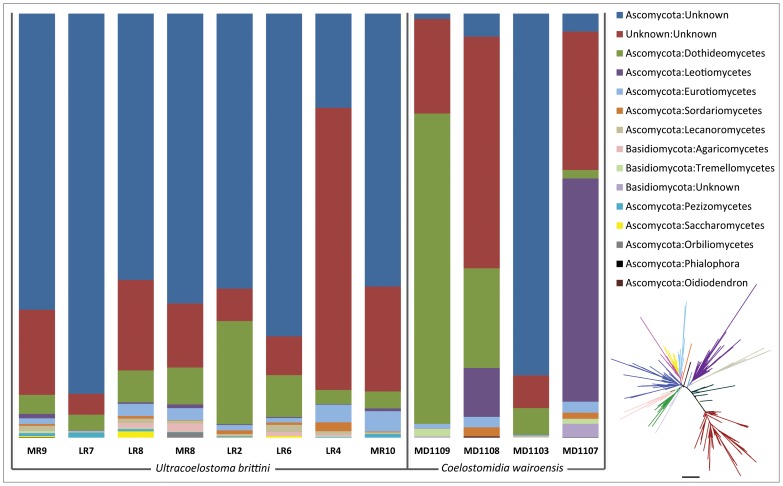
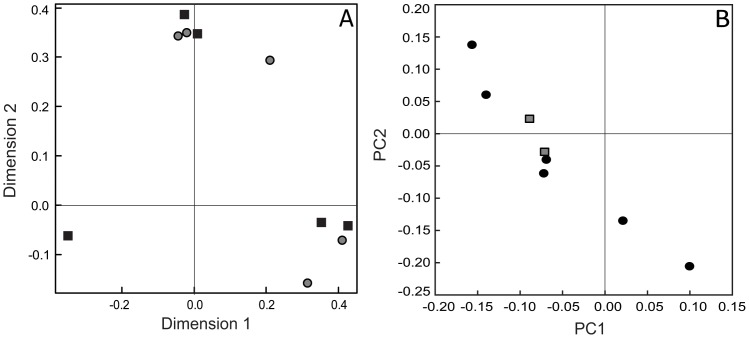
Sooty mould fungi are ubiquitous, abundant consumers of insect-honeydew that have been little-studied. They form a complex of unrelated fungi that coexist and compete for honeydew, which is a chemically complex resource. In this study, we used scanning electron microscopy in combination with T-RFLP community profiling and ITS-based tag-pyrosequencing to extensively describe the sooty mould community associated with the honeydews of two ecologically important New Zealand coelostomidiid scale insects, Coelostomidia wairoensis and Ultracoelostoma brittini. We tested the influence of host plant on the community composition of associated sooty moulds, and undertook limited analyses to examine the influence of scale insect species and geographic location. We report here a previously unknown degree of fungal diversity present in this complex, with pyrosequencing detecting on average 243 operational taxonomic units across the different sooty mould samples. In contrast, T-RFLP detected only a total of 24 different "species" (unique peaks). Nevertheless, both techniques identified similar patterns of diversity suggesting that either method is appropriate for community profiling. The composition of the microbial community associated with individual scale insect species varied although the differences may in part reflect variation in host preference and site. Scanning electron microscopy visualised an intertwined mass of fungal hyphae and fruiting bodies in near-intact physical condition, but was unable to distinguish between the different fungal communities on a morphological level, highlighting the need for molecular research. The substantial diversity revealed for the first time by pyrosequencing and our inability to identify two-thirds of the diversity to further than the fungal division highlights the significant gap in our knowledge of these fungal groups. This study provides a first extensive look at the community diversity of the fungal community closely associated with the keystone insect-honeydew systems of New Zealand's native forests and suggests there is much to learn about sooty mould communities.
煤污菌广泛存在,是大量吸食昆虫蜜露的消费者,但对其研究甚少。它们形成了一个由不相关真菌组成的复杂群落,共同生存并竞争蜜露,而蜜露是一种化学成分复杂的资源。在这项研究中,我们使用扫描电子显微镜结合 T-RFLP 群落分析和基于 ITS 的标记焦磷酸测序,广泛描述了与两种具有重要生态意义的新西兰盾蚧科(Coelostomidiidae) Scale Insects ,Coelostomidia wairoensis 和 Ultracoelostoma brittini 的蜜露相关的煤污菌群落。我们测试了宿主植物对相关煤污菌群落组成的影响,并进行了有限的分析,以研究蚧虫种类和地理位置的影响。我们在这里报告了一个以前未知的真菌多样性程度,焦磷酸测序平均在不同的煤污菌样本中检测到 243 个操作分类单元。相比之下,T-RFLP 仅检测到总共 24 个不同的“物种”(独特峰)。尽管如此,两种技术都确定了相似的多样性模式,表明这两种方法都适用于群落分析。与个别蚧虫种类相关的微生物群落的组成存在差异,尽管这些差异可能部分反映了宿主偏好和地点的变化。扫描电子显微镜观察到真菌菌丝和子实体交织在一起,处于近乎完整的物理状态,但无法在形态学水平上区分不同的真菌群落,这凸显了分子研究的必要性。焦磷酸测序首次揭示的大量多样性,以及我们无法将三分之二的多样性进一步识别到真菌分类群以外,突出了我们对这些真菌群体的知识存在重大差距。这项研究首次广泛研究了与新西兰本土森林关键昆虫-蜜露系统密切相关的真菌群落的多样性,并表明我们还有很多关于煤污菌群落的知识需要学习。