Department of Microbiology and Immunology, Vanderbilt University School of Medicine, Nashville, Tennessee, United States of America.
PLoS One. 2013 Jul 29;8(7):e70994. doi: 10.1371/journal.pone.0070994. Print 2013.
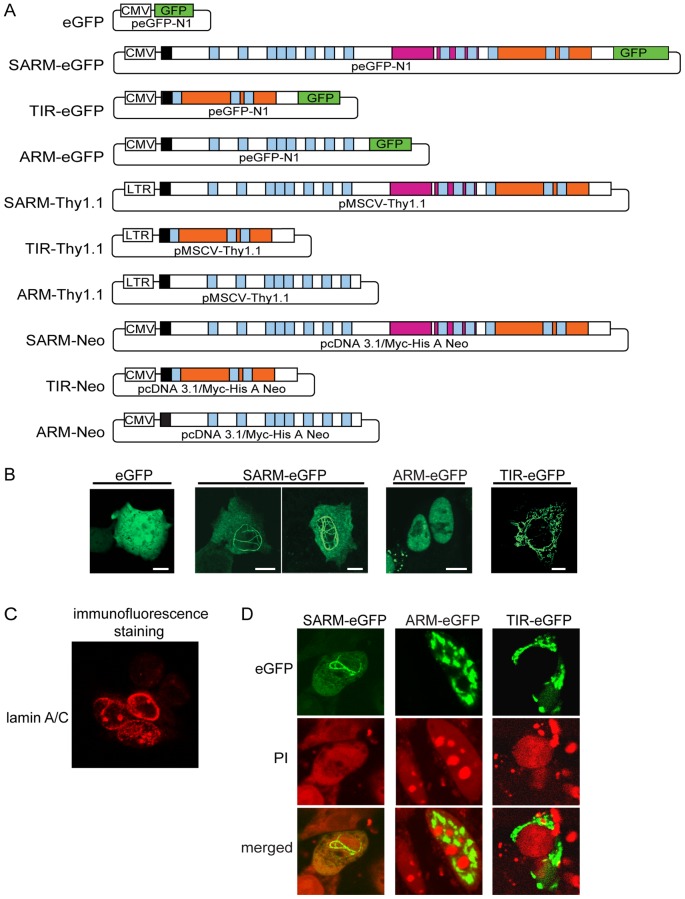
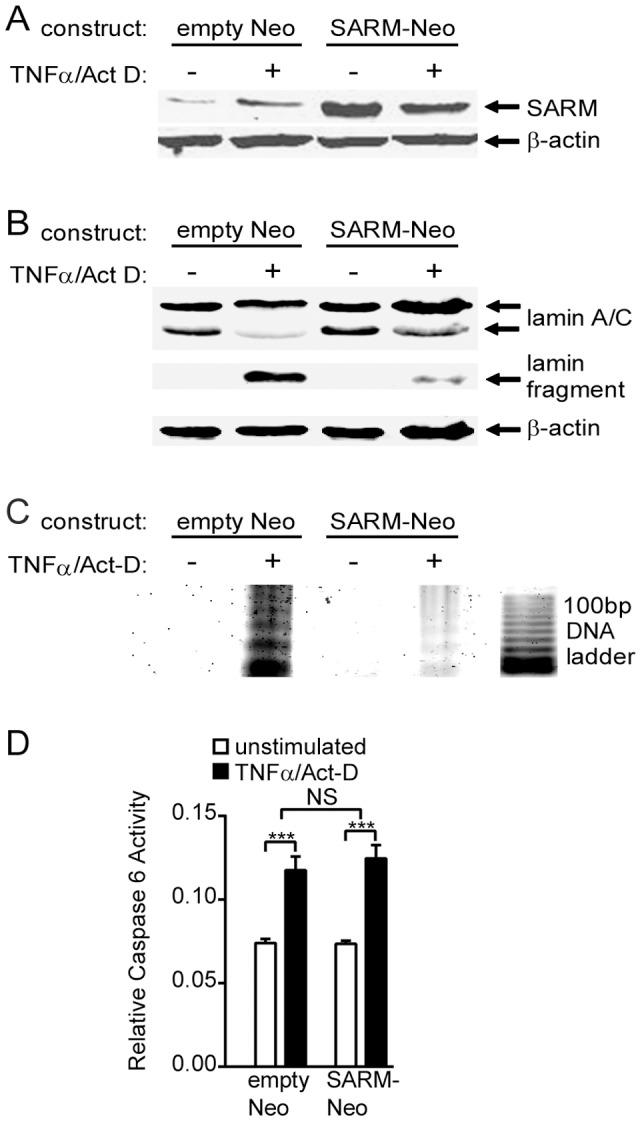
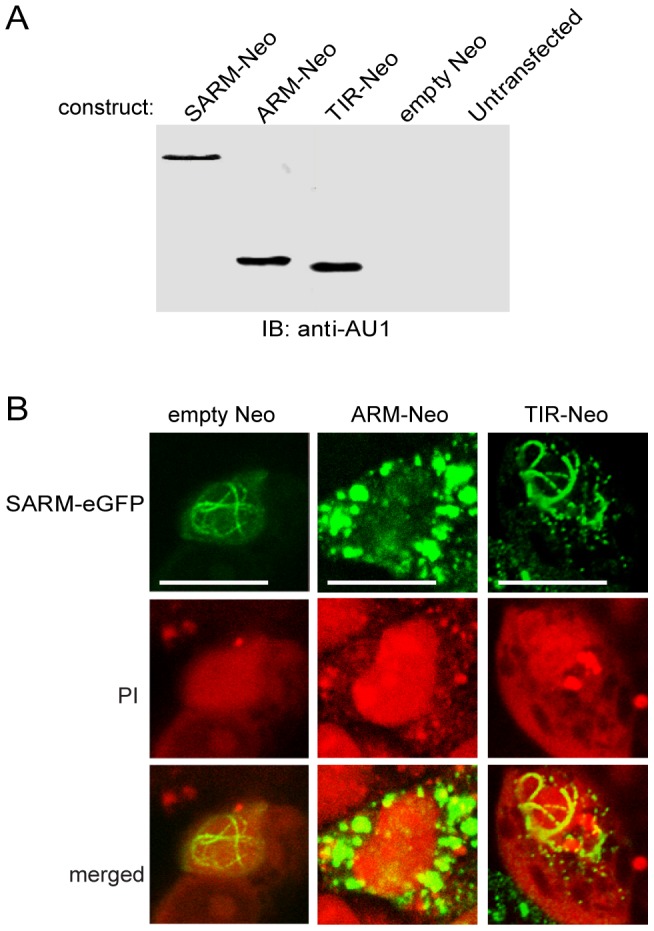
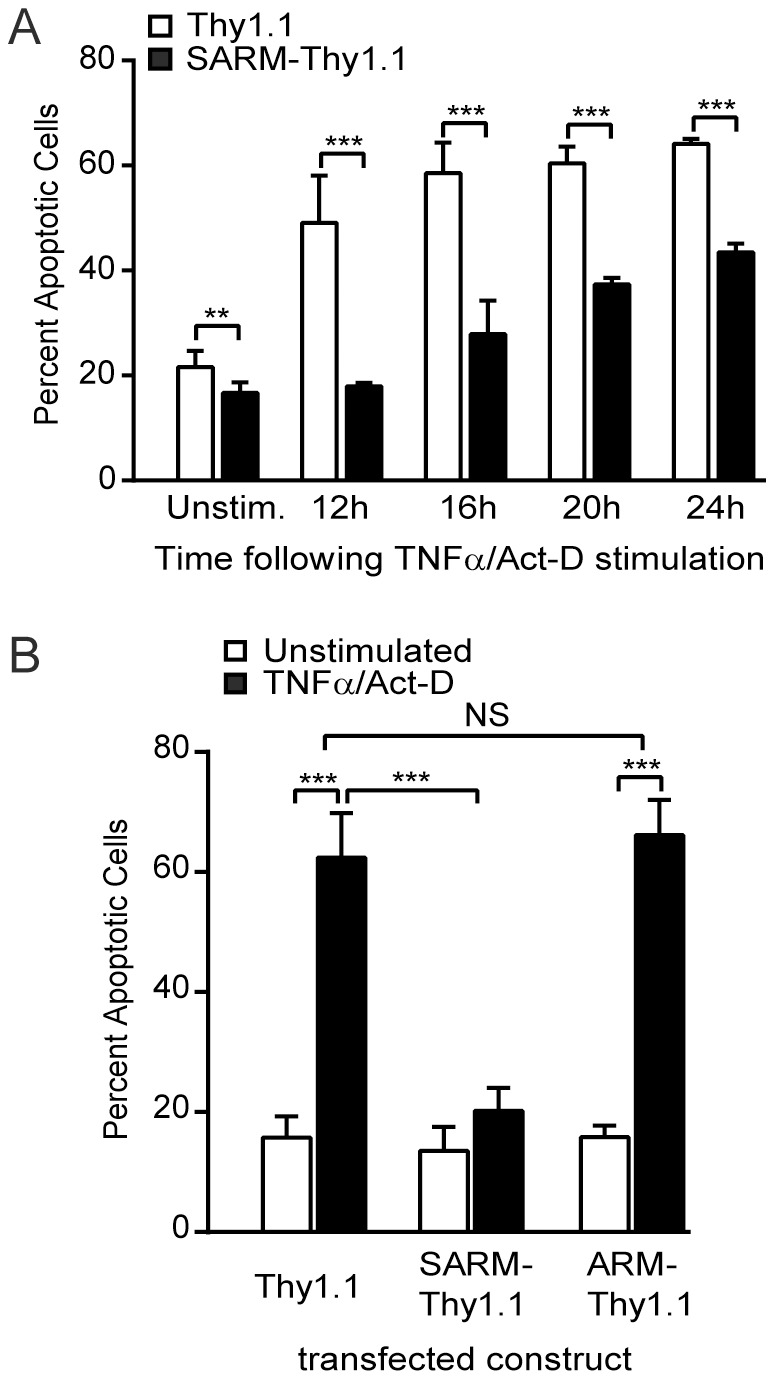
Sterile alpha and armadillo-motif containing protein (SARM), a highly conserved and structurally unique member of the MyD88 family of Toll-like receptor adaptors, plays an important role in innate immunity signaling and apoptosis. Its exact mechanism of intracellular action remains unclear. Apoptosis is an ancient and ubiquitous process of programmed cell death that results in disruption of the nuclear lamina and, ultimately, dismantling of the nucleus. In addition to supporting the nuclear membrane, lamins serve important roles in chromatin organization, epigenetic regulation, transcription, nuclear transport, and mitosis. Mutations and other damage that destabilize nuclear lamins (laminopathies) underlie a number of intractable human diseases. Here, we report that SARM translocates to the nucleus of human embryonic kidney cells by using its amino-terminal Armadillo repeat region. Within the nucleus, SARM forms a previously unreported lattice akin to the nuclear lamina scaffold. Moreover, we show that SARM protects lamins from apoptotic degradation and reduces internucleosomal DNA fragmentation in response to signaling induced by the proinflammatory cytokine Tumor Necrosis Factor alpha. These findings indicate an important link between the innate immunity adaptor SARM and stabilization of nuclear lamins during inflammation-driven apoptosis in human cells.
无菌α 和栉水母蛋白(SARM),一种高度保守且结构独特的 Toll 样受体衔接子 MyD88 家族成员,在先天免疫信号转导和细胞凋亡中发挥重要作用。其确切的细胞内作用机制尚不清楚。细胞凋亡是一种古老而普遍的程序性细胞死亡过程,导致核层的破坏,最终导致细胞核的解体。除了支持核膜外,核纤层在染色质组织、表观遗传调控、转录、核运输和有丝分裂中发挥着重要作用。核纤层不稳定的突变和其他损伤(核纤层病)是许多难治性人类疾病的基础。在这里,我们报告 SARM 通过其氨基末端的 Armadillo 重复区转移到人胚肾细胞的细胞核中。在细胞核内,SARM 形成了一种以前未报道的类似于核层支架的晶格。此外,我们还表明,SARM 可以保护核纤层免于凋亡降解,并减少促炎细胞因子 Tumor Necrosis Factor alpha 诱导的信号转导过程中核小体间 DNA 片段化。这些发现表明,先天免疫衔接子 SARM 与人类细胞中炎症驱动的细胞凋亡过程中核纤层的稳定之间存在重要联系。