Department of Microbiology and Immunology, Weill Medical College of Cornell University, New York, NY 10021, USA.
J Immunol. 2013 Jul 15;191(2):875-83. doi: 10.4049/jimmunol.1300374. Epub 2013 Jun 7.
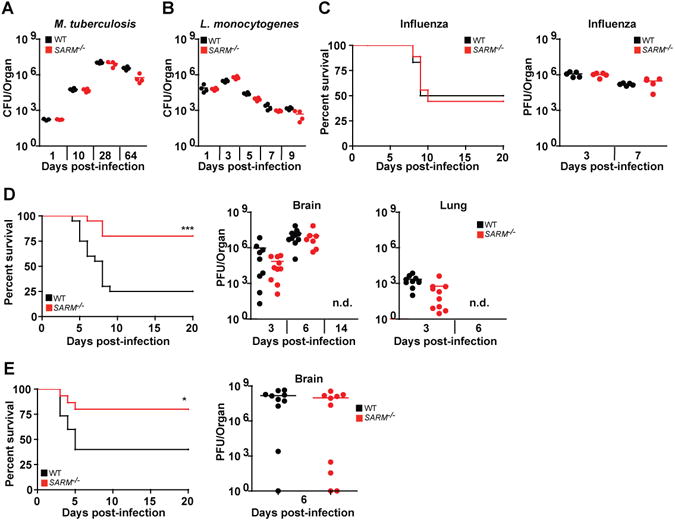
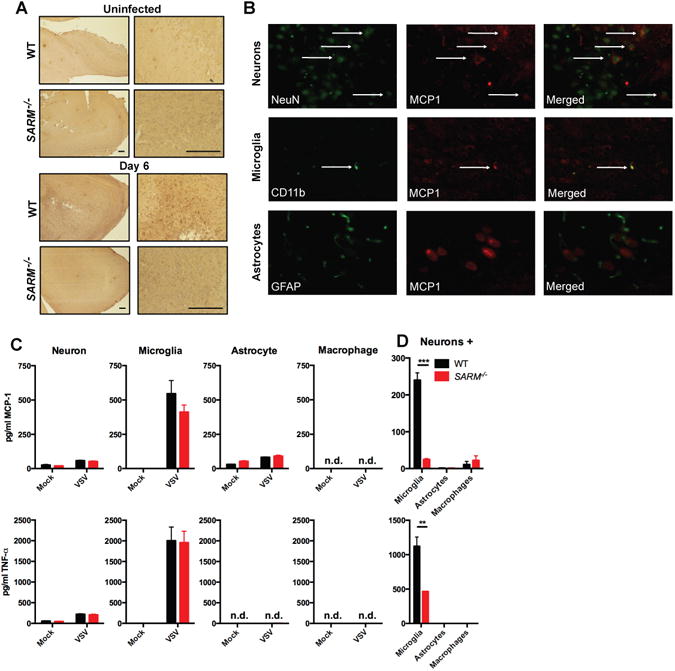
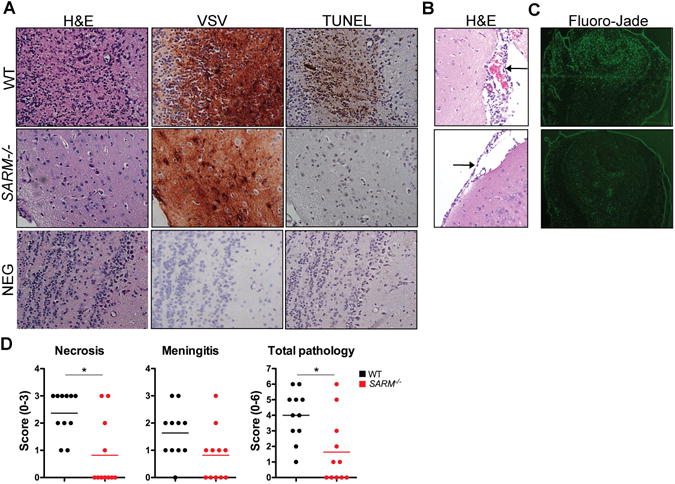
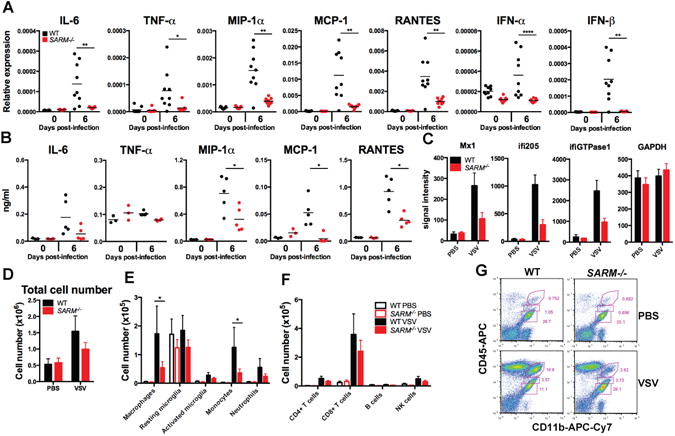
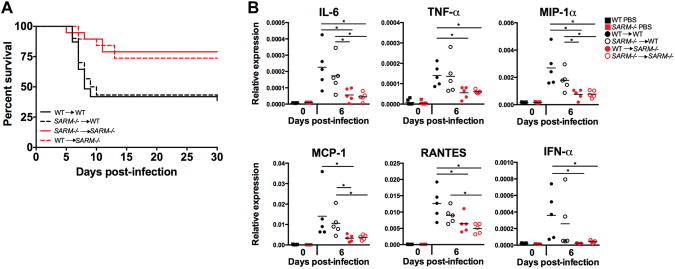
Four of the five members of the Toll/IL-1R domain-containing adaptor family are required for signaling downstream of TLRs, promoting innate immune responses against different pathogens. However, the role of the fifth member of this family, sterile α and Toll/IL-1R domain-containing 1 (SARM), is unclear. SARM is expressed primarily in the CNS where it is required for axonal death. Studies in Caenorhabditis elegans have also shown a role for SARM in innate immunity. To clarify the role of mammalian SARM in innate immunity, we infected SARM(-/-) mice with a number of bacterial and viral pathogens. SARM(-/-) mice show normal responses to Listeria monocytogenes, Mycobacterium tuberculosis, and influenza virus, but show dramatic protection from death after CNS infection with vesicular stomatitis virus. Protection correlates with reduced CNS injury and cytokine production by nonhematopoietic cells, suggesting that SARM is a positive regulator of cytokine production. Neurons and microglia are the predominant source of cytokines in vivo, supporting a role for SARM as a link between neuronal injury and innate immunity.
Toll/IL-1R 域包含衔接子家族的五个成员中的四个对于 TLR 下游的信号传递是必需的,促进了针对不同病原体的先天免疫反应。然而,这个家族的第五个成员,无菌α和 Toll/IL-1R 域包含 1(SARM)的作用尚不清楚。SARM 主要在中枢神经系统中表达,在那里它是轴突死亡所必需的。秀丽隐杆线虫中的研究也表明 SARM 在先天免疫中具有作用。为了阐明哺乳动物 SARM 在先天免疫中的作用,我们用多种细菌和病毒病原体感染 SARM(-/-) 小鼠。SARM(-/-) 小鼠对李斯特菌、结核分枝杆菌和流感病毒的反应正常,但在中枢神经系统感染水疱性口炎病毒后,死亡率显著降低。保护作用与中枢神经系统损伤和非造血细胞产生的细胞因子减少相关,表明 SARM 是细胞因子产生的正调节剂。神经元和小胶质细胞是体内细胞因子的主要来源,支持 SARM 作为神经元损伤和先天免疫之间联系的作用。