Respiratory Infections Section, Department of Respiratory Medicine, National Heart and Lung Institute, Imperial College, London, United Kingdom.
J Virol. 2013 Oct;87(20):10946-54. doi: 10.1128/JVI.01295-13. Epub 2013 Aug 7.
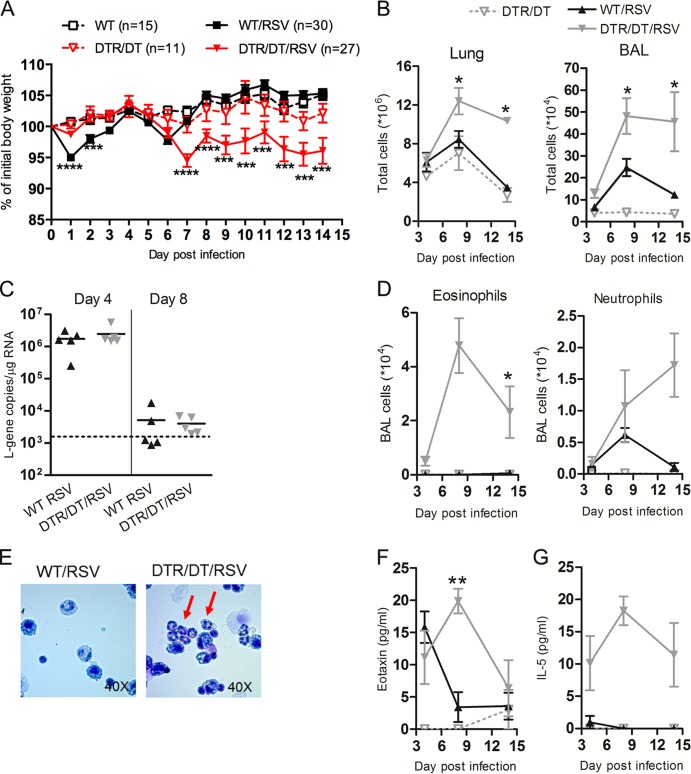
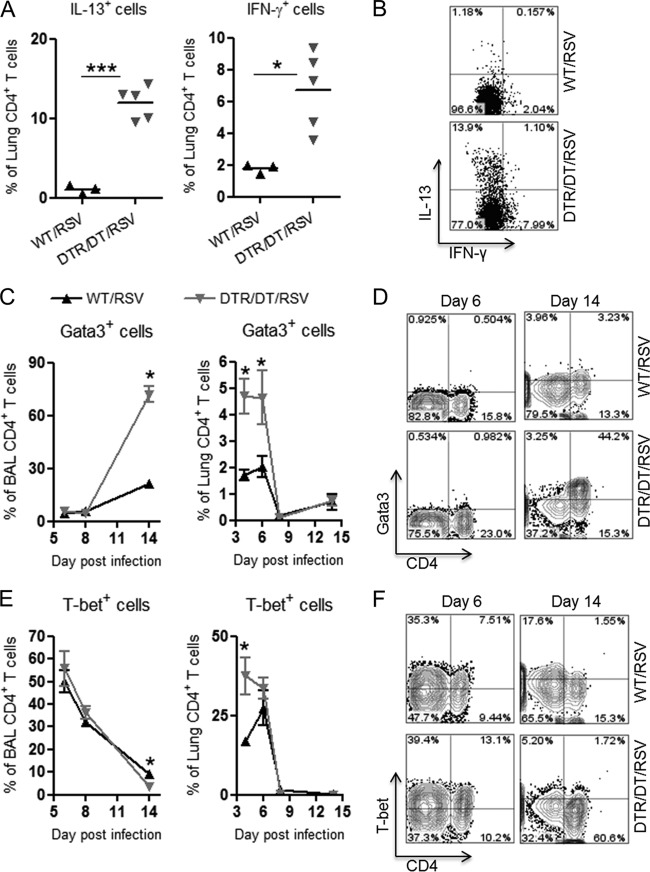
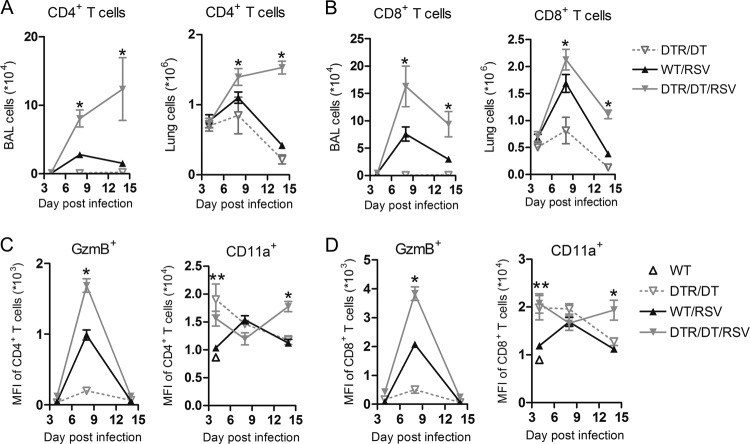
During viral infection, inflammation and recovery are tightly controlled by competing proinflammatory and regulatory immune pathways. Respiratory syncytial virus (RSV) is the leading global cause of infantile bronchiolitis, which is associated with recurrent wheeze and asthma diagnosis in later life. Th2-driven disease has been well described under some conditions for RSV-infected mice. In the present studies, we used the Foxp3(DTR) mice (which allow specific conditional depletion of Foxp3(+) T cells) to investigate the functional effects of regulatory T cells (Tregs) during A2-strain RSV infection. Infected Treg-depleted mice lost significantly more weight than wild-type mice, indicating enhanced disease. This enhancement was characterized by increased cellularity in the bronchoalveolar lavage (BAL) fluid and notable lung eosinophilia not seen in control mice. This was accompanied by abundant CD4(+) and CD8(+) T cells exhibiting an activated phenotype and induction of interleukin 13 (IL-13)- and GATA3-expressing Th2-type CD4(+) T cells that remained present in the airways even 14 days after infection. Therefore, Treg cells perform vital anti-inflammatory functions during RSV infection, suppressing pathogenic T cell responses and inhibiting lung eosinophilia. These findings provide additional evidence that dysregulation of normal immune responses to viral infection may contribute to severe RSV disease.
在病毒感染过程中,炎症和恢复受到促炎和调节性免疫途径的竞争控制。呼吸道合胞病毒(RSV)是导致婴儿细支气管炎的主要全球病因,与以后生活中反复喘息和哮喘的诊断有关。在某些条件下,已很好地描述了 RSV 感染小鼠的 Th2 驱动疾病。在本研究中,我们使用 Foxp3(DTR)小鼠(允许特异性耗竭 Foxp3(+)T 细胞)来研究调节性 T 细胞(Tregs)在 A2 株 RSV 感染期间的功能作用。感染的 Treg 耗竭小鼠比野生型小鼠体重明显减轻,表明疾病加重。这种增强的特征是支气管肺泡灌洗液(BAL)中的细胞增多,以及在对照小鼠中未见的明显肺嗜酸性粒细胞增多。这伴随着大量表达激活表型的 CD4(+)和 CD8(+)T 细胞以及诱导表达白细胞介素 13(IL-13)和 GATA3 的 Th2 型 CD4(+)T 细胞,即使在感染后 14 天,这些细胞仍存在于气道中。因此,Treg 细胞在 RSV 感染期间发挥重要的抗炎功能,抑制致病性 T 细胞反应并抑制肺嗜酸性粒细胞增多。这些发现提供了额外的证据,表明对病毒感染的正常免疫反应失调可能导致严重的 RSV 疾病。