Davis School of Gerontology, University of Southern California, Los Angeles, California, USA.
J Neurochem. 2013 Nov;127(4):509-19. doi: 10.1111/jnc.12395. Epub 2013 Aug 26.
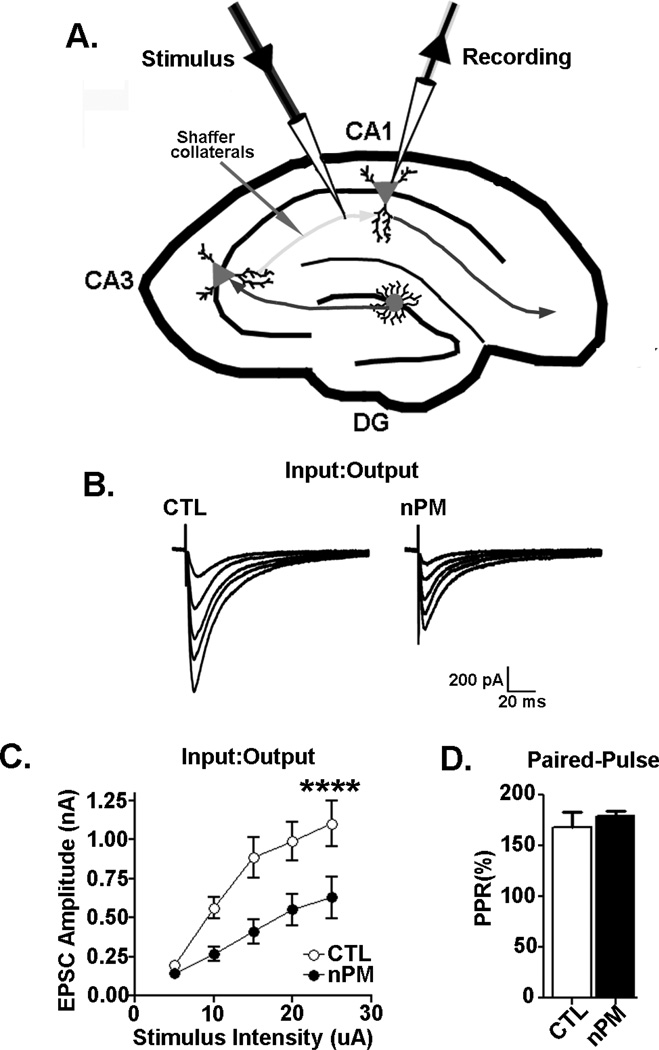
Airborne particulate matter (PM) from urban vehicular aerosols altered glutamate receptor functions and induced glial inflammatory responses in rodent models after chronic exposure. Potential neurotoxic mechanisms were analyzed in vitro. In hippocampal slices, 2 h exposure to aqueous nanosized PM (nPM) selectively altered post-synaptic proteins in cornu ammonis area 1 (CA1) neurons: increased GluA1, GluN2A, and GluN2B, but not GluA2, GluN1, or mGlur5; increased post synaptic density 95 and spinophilin, but not synaptophysin, while dentate gyrus (DG) neurons were unresponsive. In hippocampal slices and neurons, MitoSOX red fluorescence was increased by nPM, implying free radical production. Specifically, NȮ production by slices was increased within 15 min of exposure to nPM with dose dependence, 1-10 μg/mL. Correspondingly, CA1 neurons exhibited increased nitrosylation of the GluN2A receptor and dephosphorylation of GluN2B (S1303) and of GluA1 (S831 & S845). Again, DG neurons were unresponsive to nPM. The induction of NȮ and nitrosylation were inhibited by AP5, an NMDA receptor antagonist, which also protects neurite outgrowth in vitro from inhibition by nPM. Membrane injury (EthidiumD-1 uptake) showed parallel specificity. Finally, nPM decreased evoked excitatory post-synaptic currents of CA1 neurons. These findings further document the selective impact of nPM on glutamatergic functions and identify novel responses of NMDA receptor-stimulated NȮ production and nitrosylation reactions during nPM-mediated neurotoxicity. We present three new findings of rapid hippocampal slice responses to nPM (nano-sized particulate matter from urban traffic): increased NȮ production within 15 min; nitrosylation of glutamatergic NMDA receptors; and, reduced excitatory postsynaptic currents in CA1 neurons. AP5 (NMDA receptor antagonist) blocked nPM-mediated NȮ and receptor nitrosylation. Ca(2+) influx is a likely mechanism.
城市机动车气溶胶中的空气悬浮颗粒物(PM)在慢性暴露后改变了啮齿动物模型中的谷氨酸受体功能并诱导神经胶质炎症反应。在体外分析了潜在的神经毒性机制。在海马切片中,2 小时暴露于水性纳米级 PM(nPM)选择性地改变了 Cornu Ammonis 区 1(CA1)神经元中的突触后蛋白:增加了 GluA1、GluN2A 和 GluN2B,但不增加 GluA2、GluN1 或 mGlur5;增加了突触后密度 95 和 spinophilin,但不增加 synaptophysin,而齿状回(DG)神经元没有反应。在海马切片和神经元中,nPM 增加了 MitoSOX 红色荧光,表明自由基的产生。具体来说,nPM 暴露 15 分钟内,切片中 NȮ 的产生呈剂量依赖性增加,1-10μg/mL。相应地,CA1 神经元表现出 GluN2A 受体的硝化和 GluN2B(S1303)和 GluA1(S831 和 S845)的去磷酸化增加。同样,DG 神经元对 nPM 没有反应。AP5(NMDA 受体拮抗剂)抑制 NȮ 和硝化的诱导,AP5 还可防止体外 nPM 抑制神经突生长。膜损伤(EthidiumD-1 摄取)显示出相似的特异性。最后,nPM 减少了 CA1 神经元的诱发兴奋性突触后电流。这些发现进一步证明了 nPM 对谷氨酸能功能的选择性影响,并确定了在 nPM 介导的神经毒性过程中 NMDA 受体刺激的 NȮ 产生和硝化反应的新反应。我们提出了对 nPM(城市交通产生的纳米级颗粒物质)的海马切片快速反应的三个新发现:15 分钟内 NȮ 产量增加;谷氨酸能 NMDA 受体的硝化;以及 CA1 神经元的兴奋性突触后电流减少。AP5(NMDA 受体拮抗剂)阻断了 nPM 介导的 NȮ 和受体硝化。钙内流是一种可能的机制。