Jankowska-Kieltyka Monika, Roman Adam, Nalepa Irena
Department of Brain Biochemistry, Maj Institute of Pharmacology, Polish Academy of Sciences, Krakow, Poland.
Front Cell Neurosci. 2021 Jun 24;15:647643. doi: 10.3389/fncel.2021.647643. eCollection 2021.
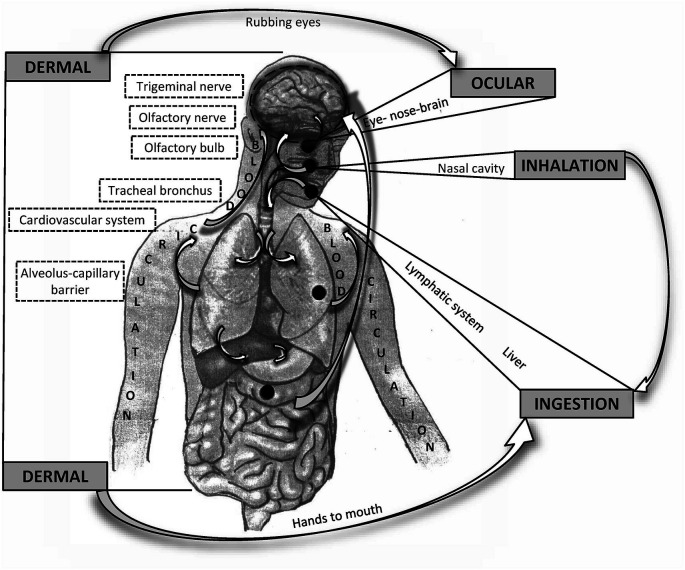
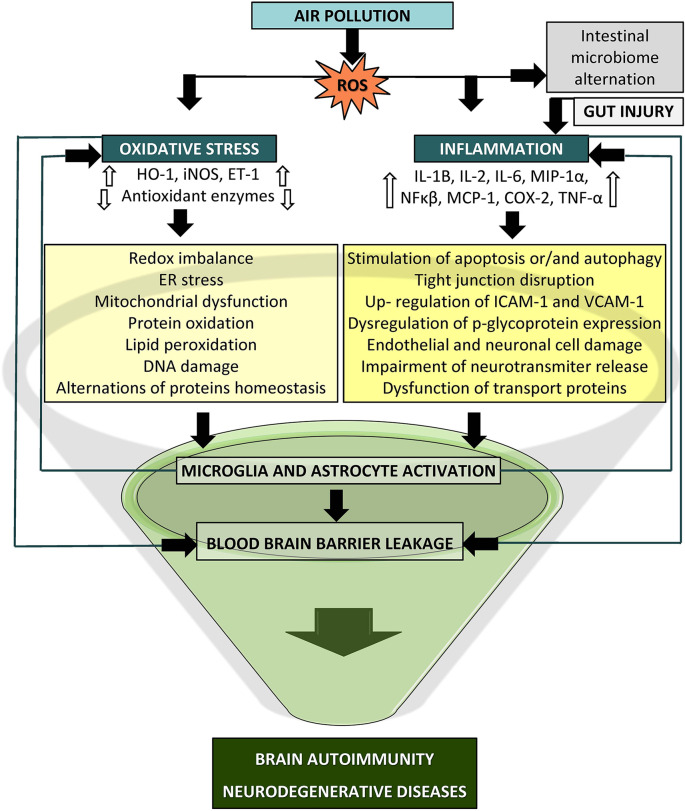
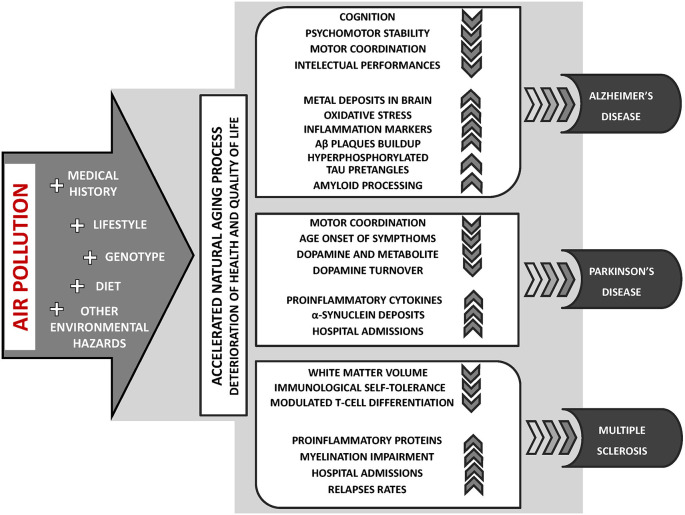
Air pollution is regarded as an important risk factor for many diseases that affect a large proportion of the human population. To date, accumulating reports have noted that particulate matter (PM) is closely associated with the course of cardiopulmonary disorders. As the incidence of Alzheimer's disease (AD), Parkinson's disease (PD), and autoimmune disorders have risen and as the world's population is aging, there is an increasing interest in environmental health hazards, mainly air pollution, which has been slightly overlooked as one of many plausible detrimental stimuli contributing to neurodegenerative disease onset and progression. Epidemiological studies have indicated a noticeable association between exposure to PM and neurotoxicity, which has been gradually confirmed by and studies. After entering the body directly through the olfactory epithelium or indirectly by passing through the respiratory system into the circulatory system, air pollutants are subsequently able to reach the brain. Among the potential mechanisms underlying particle-induced detrimental effects in the periphery and the central nervous system (CNS), increased oxidative stress, inflammation, mitochondrial dysfunction, microglial activation, disturbance of protein homeostasis, and ultimately, neuronal death are often postulated and concomitantly coincide with the main pathomechanisms of neurodegenerative processes. Other complementary mechanisms by which PM could mediate neurotoxicity and contribute to neurodegeneration remain unconfirmed. Furthermore, the question of how strong and proven air pollutants are as substantial adverse factors for neurodegenerative disease etiologies remains unsolved. This review highlights research advances regarding the issue of PM with an emphasis on neurodegeneration markers, symptoms, and mechanisms by which air pollutants could mediate damage in the CNS. Poor air quality and insufficient knowledge regarding its toxicity justify conducting scientific investigations to understand the biological impact of PM in the context of various types of neurodegeneration.
空气污染被视为影响大量人群的多种疾病的重要风险因素。迄今为止,越来越多的报告指出,颗粒物(PM)与心肺疾病的病程密切相关。随着阿尔茨海默病(AD)、帕金森病(PD)和自身免疫性疾病的发病率上升,以及世界人口老龄化,人们对环境健康危害,主要是空气污染的关注度日益增加,而空气污染作为导致神经退行性疾病发生和进展的众多可能有害刺激之一,此前一直被略微忽视。流行病学研究表明,接触PM与神经毒性之间存在显著关联,这一点已逐渐得到[具体研究1]和[具体研究2]研究的证实。空气污染物通过嗅觉上皮直接进入人体,或通过呼吸系统间接进入循环系统后,随后能够到达大脑。在颗粒物在周围和中枢神经系统(CNS)中产生有害影响的潜在机制中,氧化应激增加、炎症、线粒体功能障碍、小胶质细胞活化、蛋白质稳态紊乱,最终导致神经元死亡,这些情况经常被假定,并且与神经退行性过程的主要病理机制同时出现。PM介导神经毒性并导致神经退行性变的其他补充机制仍未得到证实。此外,空气污染物作为神经退行性疾病病因的实质性不利因素有多严重以及是否得到证实,这个问题仍然没有解决。本综述重点介绍了关于PM问题的研究进展,重点关注神经退行性变标志物、症状以及空气污染物介导中枢神经系统损伤的机制。空气质量差以及对其毒性的认识不足,使得开展科学研究以了解PM在各种类型神经退行性变背景下的生物学影响成为必要。