Department of Plant Pathology, University of Nebraska-Lincoln, Lincoln, NE 68583, USA.
Sci Rep. 2013;3:2398. doi: 10.1038/srep02398.
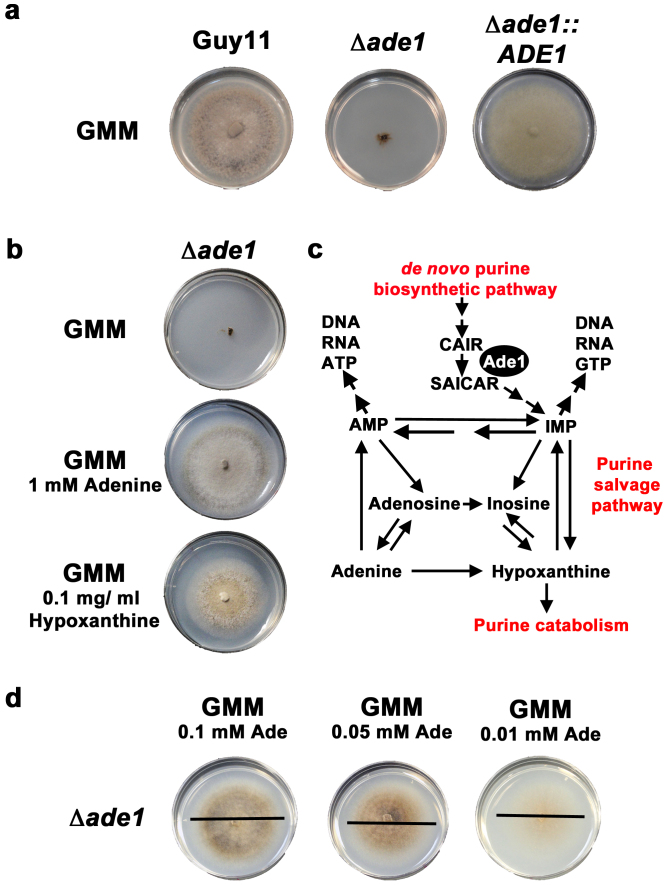
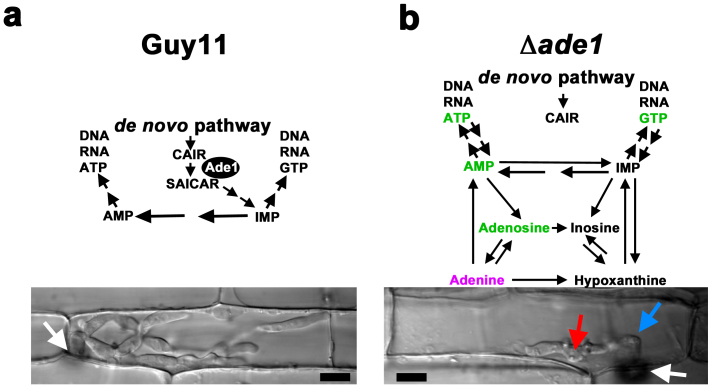
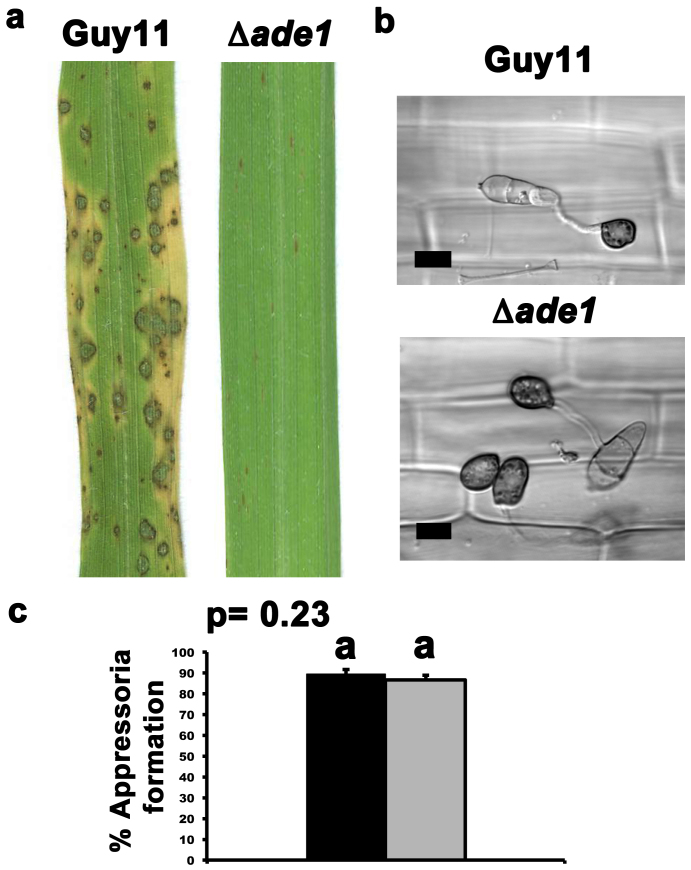
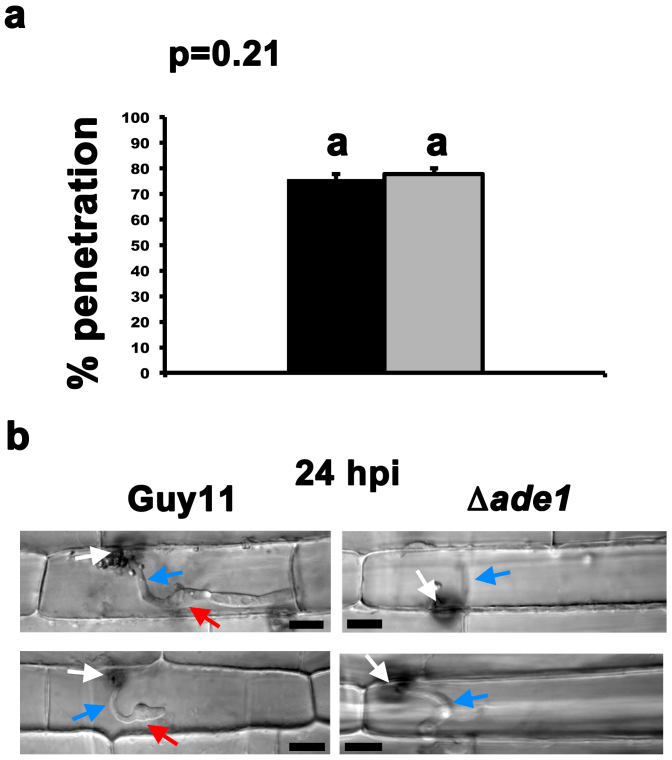
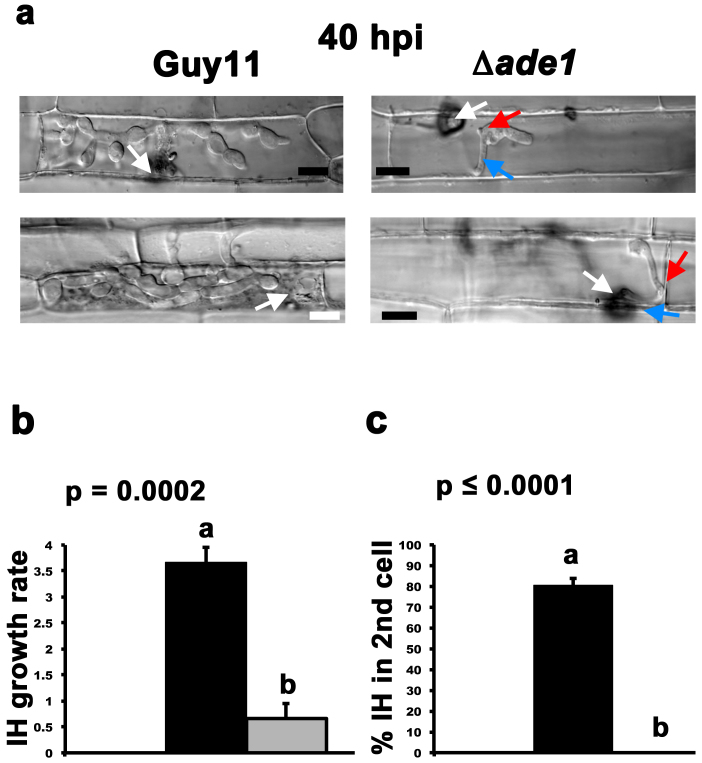
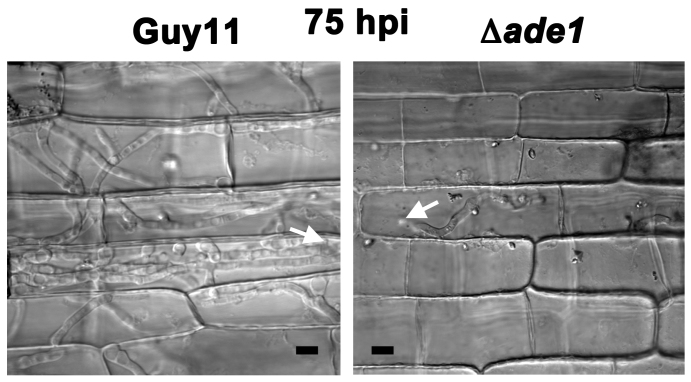
Increasing incidences of human disease, crop destruction and ecosystem perturbations are attributable to fungi and threaten socioeconomic progress and food security on a global scale. The blast fungus Magnaporthe oryzae is the most devastating pathogen of cultivated rice, but its metabolic requirements in the host are unclear. Here we report that a purine-requiring mutant of M. oryzae could develop functional appressoria, penetrate host cells and undergo the morphogenetic transition to elaborate bulbous invasive hyphae from primary hyphae, but further in planta growth was aborted. Invasive hyphal growth following rice cell ingress is thus dependent on de novo purine biosynthesis by the pathogen and, moreover, plant sources of purines are neither available to the mutant nor required by the wild type during the early biotrophic phase of infection. This work provides new knowledge about the metabolic interface between fungus and host that might be applicable to other important intracellular fungal pathogens.
真菌导致的人类疾病发病率不断上升、作物被毁和生态系统紊乱,这在全球范围内威胁着社会经济的发展和粮食安全。稻瘟病菌是危害栽培水稻最严重的病原菌,但它在宿主中的代谢需求尚不清楚。本研究报道,一株需要嘌呤的稻瘟病菌突变体能形成有功能的附着胞,穿透宿主细胞,并从初生菌丝转变为形成膨大的侵入性菌丝,但进一步的植物内生长被阻断。因此,侵入性菌丝在进入水稻细胞后的生长依赖于病原菌从头合成嘌呤,此外,在感染的早期生物营养阶段,突变体既无法获得嘌呤,野生型也不需要植物来源的嘌呤。这项工作提供了关于真菌和宿主之间代谢界面的新知识,可能适用于其他重要的细胞内真菌病原体。