Department of Biophysics and Biophysical Chemistry, Johns Hopkins University School of Medicine, Baltimore, MD 21205, USA.
Neuron. 2013 Aug 7;79(3):492-503. doi: 10.1016/j.neuron.2013.06.003.
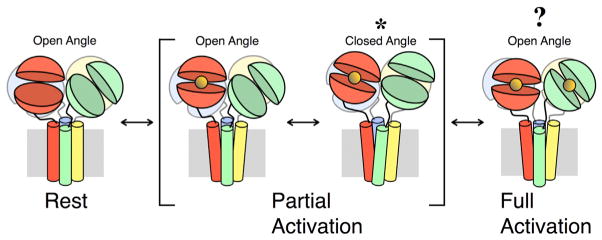
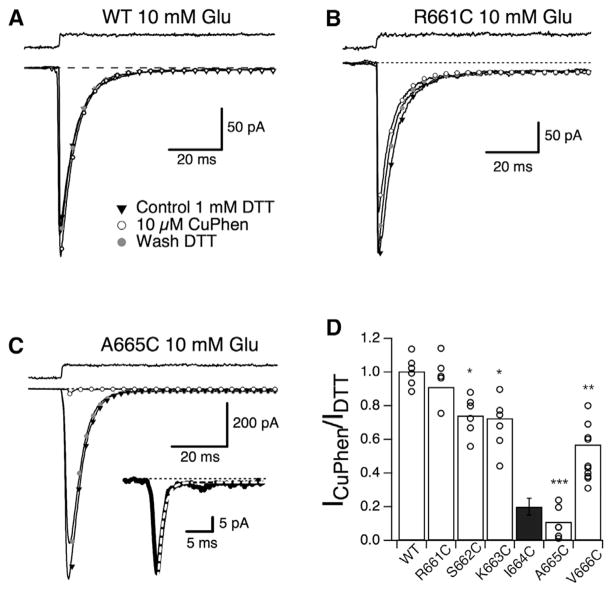
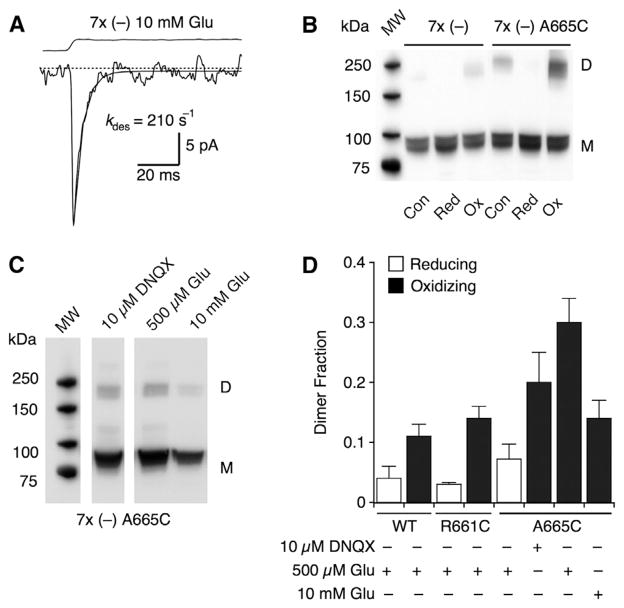
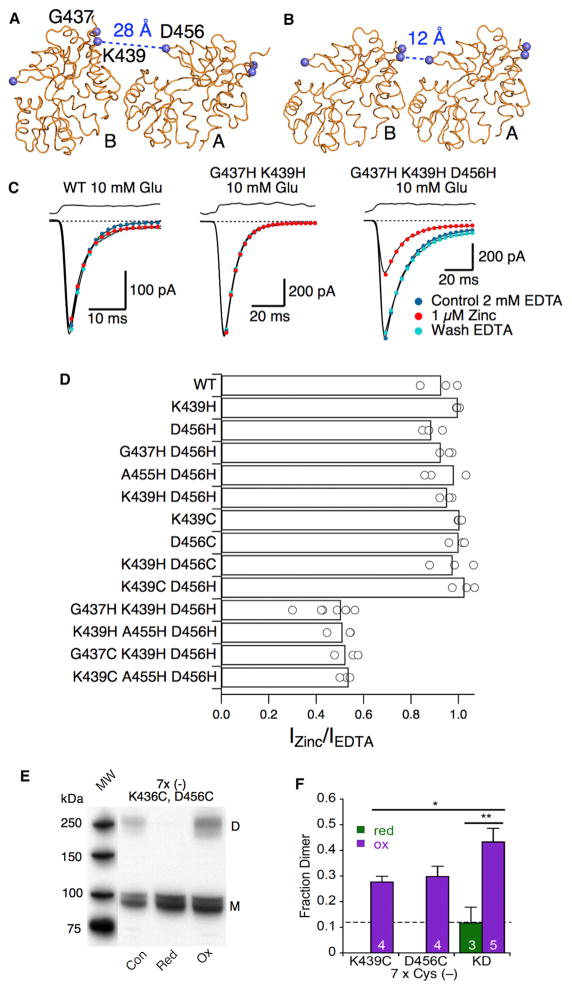
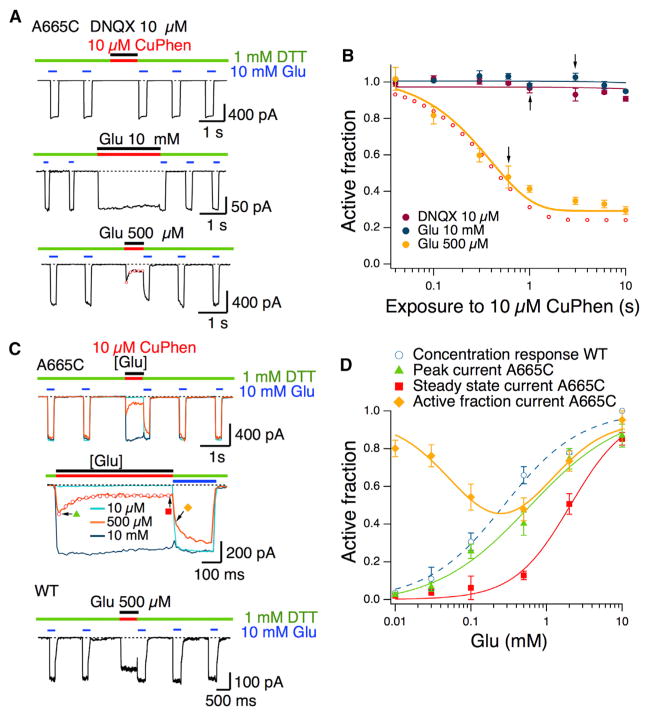
Ionotropic glutamate receptors (iGluRs) transduce the chemical signal of neurotransmitter release into membrane depolarization at excitatory synapses in the brain. The opening of the transmembrane ion channel of these ligand-gated receptors is driven by conformational transitions that are induced by the association of glutamate molecules to the ligand-binding domains (LBDs). Here, we describe the crystal structure of a GluA2 LBD tetramer in a configuration that involves an ∼30° rotation of the LBD dimers relative to the crystal structure of the full-length receptor. The configuration is stabilized by an engineered disulfide crosslink. Biochemical and electrophysiological studies on full-length receptors incorporating either this crosslink or an engineered metal bridge show that this LBD configuration corresponds to an intermediate state of receptor activation. GluA2 activation therefore involves a combination of both intra-LBD (cleft closure) and inter-LBD dimer conformational transitions. Overall, these results provide a comprehensive structural characterization of an iGluR intermediate state.
离子型谷氨酸受体 (iGluRs) 将神经递质释放的化学信号转导为大脑中兴奋性突触的膜去极化。这些配体门控受体的跨膜离子通道的开启是由谷氨酸分子与配体结合域 (LBD) 结合诱导的构象转变驱动的。在这里,我们描述了一个 GluA2 LBD 四聚体的晶体结构,其构象涉及 LBD 二聚体相对于全长受体晶体结构的约 30°旋转。该构象通过工程化的二硫键交联稳定。包含该交联或工程化金属桥的全长受体的生化和电生理学研究表明,这种 LBD 构象对应于受体激活的中间状态。因此,GluA2 的激活涉及 LBD 内(裂隙闭合)和 LBD 二聚体之间构象转变的组合。总的来说,这些结果提供了 iGluR 中间状态的全面结构特征。