Department of Biochemistry and Molecular Biology, The University of Chicago, Chicago, IL, USA.
Nat Struct Mol Biol. 2011 Mar;18(3):283-7. doi: 10.1038/nsmb.2010. Epub 2011 Feb 13.
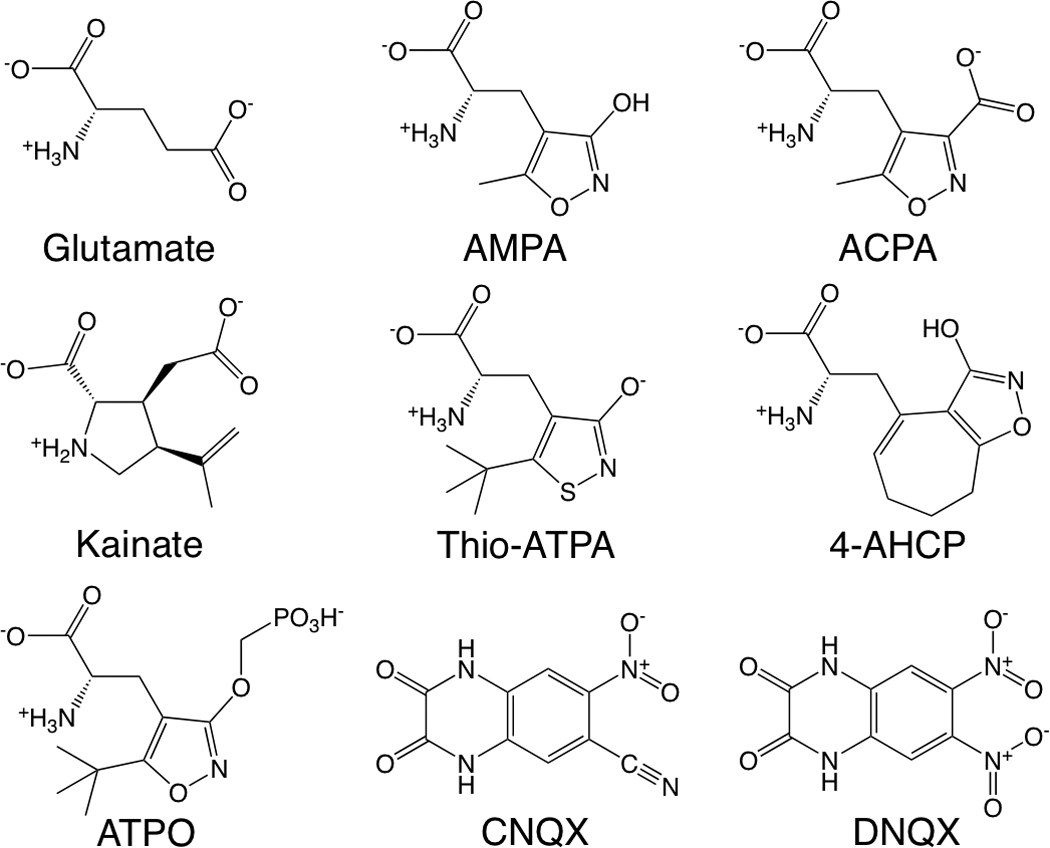
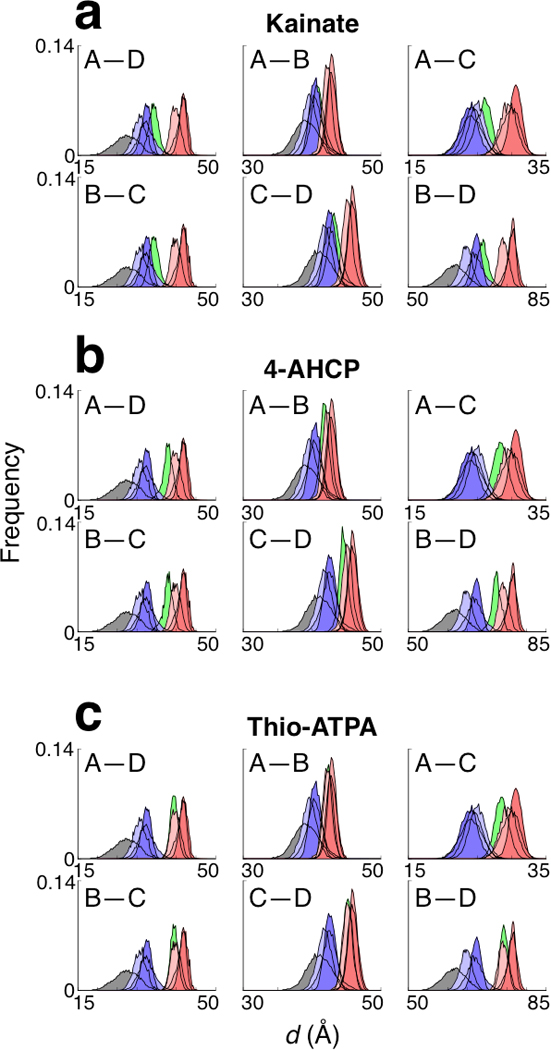
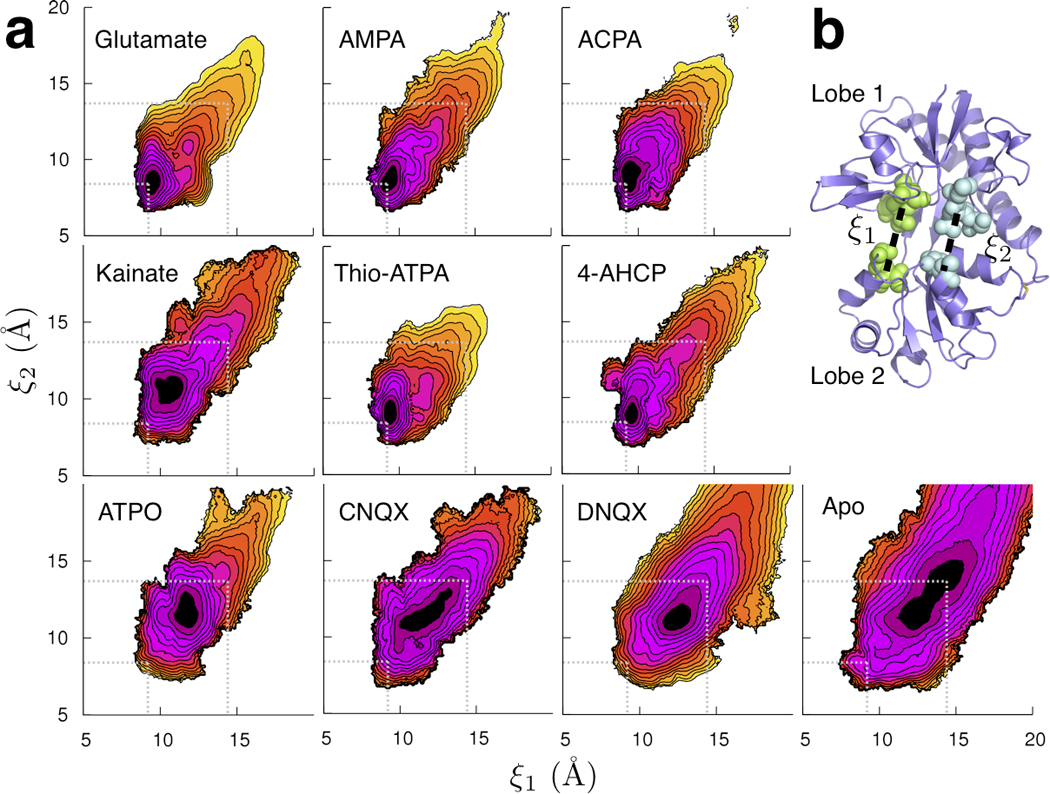
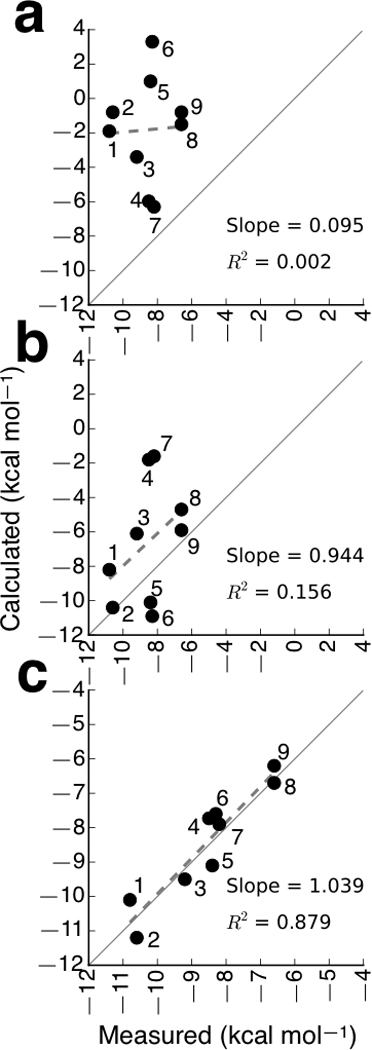
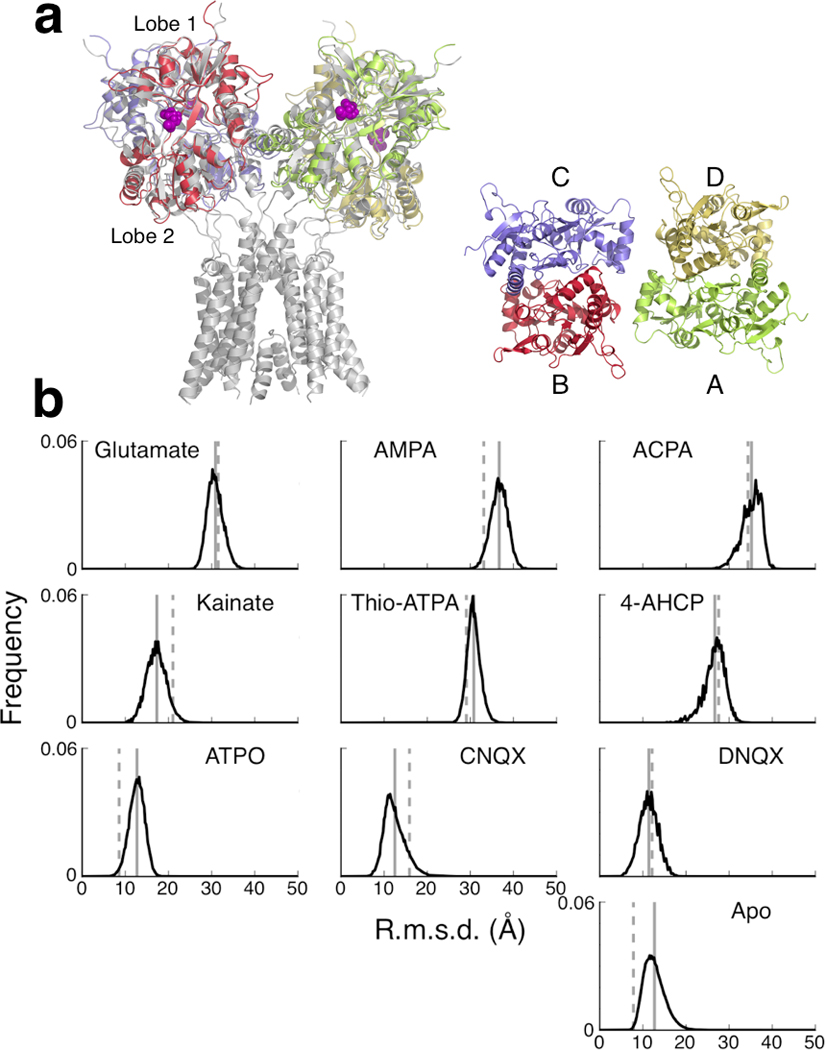
Ionotropic glutamate receptors (iGluRs) are ligand-gated ion channels that mediate most excitatory synaptic transmission in the central nervous system. The free energy of neurotransmitter binding to the ligand-binding domains (LBDs) of iGluRs is converted into useful work to drive receptor activation. We have computed the principal thermodynamic contributions from ligand docking and ligand-induced closure of LBDs for nine ligands of GluA2 using all-atom molecular dynamics free energy simulations. We have validated the results by comparison with experimentally measured apparent affinities to the isolated LBD. Features in the free energy landscapes that govern closure of LBDs are key determinants of binding free energies. An analysis of accessible LBD conformations transposed into the context of an intact GluA2 receptor revealed that the relative displacement of specific diagonal subunits in the tetrameric structure may be key to the action of partial agonists.
离子型谷氨酸受体(iGluRs)是配体门控离子通道,介导中枢神经系统中大多数兴奋性突触传递。神经递质与 iGluRs 的配体结合域(LBD)结合的自由能转化为有用的功来驱动受体激活。我们使用全原子分子动力学自由能模拟计算了 9 种 GluA2 配体与 LBD 对接和配体诱导关闭的主要热力学贡献。我们通过与分离的 LBD 的实验测量的表观亲和力进行比较来验证结果。控制 LBD 关闭的自由能景观中的特征是结合自由能的关键决定因素。对可及的 LBD 构象进行的分析转换到完整的 GluA2 受体的背景中,揭示了四聚体结构中特定对角亚基的相对位移可能是部分激动剂作用的关键。