Unidad de Biotecnología Celular, Instituto de Investigación en Enfermedades Raras, Instituto de Salud Carlos III, Carretera Majadahonda-Pozuelo km. 2.200, Majadahonda, Madrid, Spain.
Stem Cell Rev Rep. 2013 Dec;9(6):833-46. doi: 10.1007/s12015-013-9464-1.
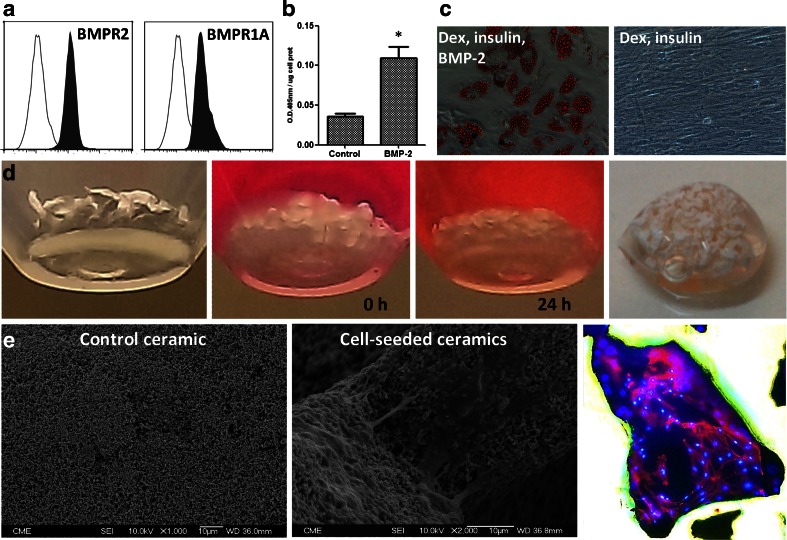
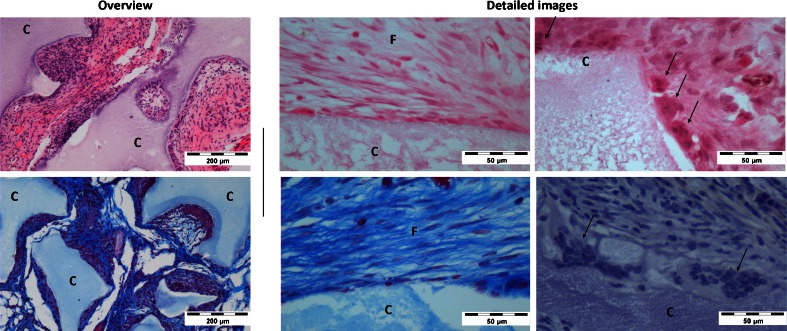
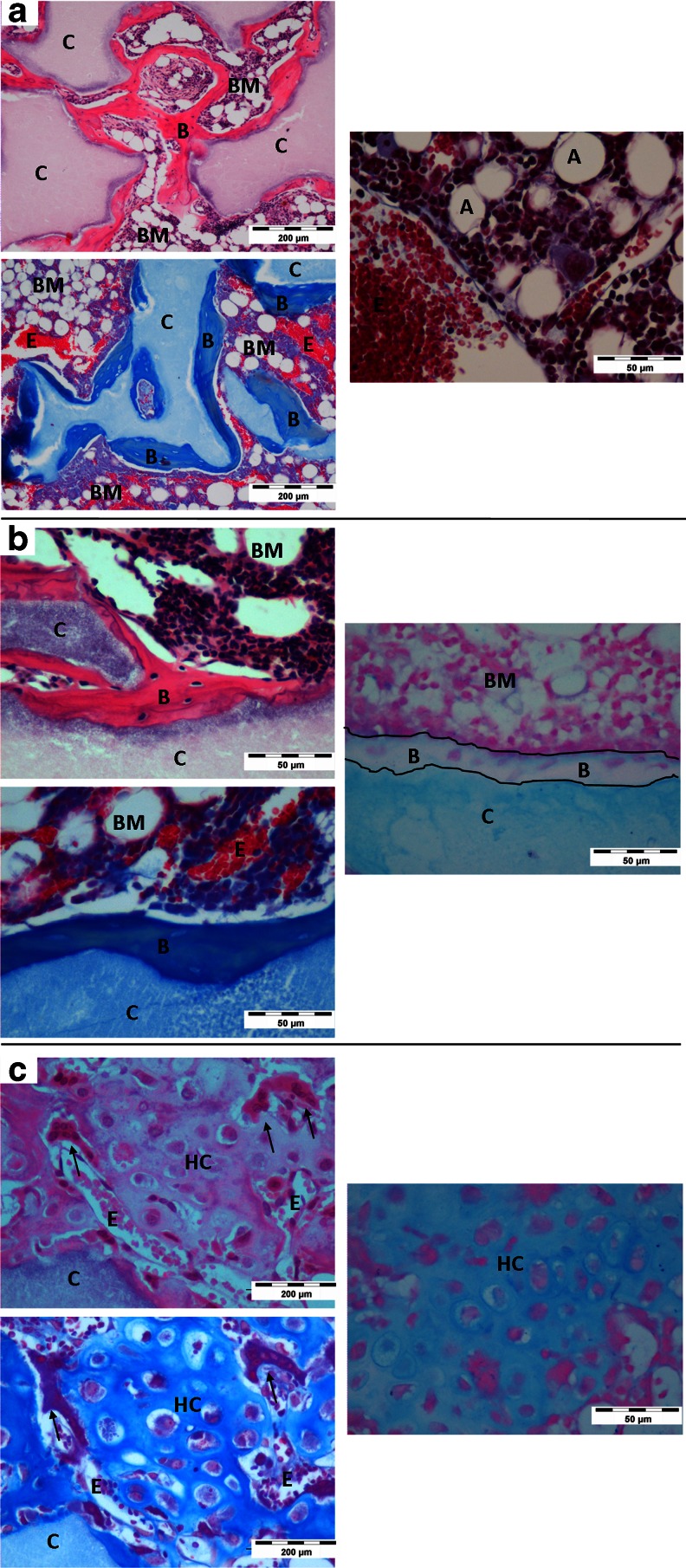
Clinical interest on human mesenchymal progenitor cells (hMPC) relies on their potential applicability in cell-based therapies. An in vitro characterization is usually performed in order to define MPC potency. However, in vitro predictions not always correlate with in vivo results and thus there is no consensus in how to really assess cell potency. Our goal was to provide an in vivo testing method to define cell behavior before therapeutic usage, especially for bone tissue engineering applications. In this context, we wondered whether bone marrow stromal cells (hBMSC) would proceed in an osteogenic microenvironment. Based on previous approaches, we developed a fibrin/ceramic/BMP-2/hBMSCs compound. We implanted the compound during only 2 weeks in NOD-SCID mice, either orthotopically to assess its osteoinductive property or subcutaneously to analyze its adequacy as a cell potency testing method. Using fluorescent cell labeling and immunohistochemistry techniques, we could ascertain cell differentiation to bone, bone marrow, cartilage, adipocyte and fibrous tissue. We observed differences in cell potential among different batches of hBMSCs, which did not strictly correlate with in vitro analyses. Our data indicate that the method we have developed is reliable, rapid and reproducible to define cell potency, and may be useful for testing cells destined to bone tissue engineering purposes. Additionally, results obtained with hMPCs from other sources indicate that our method is suitable for testing any potentially implantable mesenchymal cell. Finally, we propose that this model could successfully be employed for bone marrow niche and bone tumor studies.
临床对人骨髓间充质祖细胞(hMPC)的兴趣在于其在细胞治疗中的潜在适用性。通常进行体外表征以定义 MPC 效力。然而,体外预测并不总是与体内结果相关,因此如何真正评估细胞效力尚无共识。我们的目标是提供一种体内测试方法,在治疗用途之前定义细胞行为,特别是用于骨组织工程应用。在这种情况下,我们想知道骨髓基质细胞(hBMSC)是否会在成骨微环境中进行。基于先前的方法,我们开发了一种纤维蛋白/陶瓷/BMP-2/hBMSC 复合物。我们将该复合物仅植入 NOD-SCID 小鼠体内 2 周,无论是原位植入以评估其成骨诱导特性,还是皮下植入以分析其作为细胞效力测试方法的适宜性。使用荧光细胞标记和免疫组织化学技术,我们可以确定细胞向骨、骨髓、软骨、脂肪细胞和纤维组织的分化。我们观察到不同批次的 hBMSC 之间细胞潜力的差异,这些差异与体外分析没有严格相关。我们的数据表明,我们开发的方法可靠、快速且可重复,可用于定义细胞效力,并且可能有助于测试用于骨组织工程目的的细胞。此外,来自其他来源的 hMPC 的结果表明,我们的方法适用于测试任何潜在可植入的间充质细胞。最后,我们提出该模型可成功用于骨髓龛和骨肿瘤研究。