Shibata Katsumi, Shimizu Atsushi, Fukuwatari Tsutomu
Department of Nutrition, School of Human Cultures, The University of Shiga Prefecture.
Nutr Metab Insights. 2013 Apr 16;6:1-10. doi: 10.4137/NMI.S11749. Print 2013.
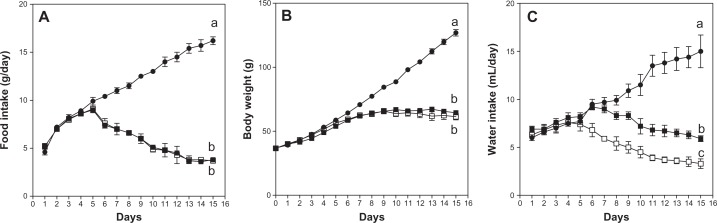
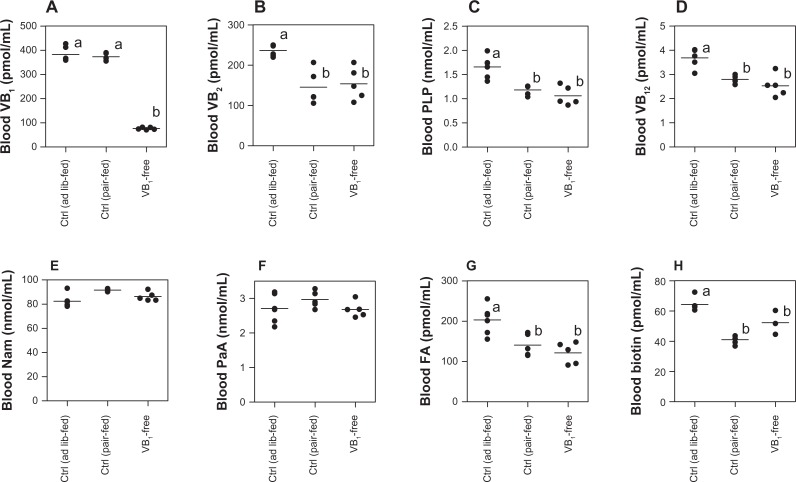
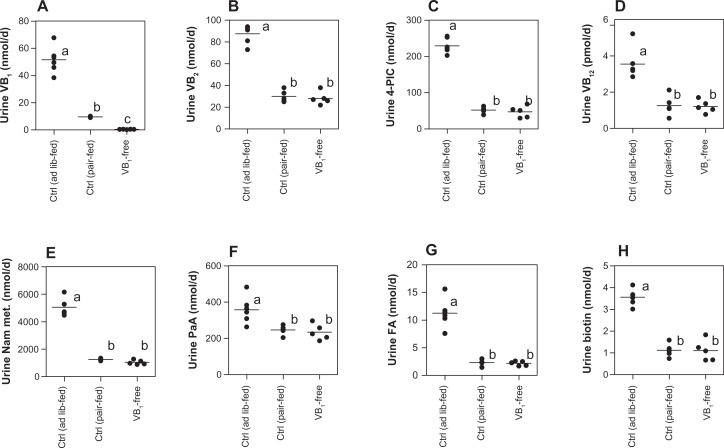
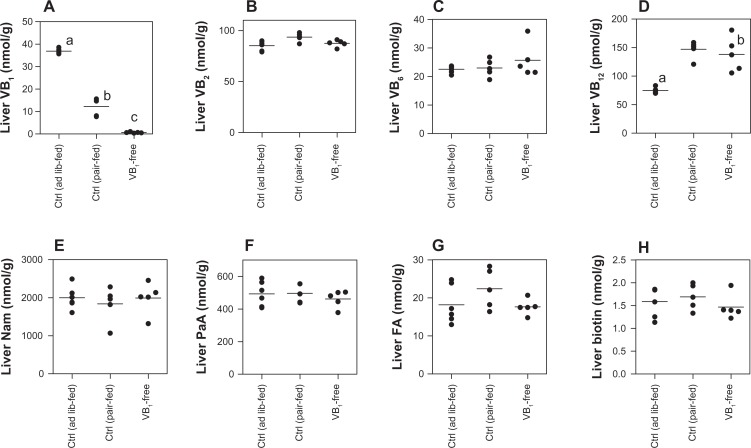
We aimed to determine the effects of vitamin B1 deficiency on vitamin contents of urine, liver, and blood. In the current study, rats were divided into 3 groups (n = 5, each group): the first was freely fed a complete diet (ad lib-fed control group); the second freely fed a vitamin B1-free diet (vitamin B1 deficient group); and the third pair-fed a complete diet with the same amounts of the vitamin B1 deficient group (pair-fed control group). The experimental period was for 15 days. The blood concentrations of vitamin B2, PLP, vitamin B12, folic acid, and biotin were lower in the pair-fed control than in the ad lib-fed control and those of nicotinamide and pantothenic acid were the same. We conclude that Vitamin B1 deficiency did not affect concentrations of the other B-group vitamins.
我们旨在确定维生素B1缺乏对尿液、肝脏和血液中维生素含量的影响。在本研究中,大鼠被分为3组(每组n = 5):第一组自由进食完整饮食(随意进食对照组);第二组自由进食不含维生素B1的饮食(维生素B1缺乏组);第三组按与维生素B1缺乏组相同的量配对进食完整饮食(配对进食对照组)。实验期为15天。配对进食对照组血液中维生素B2、PLP、维生素B12、叶酸和生物素的浓度低于随意进食对照组,而烟酰胺和泛酸的浓度相同。我们得出结论,维生素B1缺乏不会影响其他B族维生素的浓度。