Department of Ecology and Evolutionary Biology, University of California Santa Cruz, CA, USA.
Front Plant Sci. 2013 Aug 5;4:285. doi: 10.3389/fpls.2013.00285. eCollection 2013.
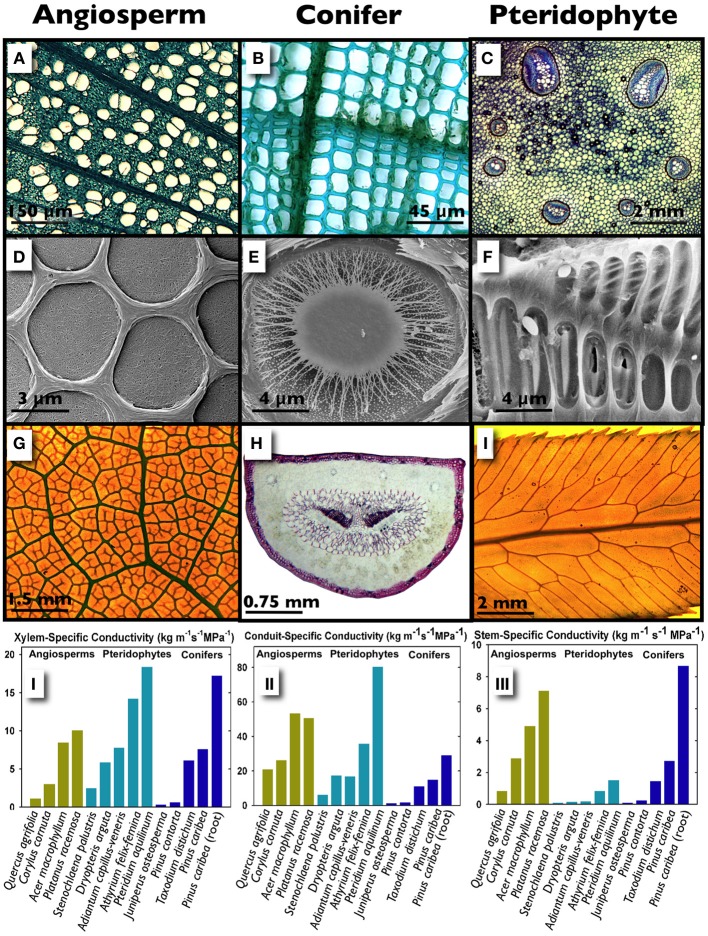
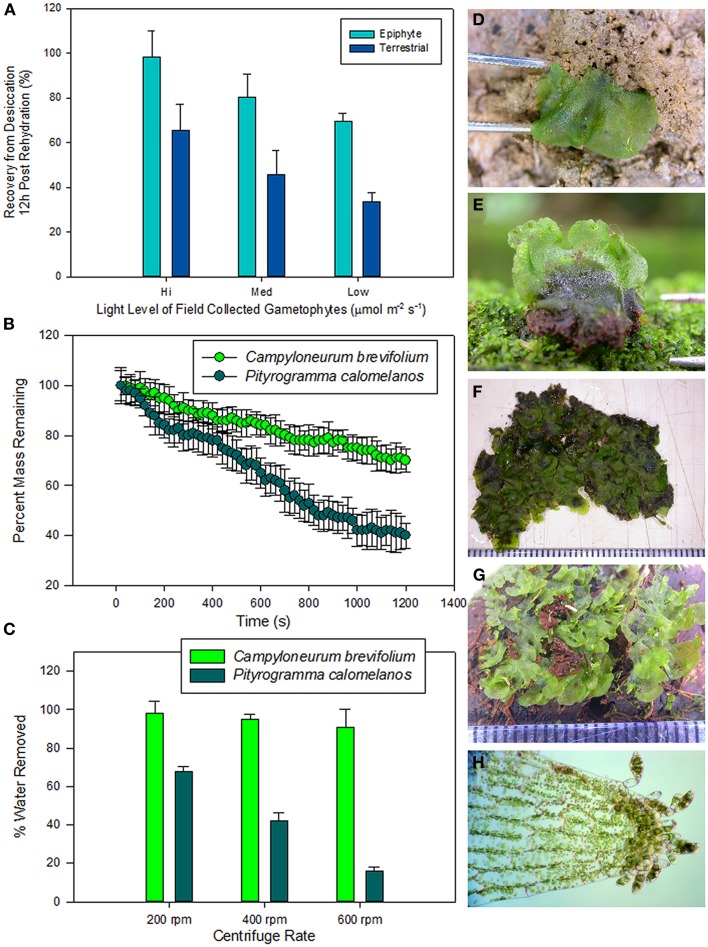
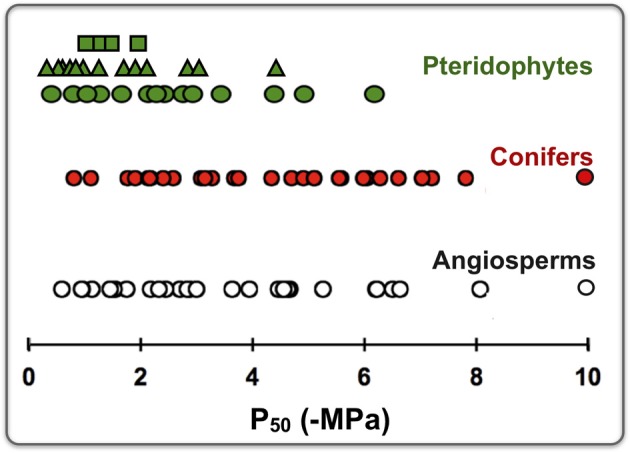
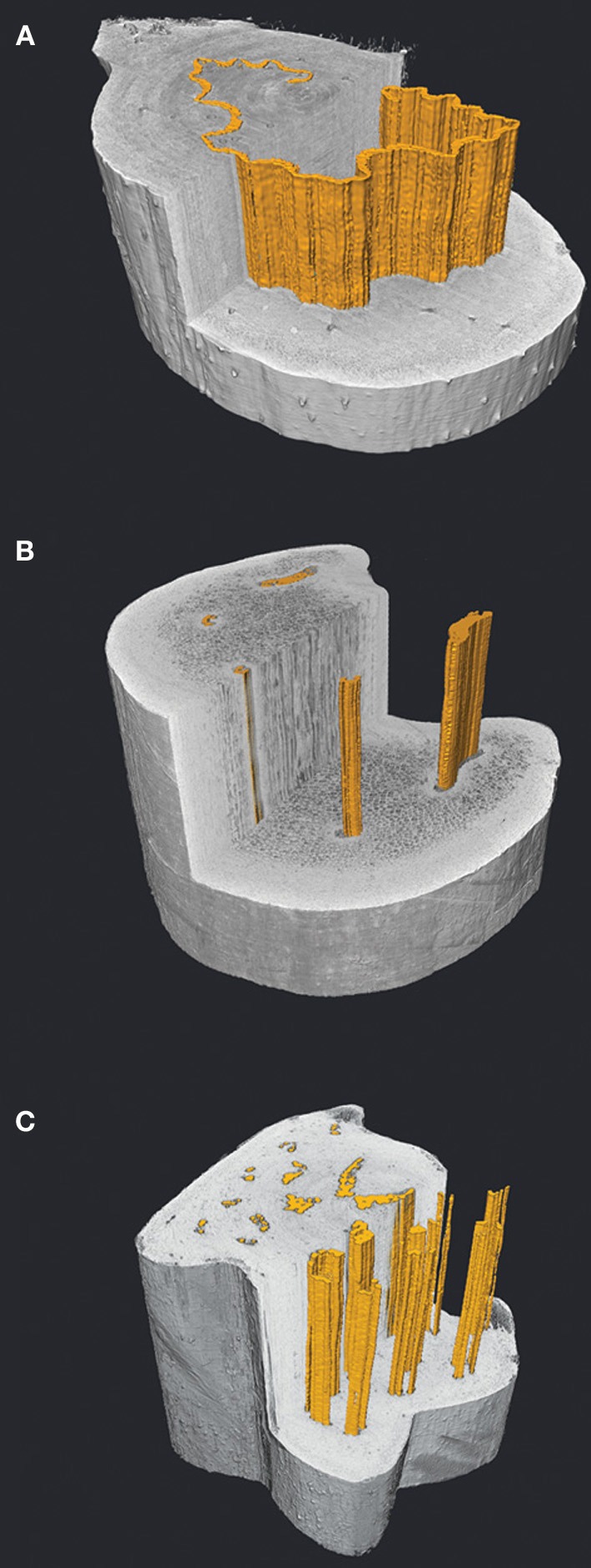
Ferns are some of the oldest vascular plants in existence and they are the second most diverse lineage of tracheophytes next to angiosperms. Recent efforts to understand fern success have focused on the physiological capacity and stress tolerance of both the sporophyte and the gametophyte generations. In this review, we examine these insights through the lens of plant water relations, focusing primarily on the form and function of xylem tissue in the sporophyte, as well as the tolerance to and recovery from drought and desiccation stress in both stages of the fern life cycle. The absence of secondary xylem in ferns is compensated by selection for efficient primary xylem composed of large, closely arranged tracheids with permeable pit membranes. Protection from drought-induced hydraulic failure appears to arise from a combination of pit membrane traits and the arrangement of vascular bundles. Features such as tracheid-based xylem and variously sized megaphylls are shared between ferns and more derived lineages, and offer an opportunity to compare convergent and divergent hydraulic strategies critical to the success of xylem-bearing plants. Fern gametophytes show a high degree of desiccation tolerance but new evidence shows that morphological attributes in the gametophytes may facilitate water retention, though little work has addressed the ecological significance of this variation. We conclude with an emergent hypothesis that selection acted on the physiology of both the sporophyte and gametophyte generations in a synchronous manner that is consistent with selection for drought tolerance in the epiphytic niche, and the increasingly diverse habitats of the mid to late Cenozoic.
蕨类植物是现存最古老的维管植物之一,它们是仅次于被子植物的第二大多样性的维管植物谱系。最近,人们努力理解蕨类植物的成功,主要集中在孢子体和配子体世代的生理能力和应激耐受性上。在这篇综述中,我们通过植物水分关系的视角来审视这些见解,主要关注孢子体的木质部组织的形态和功能,以及在蕨类植物生命周期的两个阶段对干旱和干燥胁迫的耐受性和恢复能力。蕨类植物中不存在次生木质部,这是通过选择高效的初生木质部来补偿的,初生木质部由具有可渗透的纹孔膜的大型、紧密排列的管胞组成。似乎是通过纹孔膜特性和维管束的排列来防止干旱引起的水力失效。管胞基木质部和各种大小的大叶片等特征在蕨类植物和更衍生的谱系之间共享,为比较对木质部植物成功至关重要的趋同和发散水力策略提供了机会。蕨类植物的配子体表现出高度的干燥耐受性,但新的证据表明,配子体中的形态特征可能有助于保持水分,尽管很少有工作涉及到这种变异的生态意义。我们得出一个新兴的假设,即选择以同步的方式作用于孢子体和配子体世代的生理学,这与在附生生态位中对干旱耐受性的选择以及中生代到新生代中期的多样化栖息地相一致。