Kaplan Adriana, Cham Babucarr, Njie Lamin A, Seixas Ana, Blanco Sandra, Utzet Mireia
Department of Social and Cultural Anthropology, Universitat Autònoma de Barcelona, Belatterra 08193, Spain ; Interdisciplinary Group for the Prevention and Study of Harmful Traditional Practices (IGPS/HTP), Department of Social and Cultural Anthropology, Universitat Autònoma de Barcelona, Belatterra 08193, Spain ; NGO Wassu Gambia Kafo, Fajara F Section, Banjul, Gambia.
Obstet Gynecol Int. 2013;2013:643780. doi: 10.1155/2013/643780. Epub 2013 Jul 10.
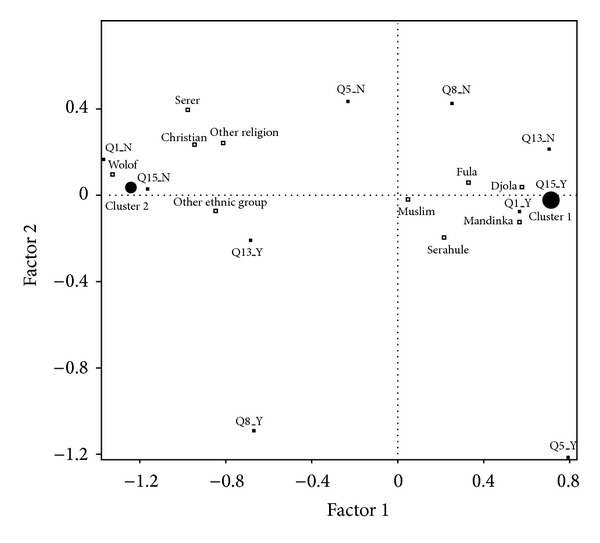
Efforts aimed at the abandonment of Female Genital Mutilation/Cutting (FGM/C) in the communities where it is deeply rooted have extensively considered and addressed women's perceptions on the issue, leaving those of men barely acknowledged. Although the practice is generally confined to the secret world of women, it does not mean that men cannot be influential. Indeed, men can play an important role in prevention. In order to address this gap, and having as background an extensive ethnographic field work, a transversal descriptive study was designed to explore Gambian men's knowledge and attitudes towards FGM/C, as well as related practices in their family/household. Results show ethnic identity, more than religion, as the decisive shaping factor on how men conceive and value FGM/C. The greater support towards the practice is found among traditionally practicing groups. A substantial proportion of men intend to have it performed on their daughters, although reporting a low involvement in the decision making process, with very few taking alone the final decision. Only a minority is aware of FGM/C health consequences, but those who understand its negative impact on the health and well-being of girls and women are quite willing to play a role in its prevention.
在女性生殖器切割习俗根深蒂固的社区,为摒弃这一习俗所做的努力广泛考虑并探讨了女性对该问题的看法,而男性的看法却几乎未得到关注。尽管这种做法通常局限于女性的隐秘世界,但这并不意味着男性没有影响力。事实上,男性在预防工作中可以发挥重要作用。为了填补这一空白,并基于广泛的人种志实地调查,设计了一项横向描述性研究,以探究冈比亚男性对女性生殖器切割习俗的了解和态度,以及他们家庭中的相关做法。结果表明,与宗教相比,种族身份是决定男性如何看待和重视女性生殖器切割习俗的关键因素。在传统实行该习俗的群体中,对这种做法的支持度更高。相当一部分男性打算让女儿接受切割,尽管他们表示在决策过程中的参与度较低,很少有人独自做出最终决定。只有少数人了解女性生殖器切割习俗对健康的影响,但那些明白其对女孩和妇女健康及幸福有负面影响的人非常愿意在预防工作中发挥作用。