Postgraduate Program in Health Sciences, Pontifícia Universidade Católica do Rio Grande do Sul (PUCRS), Porto Alegre, Brazil.
PLoS One. 2013 Jul 23;8(7):e65833. doi: 10.1371/journal.pone.0065833. Print 2013.
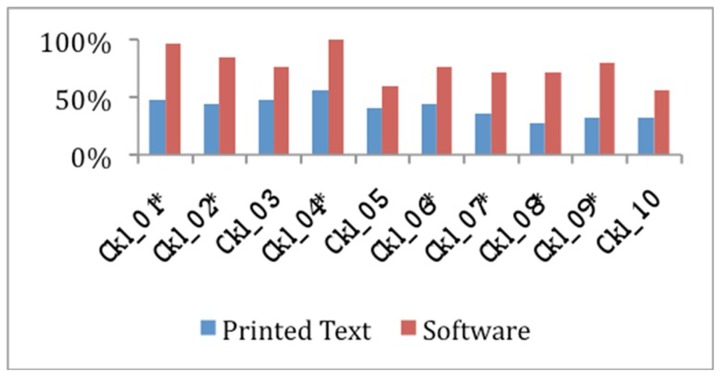
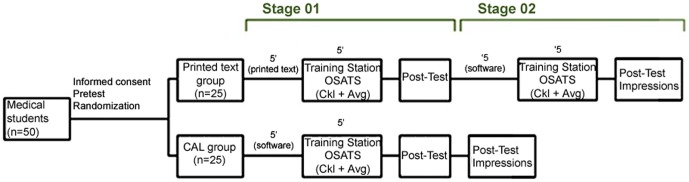
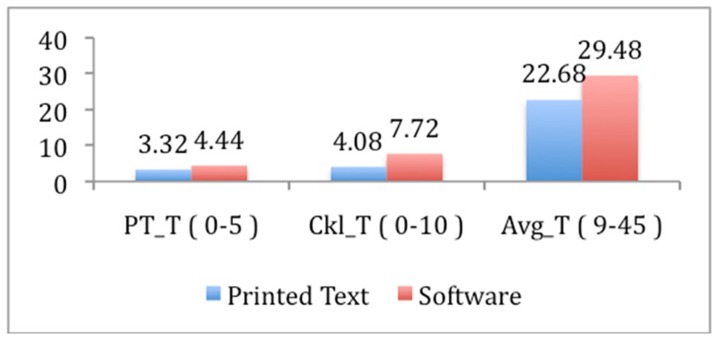
The purpose of this study was to develop and validate a multimedia software application for mobile platforms to assist in the teaching and learning process of design and construction of a skin flap. Traditional training in surgery is based on learning by doing. Initially, the use of cadavers and animal models appeared to be a valid alternative for training. However, many conflicts with these training models prompted progression to synthetic and virtual reality models. Fifty volunteer fifth- and sixth-year medical students completed a pretest and were randomly allocated into two groups of 25 students each. The control group was exposed for 5 minutes to a standard text-based print article, while the test group used multimedia software describing how to fashion a rhomboid flap. Each group then performed a cutaneous flap on a training bench model while being evaluated by three blinded BSPS (Brazilian Society of Plastic Surgery) board-certified surgeons using the OSATS (Objective Structured Assessment of Technical Skill) protocol and answered a post-test. The text-based group was then tested again using the software. The computer-assisted learning (CAL) group had superior performance as confirmed by checklist scores (p<0.002), overall global assessment (p = 0.017) and post-test results (p<0.001). All participants ranked the multimedia method as the best study tool. CAL learners exhibited better subjective and objective performance when fashioning rhomboid flaps as compared to those taught with standard print material. These findings indicate that students preferred to learn using the multimedia method.
本研究旨在开发和验证一种适用于移动平台的多媒体软件应用程序,以辅助皮瓣设计和构建的教学和学习过程。传统的手术培训基于实践学习。最初,使用尸体和动物模型似乎是一种有效的替代培训方法。然而,许多与这些培训模型相关的冲突促使人们转向合成和虚拟现实模型。五十名志愿的五年级和六年级医学生完成了预测试,并被随机分为两组,每组 25 名学生。对照组接触 5 分钟基于标准文本的印刷文章,而实验组使用多媒体软件描述如何制作菱形皮瓣。然后,每组在培训台模型上进行皮瓣手术,由三名盲评 BSPS(巴西整形外科学会)认证外科医生使用 OSATS(客观结构化评估技术技能)协议进行评估,并回答后测问题。然后,文本组再次使用软件进行测试。计算机辅助学习 (CAL) 组的表现优于检查表评分(p<0.002)、整体全球评估(p=0.017)和后测结果(p<0.001)。所有参与者都将多媒体方法评为最佳学习工具。与使用标准印刷材料教学相比,CAL 学习者在制作菱形皮瓣方面表现出更好的主观和客观表现。这些发现表明,学生更喜欢使用多媒体方法进行学习。