Institute for Clinical Research, National Hospital Organization Kagoshima Medical Center, Kagoshima, Japan.
PLoS One. 2013 Jul 23;8(7):e68801. doi: 10.1371/journal.pone.0068801. Print 2013.
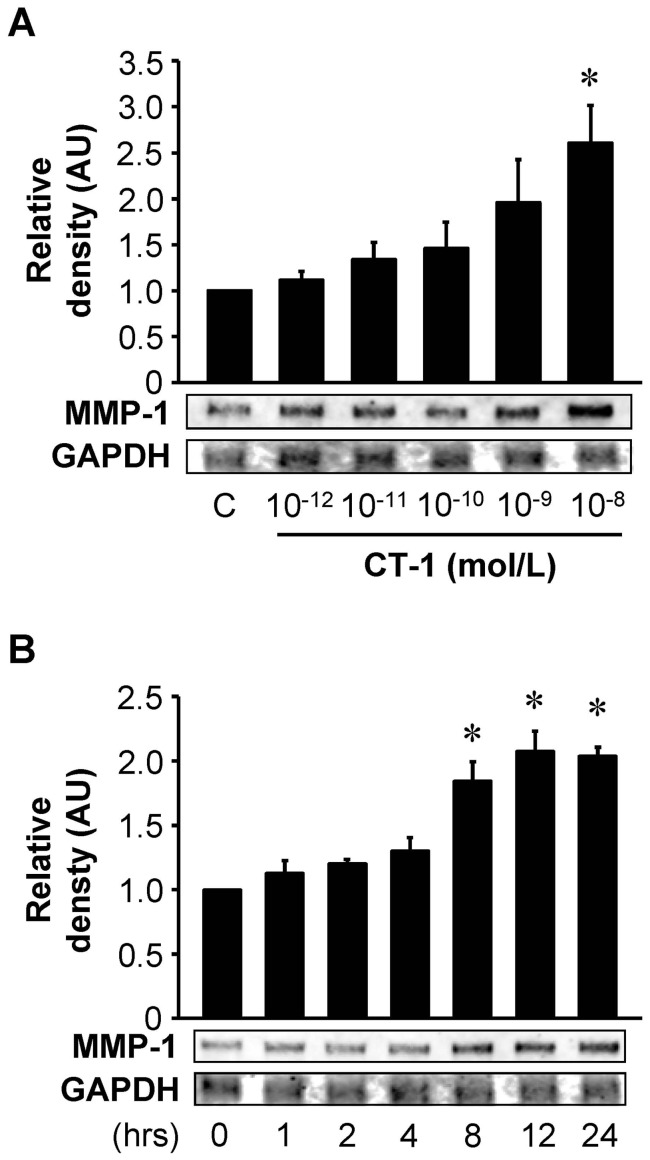
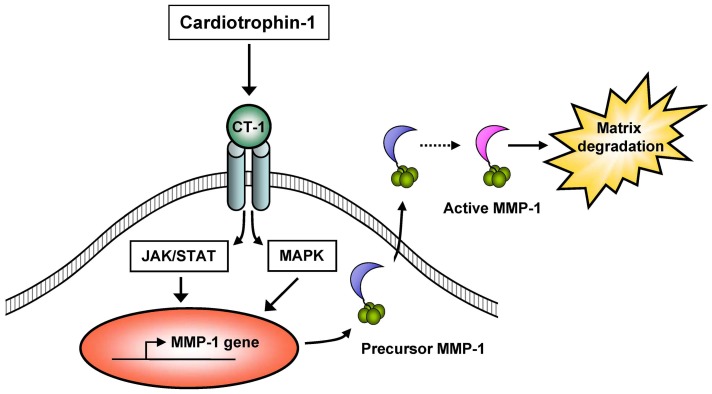
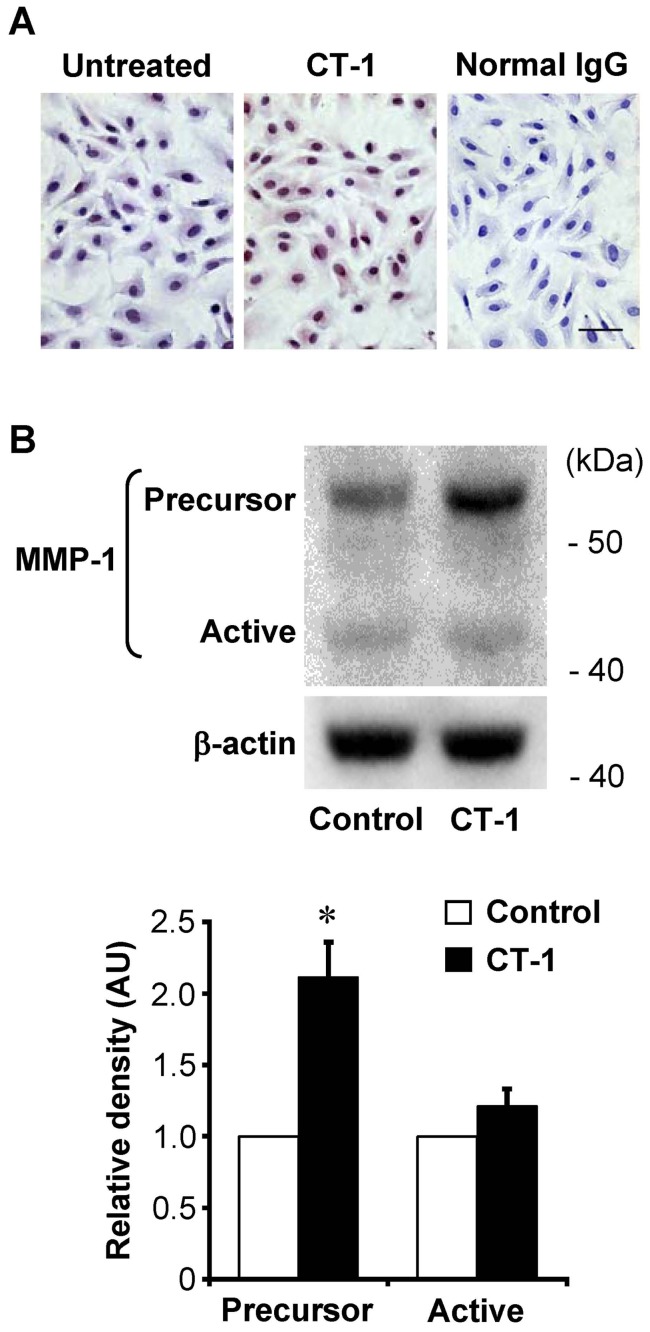
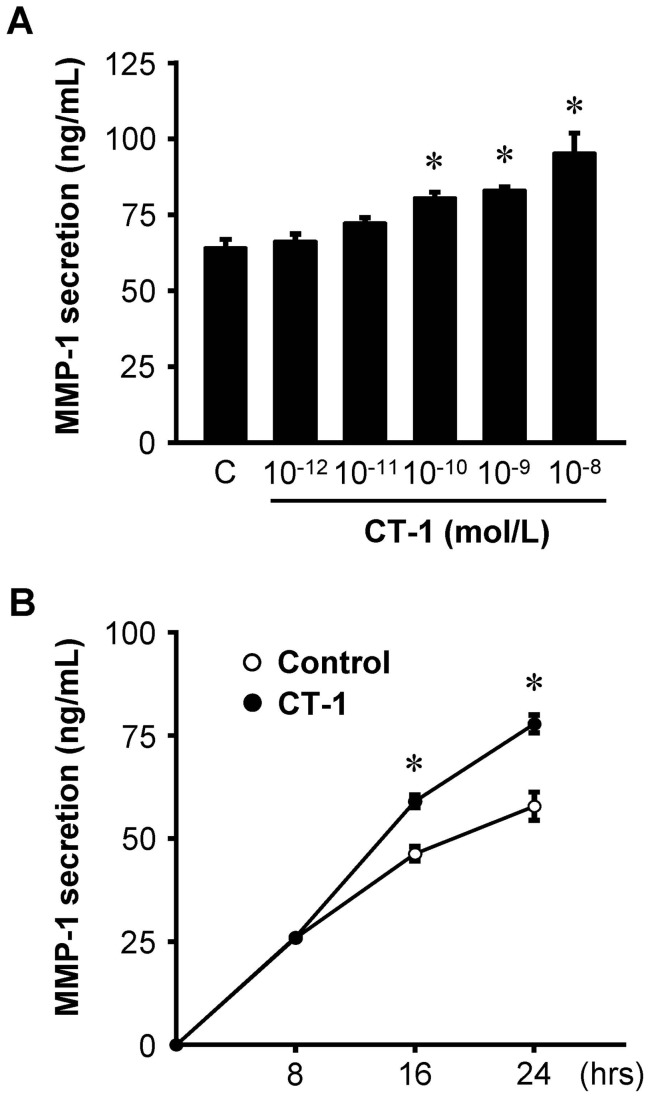
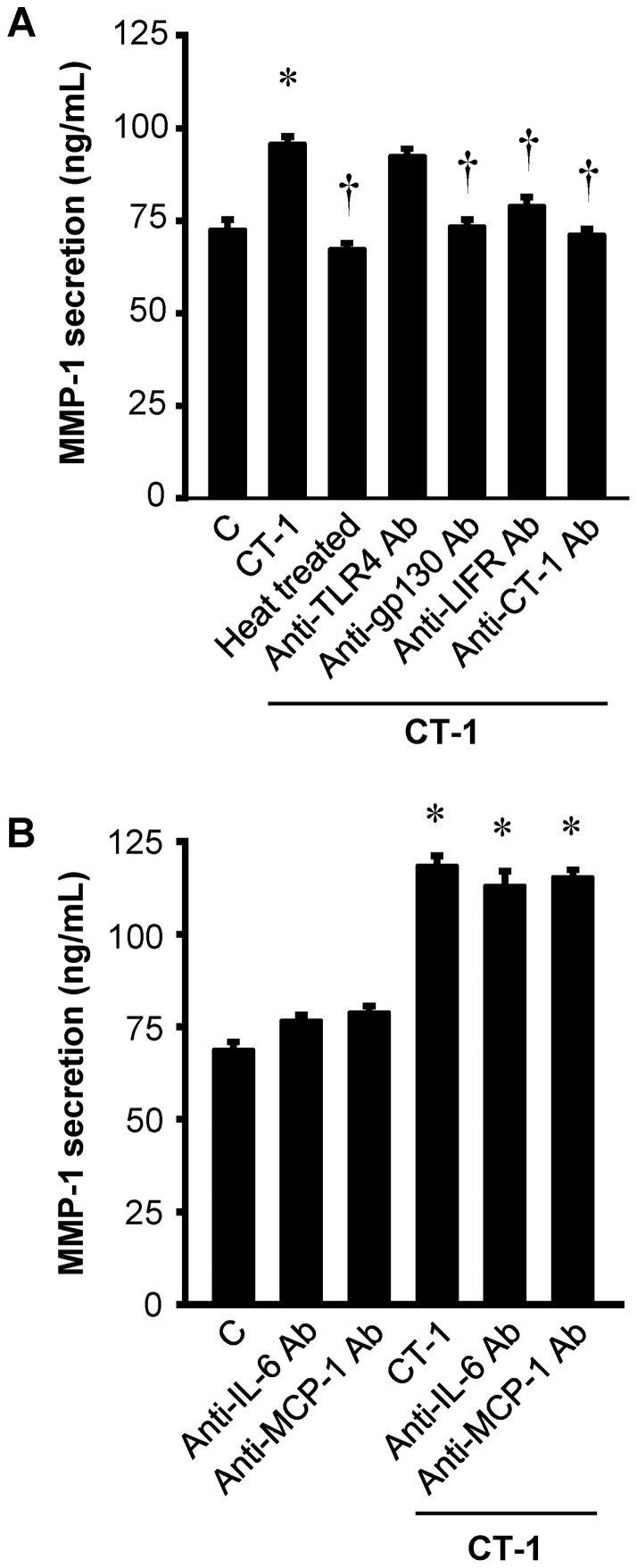
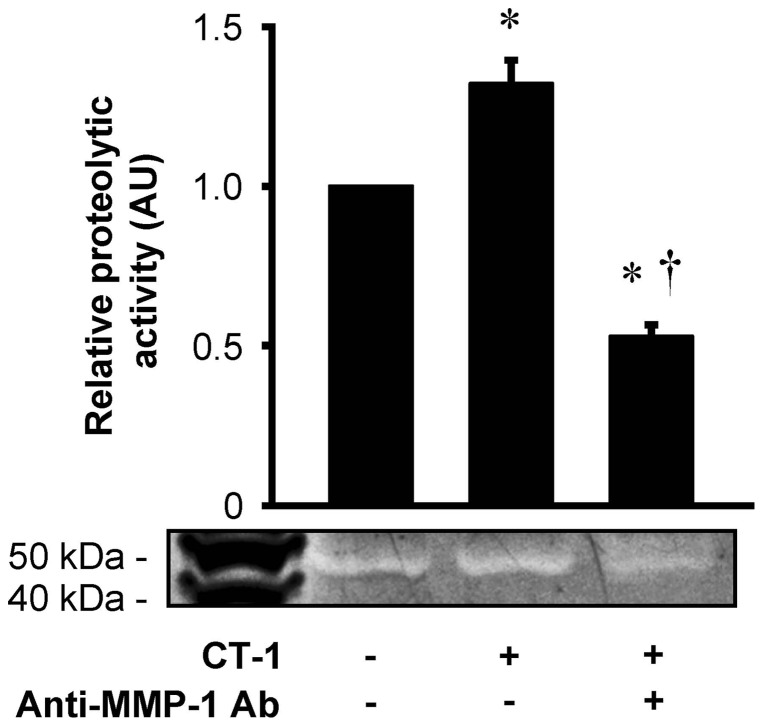
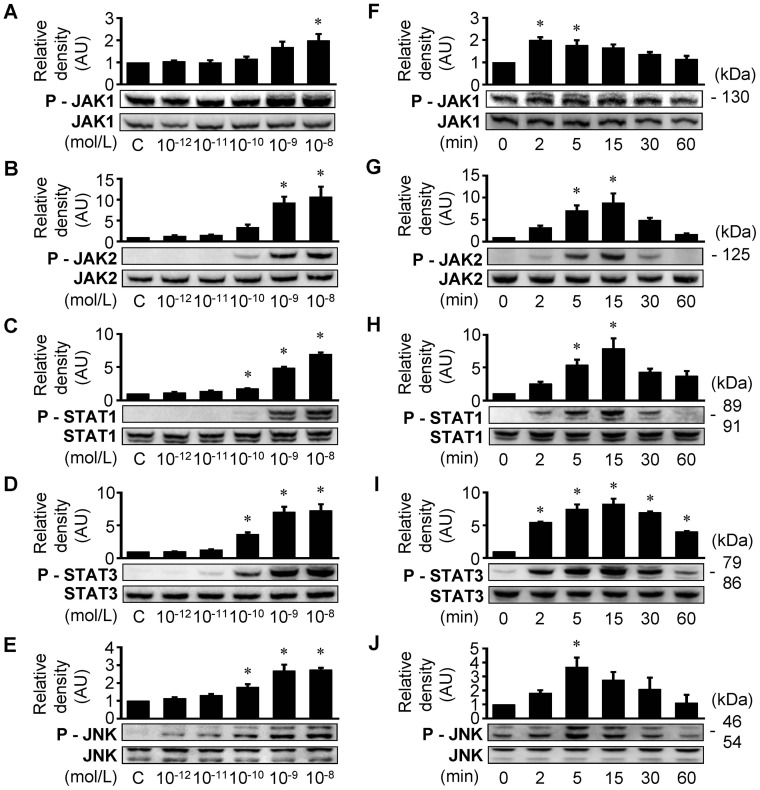
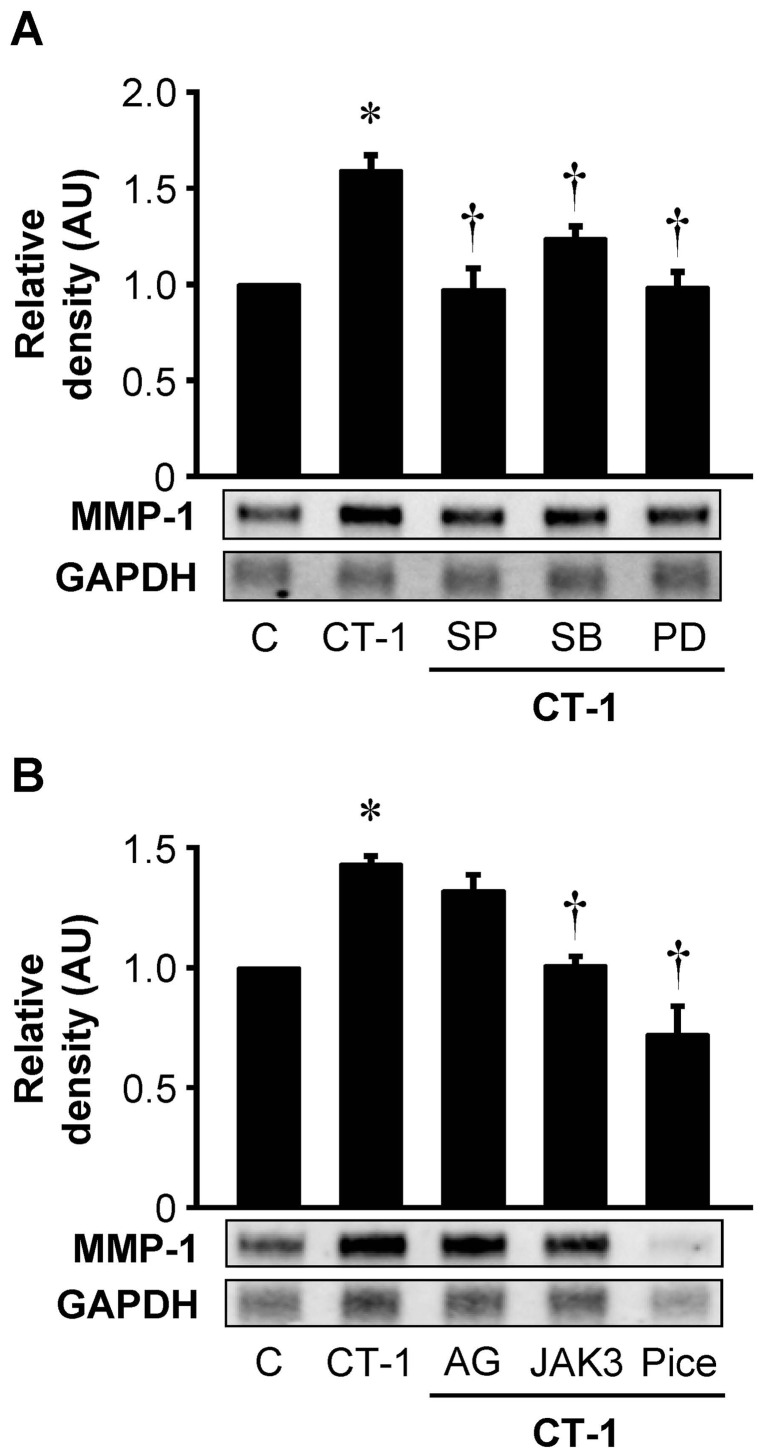
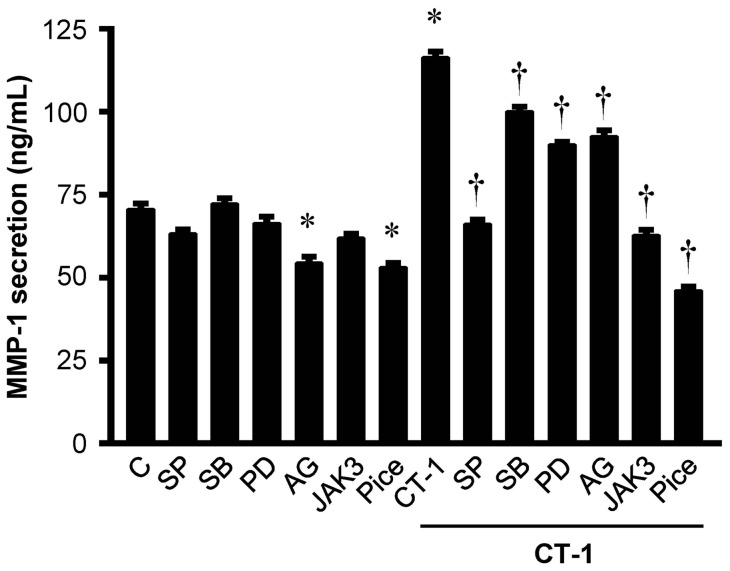
Rupture of an atherosclerotic plaque is a key event in the development of cardiovascular disorders, in which matrix metalloproteinase-1 (MMP-1) plays a crucial role by degradation of extracellular matrix resulting in plaque instability. Cardiotrophin-1 (CT-1), a member of interleukin-6-type proinflammatory cytokines, has potent cardiovascular actions and is highly expressed in vascular endothelium, however its role in atherosclerosis has not been fully elucidated to date. The present study was designed to investigate whether CT-1 induces MMP-1 in human aortic endothelial cells (HAECs). Ribonuclease protection assay demonstrated that MMP-1 gene level in HAECs was enhanced by the treatment of CT-1 in a dose- and time-dependent manner. Immunocytochemical staining, Western immunoblot analysis and enzyme-linked immunosorbent assay revealed that CT-1 augmented MMP-1 protein synthesis and secretion. MMP-1 activity assay revealed that MMP-1 present in the supernatant of HAECs was exclusively precursor form. Casein zymography disclosed proteolytic activity in the supernatant of HAECs, which was enhanced by CT-1 treatment. Furthermore, pharmacological inhibitor study indicated the important roles of extracellular signal-regulated kinase (ERK) 1/2, p38 mitogen-activated protein (MAP) kinase, c-Jun N-terminal kinase (JNK) and Janus kinase/signal transducers and activators of transcription (JAK/STAT) signaling pathways in mediating CT-1-induced MMP-1 gene and protein expression. These data reveal for the first time that CT-1 induces the proteolytic potential in HAECs by upregulating MMP-1 expression through ERK1/2, p38 MAP kinase, JNK and JAK/STAT pathways, and suggest that CT-1 may play an important role in the pathophysiology of atherosclerosis and plaque instability.
动脉粥样硬化斑块的破裂是心血管疾病发展的关键事件,其中基质金属蛋白酶-1(MMP-1)通过降解细胞外基质导致斑块不稳定而发挥关键作用。心肌营养素-1(CT-1)是白细胞介素-6 型前炎性细胞因子的成员,具有强大的心血管作用,在血管内皮细胞中高度表达,但迄今为止其在动脉粥样硬化中的作用尚未完全阐明。本研究旨在探讨 CT-1 是否诱导人主动脉内皮细胞(HAEC)中的 MMP-1。核糖核酸酶保护试验表明,CT-1 以剂量和时间依赖的方式增强 HAEC 中 MMP-1 基因水平。免疫细胞化学染色、Western 免疫印迹分析和酶联免疫吸附试验显示,CT-1 增强 MMP-1 蛋白合成和分泌。MMP-1 活性测定显示,HAEC 上清液中的 MMP-1 主要为前体形式。酪蛋白酶谱分析显示,HAEC 上清液中的蛋白酶活性增强,经 CT-1 处理后进一步增强。此外,药理抑制剂研究表明,细胞外信号调节激酶(ERK)1/2、p38 丝裂原激活蛋白(MAP)激酶、c-Jun N 末端激酶(JNK)和 Janus 激酶/信号转导和转录激活因子(JAK/STAT)信号通路在介导 CT-1 诱导的 MMP-1 基因和蛋白表达中发挥重要作用。这些数据首次揭示,CT-1 通过上调 ERK1/2、p38 MAP 激酶、JNK 和 JAK/STAT 通路来诱导 HAEC 中的蛋白水解潜能,从而上调 MMP-1 表达,并表明 CT-1 可能在动脉粥样硬化和斑块不稳定的病理生理学中发挥重要作用。